
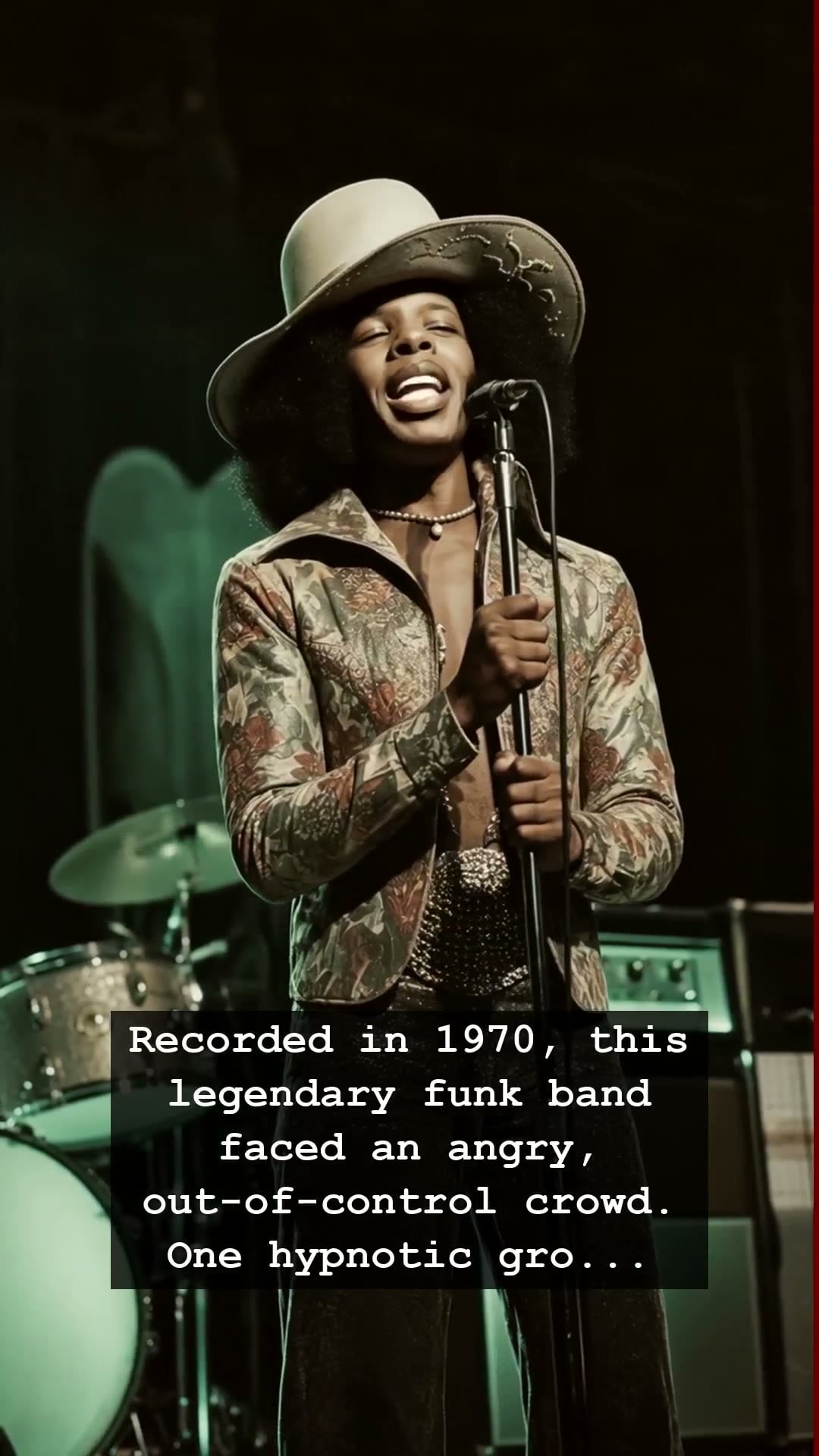
It was 1970, a year that felt like the hangover after the psychedelic dream of the sixties had finally withered. The air at the Randall’s Island Festival was thick with humidity, rebellion, and a rising, jagged tension that threatened to tear the event apart. Thousands of fans were pressed together, frayed by delays and the suffocating pressure of a changing social landscape. The atmosphere was turning ugly; the crowd was nearing a breaking point, and the sound of shattering glass and angry shouting suggested a full-scale riot was only seconds away. In the middle of this chaos, Sly and the Family Stone, the masters of funk, stepped onto the stage. They were the sonic glue of an era defined by soul, unity, and a heavy dose of unpredictable brilliance.
Most bands would have fled the stage, fearing for their safety as the unruly masses surged toward the barrier. But Sly Stone and his collective weren’t most bands. With a swagger that felt like a quiet command, they didn’t reach for an apology or an exit strategy. Instead, they tapped into the raw, hypnotic power of their rhythm. Larry Graham, the architect of the slapping bass technique, didn’t just play a note; he dropped a low-end earthquake that vibrated through the very soles of the audience. The groove was so infectious, so impossibly tight, that the violence that had been building like a storm simply evaporated.
It is difficult for us today, in an age of curated digital streams and noise-canceling headphones, to imagine the sheer physical dominance of a live funk band in the seventies. Sly and the Family Stone were not just entertainers; they were cultural lightning rods. Their music bridged the gaps between black and white, rock and soul, peace and protest. They stood at the center of a musical universe that was shifting from the idealism of Woodstock to the grit of a harsher decade. Yet, on that day at Randall’s Island, they proved that rhythm was more potent than rage. The riot stopped dead in its tracks, replaced by a collective, swaying trance that silenced the chaos.
This incident wasn’t just a lucky break; it was a testament to the transformative power of the funk movement. Throughout the late sixties and early seventies, Sly and the Family Stone redefined what a band could look and sound like. They were a multi-racial, mixed-gender force of nature, a vision of the future that existed even as the real world grew more divided. Their sound—layered, funky, and unapologetically bold—captured the restless energy of the era, from the neon hum of the discotheques to the underground clubs where the youth escaped the realities of the draft and inflation.
Looking back, the story of Sly and the Family Stone remains one of music history’s most compelling paradoxes. Their rise was meteoric, and their influence on everything from funk to hip-hop is immeasurable. They lived fast, fueled by the excesses of fame and the heavy creative burdens that come with being icons. Yet, they always returned to that one, undeniable truth: music is the ultimate mediator. Even today, listening to the crackling vinyl of their classic records transports us back to that dangerous, vibrant, and transformative time. The next time you find yourself lost in the steady, thumping heartbeat of a bassline, remember Randall’s Island and the moment a band decided to turn the noise of a riot into the rhythm of a revolution.