
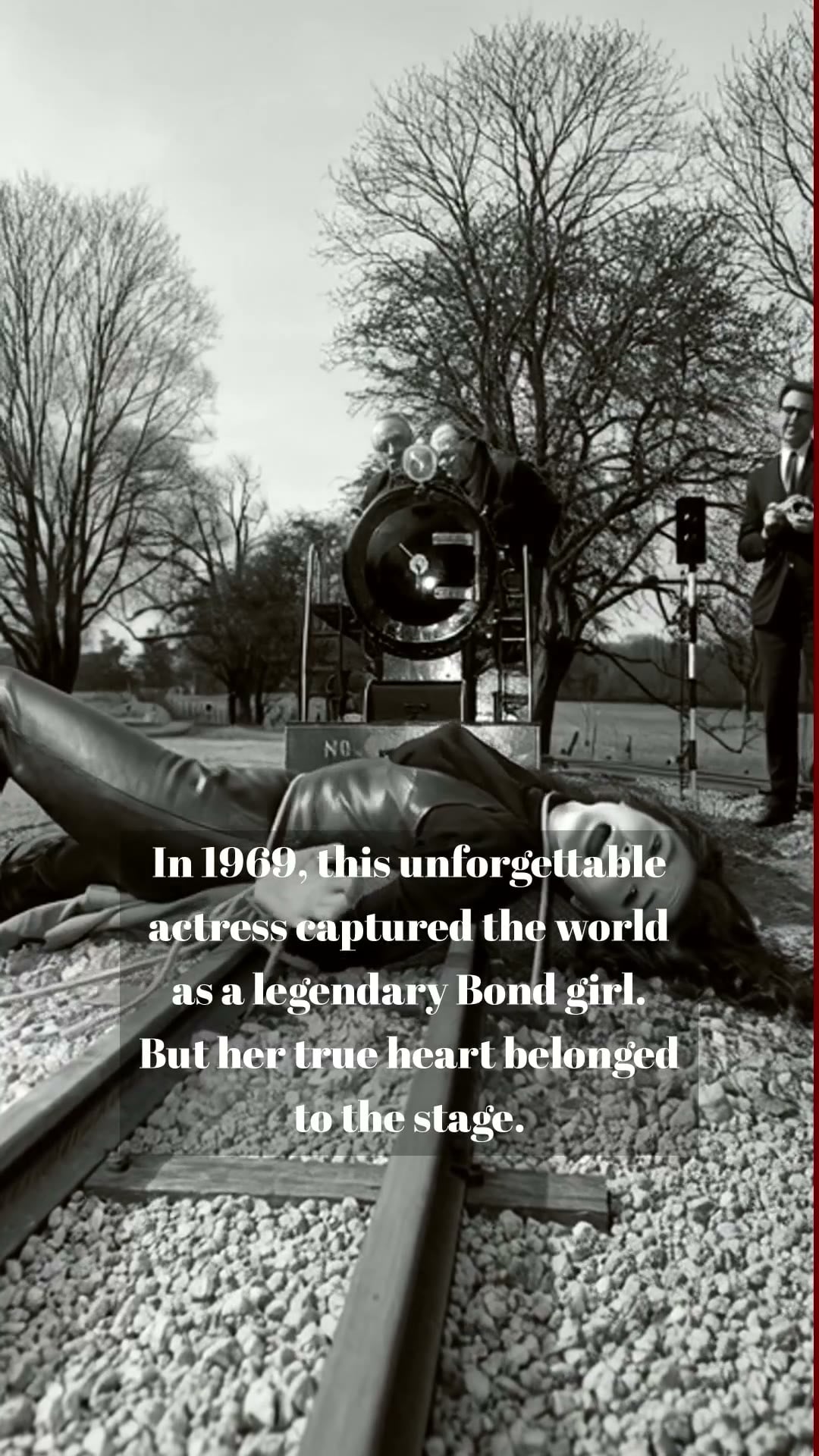
In the golden age of cinema, certain faces become etched into the cultural consciousness, defined forever by a single, iconic moment under the spotlights. For many, that moment arrived in 1969, when the luminous Diana Rigg graced the silver screen as Tracy Di Vicenzo in On Her Majesty’s Secret Service. As the only woman to ever capture the heart of James Bond and become his wife, Diana Rigg transformed the archetype of the Bond girl. She brought a sharp, sophisticated wit and a vulnerable humanity to the role, elevating a blockbuster franchise into something deeply poignant. Yet, for those who truly understood her craft, that high-octane cinematic performance was merely a single chapter in a lifetime dedicated to the art of acting.
While the world saw her as a glamorous star of the silver screen, Diana Rigg often spoke of her soul being anchored in the theater. Before, during, and long after her brush with global fame, she was a titan of the stage. Her journey through the mid-20th century was defined by a commitment to the Method acting principles that demanded raw, emotional authenticity. Whether she was delivering Shakespearean verse with unparalleled precision or commanding the presence of a West End audience, she approached her work with the discipline of a classical master. She did not merely perform; she inhabited her characters, leaving an indelible mark on the history of performance art that transcended the flickering frames of the VHS tapes we once cherished in our living rooms.
Looking back at her career, one is struck by the immense versatility that Diana Rigg possessed. In an era when many starlets were confined to limited roles, she refused to be pigeonholed. She possessed an iron-willed intelligence and a voice that could convey both scathing irony and profound tenderness. Her peers in Hollywood and London regarded her with a reverence usually reserved for legends. She understood that while a film might capture a moment, the stage captures a spirit. This dedication to her craft during the transformative years of the 1960s, 70s, and 80s solidified her status as one of the most respected actresses of her generation.
Her influence extended far beyond the characters she played. Diana Rigg served as a bridge between the classic elegance of old Hollywood and the grittier, more complex storytelling that defined the later decades of the century. She navigated the transition of the industry with grace, remaining a constant, reliable force of brilliance while the world around her changed. Her presence on the screen and stage was a masterclass in poise, reminding us that true stardom is rooted in the quiet, painstaking work of honing one’s talent.
Today, as we revisit the cinematic treasures of that bygone era, the legacy of Diana Rigg remains as compelling as ever. Her life reminds us that true artistry is not measured by box office returns, but by the emotional imprint left upon an audience. Her story is a poignant invitation to look beyond the glamour of the red carpet and appreciate the immense dedication of a life lived for the theater. Perhaps it is time to press play on those old memories once more and celebrate the enduring spirit of a woman who graced our lives with such timeless elegance.