
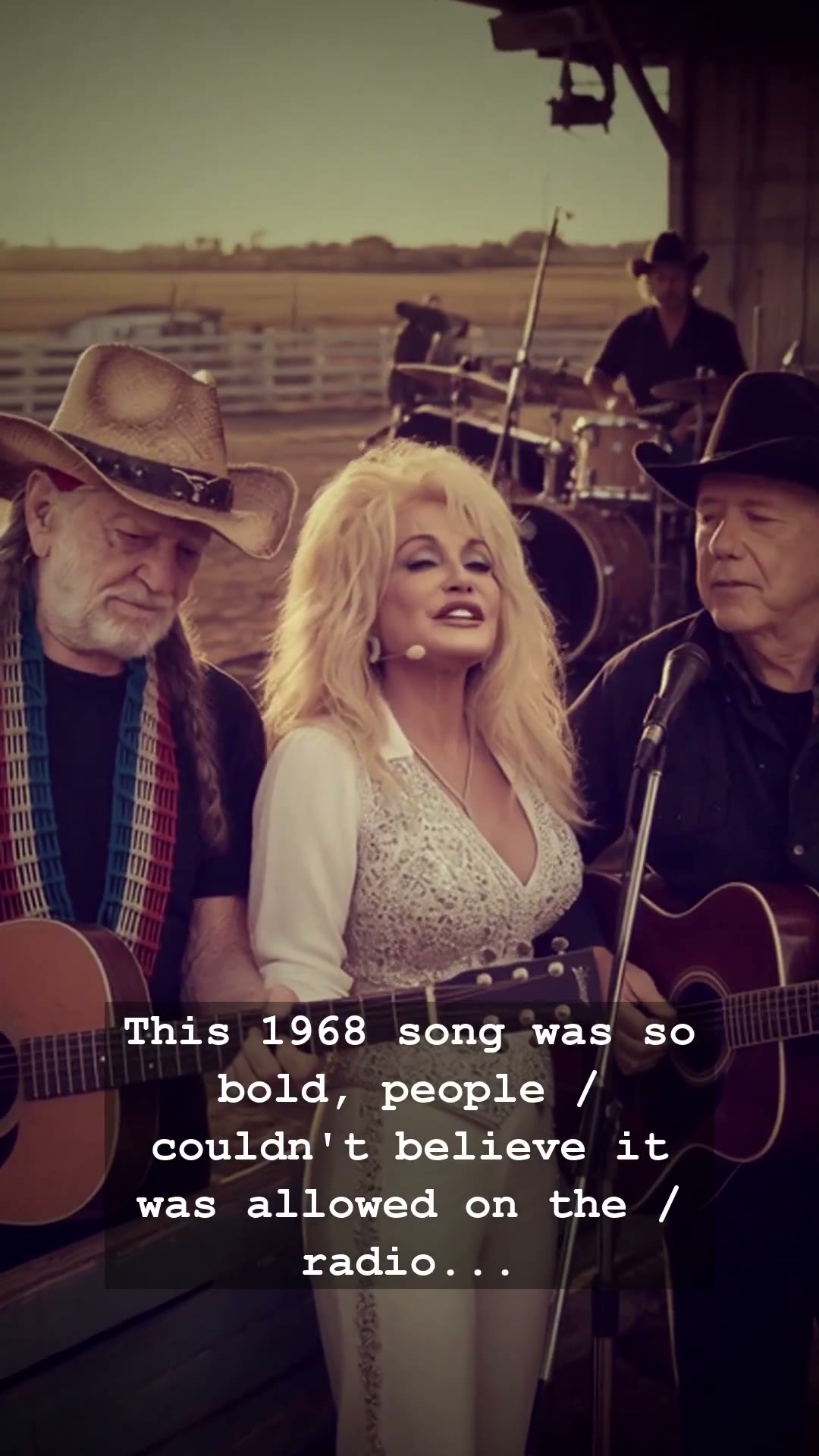
It was 1968, a year defined by societal upheaval, the flicker of the television set, and the crackle of the jukebox in every roadside diner. Amidst the chaos of a changing America, a voice emerged from the heart of country music that would fundamentally alter the landscape of the genre forever. When Tammy Wynette stepped into the recording studio to cut a song titled D-I-V-O-R-C-E, few could have predicted that it would become a cultural lightning rod. At first glance, the track appeared to be a standard, heart-wrenching ballad about a crumbling marriage, but it carried a hidden, raw truth that shattered the polite silence of the airwaves and left radio programmers scrambling for excuses to pull it from rotation.
To understand the shockwave created by Tammy Wynette, one must remember the era. The late 60s were a time of rigid traditionalism clashing with the burgeoning counterculture. In the world of country music, domestic stability was often the unspoken currency. By spelling out the word D-I-V-O-R-C-E to shield her young child from the painful reality of a broken home, Wynette did more than just sing a song; she dragged the uncomfortable, taboo subject of marital dissolution into the living rooms of millions. It was bold, it was visceral, and it was considered by many to be far too honest for radio play at the time.
The genius of the track lay in its quiet intensity. Unlike the booming sounds of the emerging rock scene or the psychedelic rebellion echoing from the West Coast, Tammy Wynette chose a path of stark emotional realism. As she paced through the lyrics, listeners felt as though they were peering through a keyhole into a dying romance. The song wasn’t just a hit; it was a mirror held up to the American family, reflecting a narrative that thousands were living through but were too ashamed to discuss in public. This performance solidified Wynette as the First Lady of Country Music, a title she wore with both grace and the heavy burden of her own complex life.
Behind the scenes, the drama of Tammy Wynette was as intense as the music she produced. Her personal life was often a rollercoaster of high-profile relationships and private heartaches, themes that naturally bled into her songwriting. This authenticity is precisely why her music still resonates with us today. When we listen to the scratchy vinyl or play the track on a vintage stereo, we aren’t just hearing a song from 1968; we are hearing the unvarnished pain of a woman who refused to hide her scars. She transformed her vulnerability into an enduring anthem of survival.
Even as the years have passed and the musical landscape has shifted toward the digital age, the impact of Tammy Wynette remains undimmed. Her willingness to push the boundaries of what was acceptable gave voice to those who felt silenced by society. Today, we look back at her legacy not just as a singer, but as a pioneer who challenged the status quo with nothing more than a melody and a gut-wrenching story. Do you remember where you were when you first heard those iconic lyrics? There is something truly timeless about that 1968 sound—a haunting reminder of a world that was changing, one song at a time.