
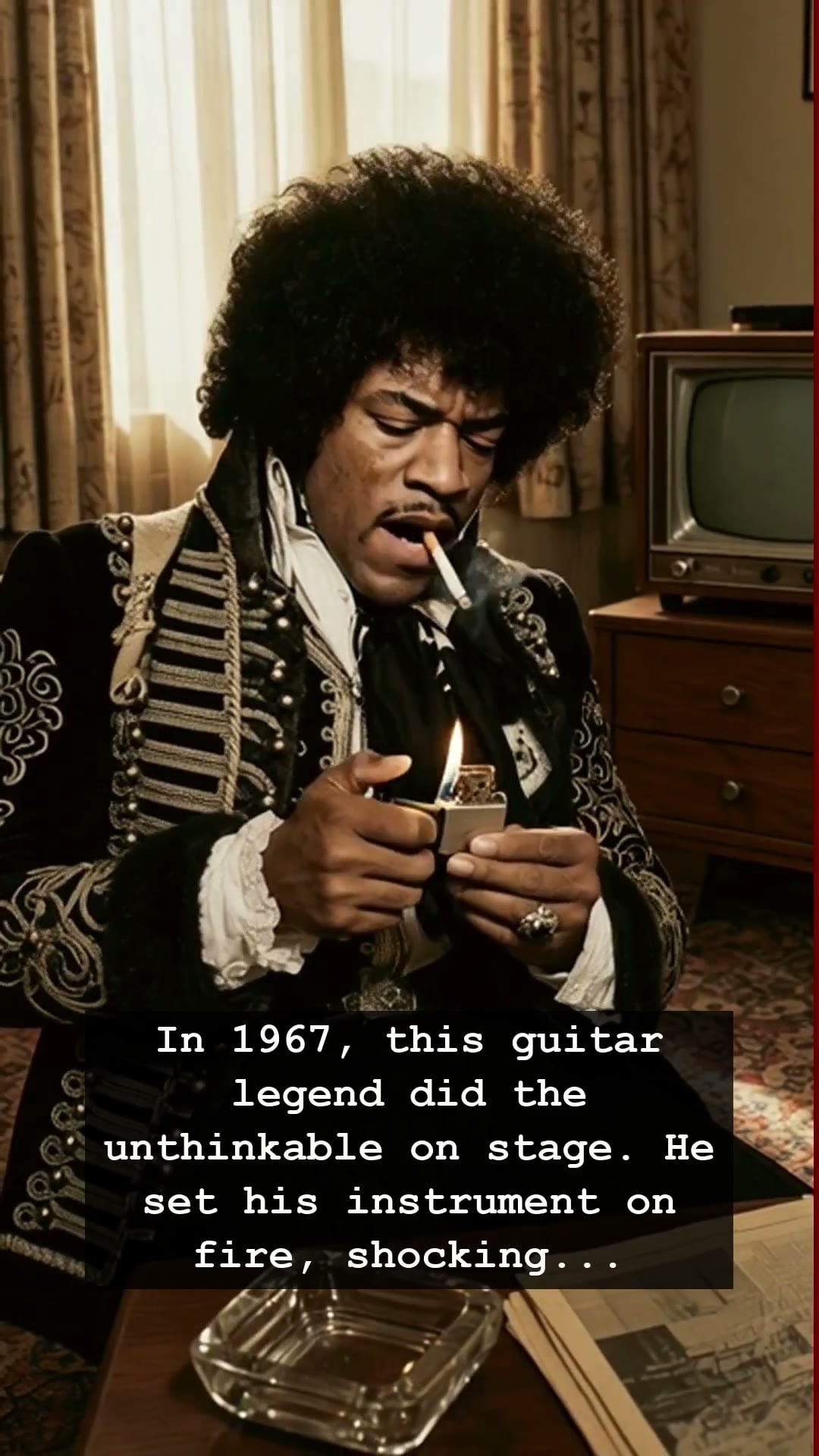
It was June 1967, and the air at the Monterey Pop Festival was thick with the scent of patchouli, cheap tobacco, and a palpable sense of change. The Summer of Love was in full bloom, but as the night descended upon the California fairgrounds, the atmosphere shifted from peace and flowers to something primal and electric. The crowd, a sea of bell-bottoms and wide-eyed dreamers, had no idea they were about to witness a definitive pivot point in music history. Jimi Hendrix, a man who seemed to channel the raw energy of the universe through six strings, stepped up to the microphone, his silhouette framed by the haze of the era.
By 1967, the world was hungry for a new sound. The polished, safe edges of early rock and roll were being dismantled by artists looking for something visceral. Jimi Hendrix had already begun to redefine the sonic landscape, pushing amplifiers to their breaking point and creating a wall of sound that felt like it was tearing the fabric of reality. But that night in Monterey, he wasn’t just interested in the sound; he wanted to create an image that would be seared into the collective consciousness of a generation. The performance had been intense, a whirlwind of blues and psychedelia, but the grand finale was yet to come.
As the final chords of Wild Thing echoed across the field, Jimi Hendrix knelt down with a deliberate, haunting grace. In a moment that remains legendary for its sheer audacity, he doused his Fender Stratocaster in lighter fluid. With a flick of a match, a golden roar of flame erupted, casting long, flickering shadows against his face. It was an act of artistic destruction that shocked the audience into a stunned silence, followed by a deafening roar of disbelief. The instrument, a sacred artifact for most musicians, was transformed into a temporary vessel for fire. It was more than a stunt; it was a ritual sacrifice of the past to make way for the future of rock.
This incident cemented Jimi Hendrix as the high priest of psychedelic rock, a figure who blurred the lines between performer and shaman. While the press scrambled to label it as a gimmick, those who were there understood that something deeper had occurred. He had stripped away the artifice of the music industry and forced the world to look at the raw, burning passion behind the performance. The image of the scorched guitar became an enduring emblem of the counterculture, representing a generation that was willing to burn down the status quo to find its own voice.
Decades later, the legend of that fiery night at Monterey continues to resonate, reminding us of a time when rock music was dangerous, unpredictable, and entirely unfiltered. Even now, whenever we hear the feedback-laden melodies of the sixties, we can almost smell the lighter fluid and feel the heat of that stage. It remains a stark reminder that true greatness requires a willingness to take risks that others would never dare. As you look back on the archives of music history, Jimi Hendrix stands not just as a virtuoso, but as the man who taught us that sometimes, you have to watch your world burn to truly set it free.