
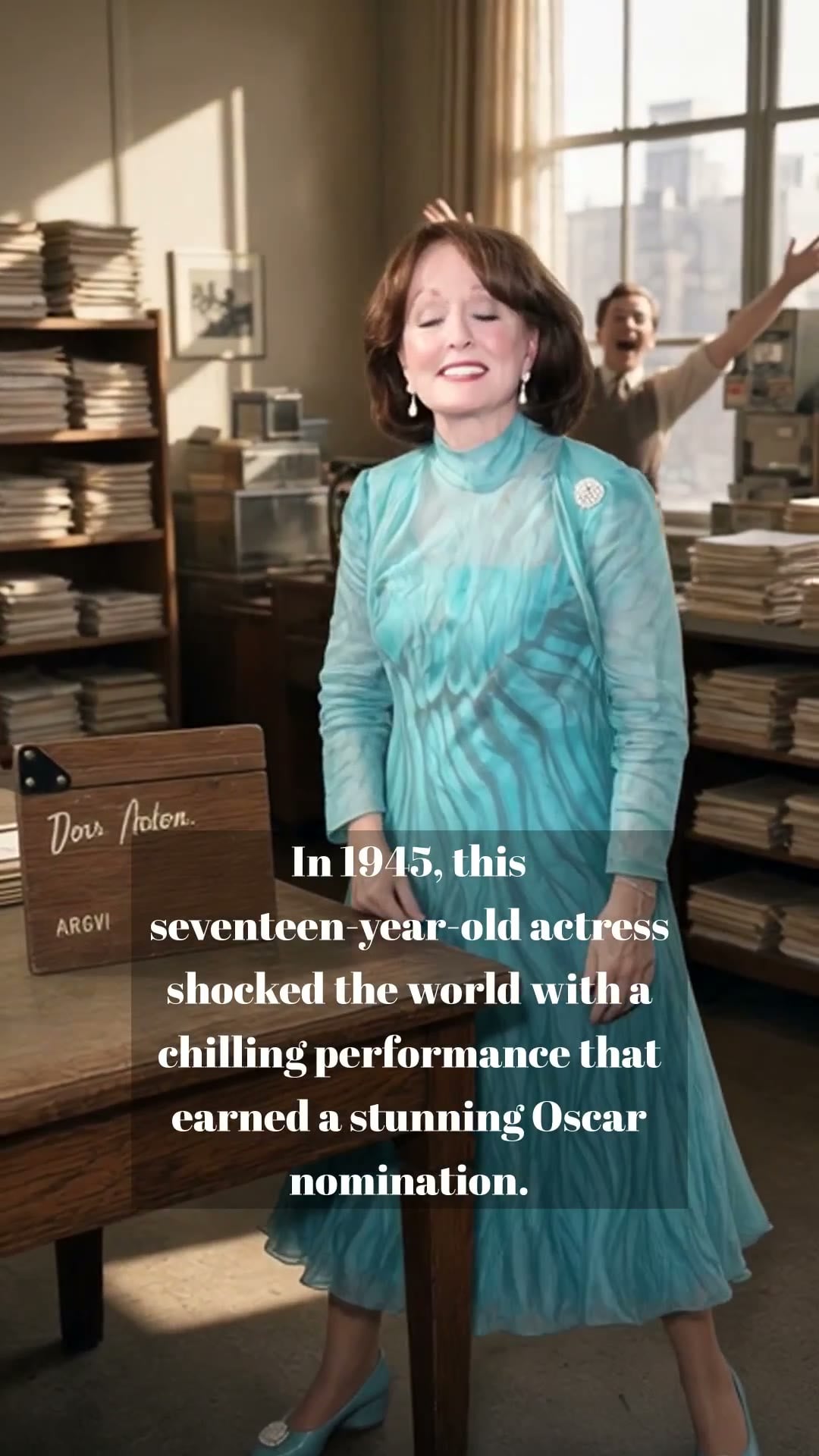
In the golden tapestry of mid-century cinema, few debuts remain as hauntingly unforgettable as that of Ann Blyth. While many young starlets of the 1940s were carefully crafted into archetypes of innocence, Ann Blyth took a daring departure from the norm. In the 1945 noir masterpiece Mildred Pierce, she stepped into the role of Veda Pierce with a ferocity that defied her seventeen years. With an angelic face that masked a core of cold, calculating ambition, she delivered a performance so chilling that it permanently altered the audience’s perception of the silver screen ingenue. It was a masterclass in subtlety and ruthlessness that earned her a well-deserved Oscar nomination, cementing her status as a force of nature.
To look back at the career of Ann Blyth is to step into a bygone era when cinema was defined by the intensity of Method Acting and the magnetic pull of authentic screen presence. During those years, the studio system was at its height, and the competition to stand out was fierce. Yet, Ann Blyth possessed a rare duality; she could transition seamlessly from the psychological tension of a noir drama to the warmth of a musical production. This versatility made her a cornerstone of the Golden Age of Hollywood, a performer who understood that a truly iconic role required more than just beauty—it required a deep, soulful commitment to the craft.
Her nomination for an Academy Award remains a historic milestone. It was not merely a recognition of a singular performance, but a testament to her ability to hold her own against seasoned legends like Joan Crawford. On that legendary Oscar night, the industry saw a young woman who refused to be sidelined. Ann Blyth brought an intellectual rigor to her roles, ensuring that every character she portrayed felt like a living, breathing person rather than a script instruction. This dedication to her art form echoed through the corridors of the Walk of Fame, where her legacy continues to inspire those who appreciate the nuances of mid-century acting.
As we look back at the archives of our VHS collections or recall the flickering light of the movie theaters of our youth, it is impossible not to feel a surge of nostalgia for the era Ann Blyth represents. Her work reminds us of a time when films were curated with an eye for dramatic weight and emotional resonance. She wasn’t just a face on a poster; she was a woman who commanded the screen, forcing the viewer to confront the darker complexities of the human condition. Her influence lingers in the DNA of contemporary acting, a quiet reminder that the greatest performances are those that stay with us long after the credits roll.
Today, we honor Ann Blyth not just for her accolades, but for the profound humanity she brought to every frame. She remains a beloved figure for those of us who grew up with the magic of the studio era, serving as a beacon of artistic integrity in an industry that was rapidly evolving. Whether you remember her as the ruthless Veda or from her later, gentler roles, her presence is a testament to the enduring power of classic cinema. We invite you to revisit her classic films, to rediscover that seventeen-year-old spark, and to share in the joy of celebrating a true legend of the silver screen.