
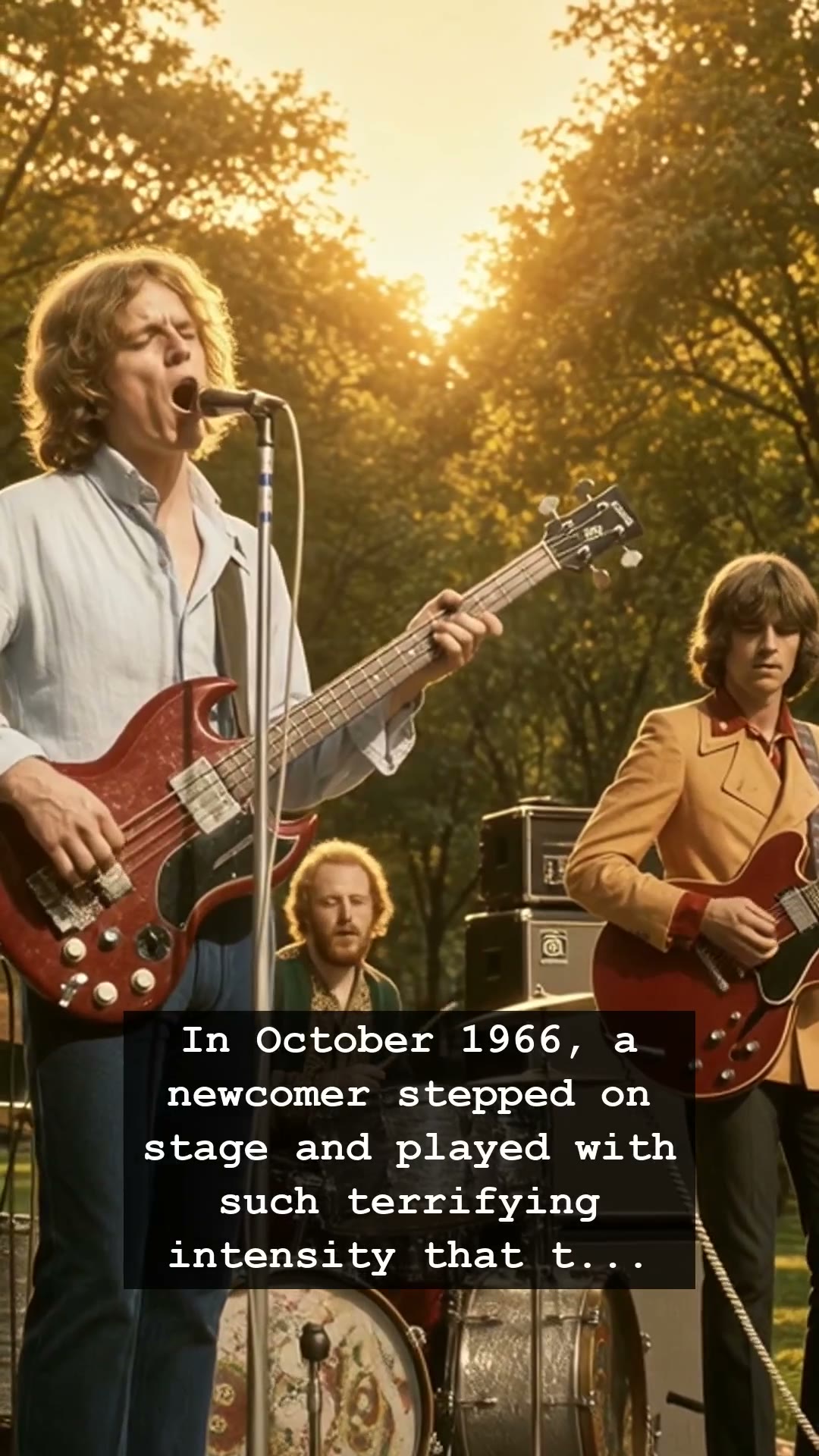
It was October 1966, a rainy evening in London that would forever alter the trajectory of rock and roll. The air inside the club was thick with the scent of stale tobacco and the buzzing anticipation of a scene dominated by the titans of the British blues explosion. Eric Clapton, the undisputed guitar god of his era, was the man everyone had come to see. He had redefined the sound of the electric guitar, turning the instrument into a soulful, howling extension of his very nerves. But that night, the history of music shifted on its axis the moment a scrawny, shy newcomer named Jimi Hendrix was invited on stage to jam with Cream.
Most people in the audience had never heard the name Jimi Hendrix before. He looked like an eccentric vision from another planet, sporting a wild mane of hair and clothes that defied the staid fashion of mid-sixties London. But as soon as his fingers touched the fretboard, the room fell into an uneasy silence. He didn’t just play the guitar; he interrogated it. He summoned feedback, wove dissonant harmonies into blistering speed, and treated his instrument with a raw, terrifying intensity that made the established order look like a rehearsed school play. It was a sensory assault that felt both alien and deeply ancient.
Eric Clapton, standing just a few feet away, watched as the newcomer pushed the boundaries of what the human ear thought possible. As the song reached its chaotic, psychedelic peak, Clapton famously froze. The man who had been hailed as the king of the six-string suddenly looked hollowed out. He reportedly dropped his hands, stopped playing, and walked off the stage, his expression a mixture of profound shock and total defeat. In that single, haunting moment, the crown had been usurped by a genius who played as if he were trying to set the very air on fire.
This incident became a foundational myth of the rock era, a bridge between the traditional blues-rock foundation and the radical, experimental soundscapes that would define the late sixties. It wasn’t just a clash of talent; it was a clash of realities. Jimi Hendrix brought a vision of music that was untethered from the rigid structures of his contemporaries. While the era was beginning to embrace the high-fidelity revolution of the burgeoning studio scene, Hendrix operated on an intuitive, almost spiritual level that couldn’t be contained by a simple recording desk.
The legacy of that night at the London club continues to resonate today, reminding us that true brilliance is often disruptive. Jimi Hendrix went on to become the quintessential icon of the era, while Eric Clapton would eventually find his own legendary path, but the memory of that defeat remains a poignant reminder of the volatility of the music industry. It is a story of how, in the blink of an eye, the world changes forever. Do you still feel the echoes of that feedback ringing through the decades?