
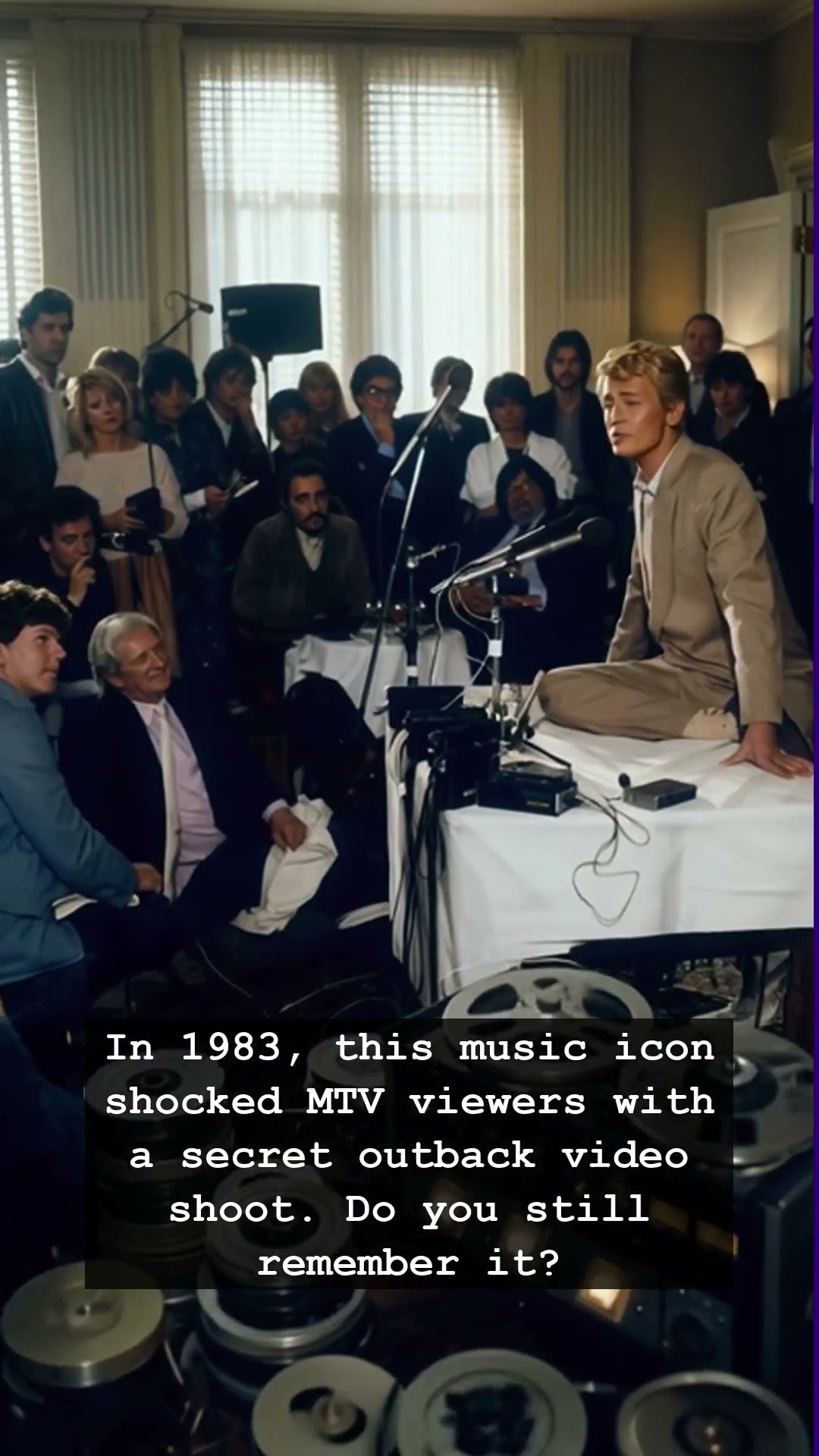
In 1983, the world was obsessed with the glossy, neon-soaked revolution of MTV. Pop music was becoming a polished machine of synthesizers and carefully choreographed visuals. Yet, amid the commercial sheen, one man decided to disappear into the dusty, unforgiving red earth of the Australian outback. David Bowie was at the peak of his commercial power with the Let’s Dance album, but instead of opting for a safe Hollywood soundstage, he chose a remote town called Carinda to capture a raw, unfiltered vision that would shock millions of viewers overnight. The resulting music video for Let’s Dance was more than just a promotional tool; it was a bold cultural statement that stripped away the artifice of the early eighties.
For those who remember the flickering glow of a television set during that era, David Bowie was a shape-shifting enigma. He had already survived the Ziggy Stardust glam era and the experimental Berlin trilogy, but by 1983, he was a global superstar navigating the new frontier of music television. The footage from the Australian shoot felt jarringly real compared to the stylized synth-pop spectacles playing on heavy rotation. Seeing David Bowie sitting in a humble, flickering pub in the middle of nowhere, surrounded by local residents who were largely unaware of his massive international fame, created a fascinating disconnect. It was an authentic, gritty portrayal of humanity that felt light-years away from the hollow glitz of Studio 54.
Behind the scenes, the choice of location was deliberate. David Bowie wanted to capture the stark contrast between the booming Western consumerism of the eighties and the silent, ancient landscape of the outback. He used the platform to highlight the struggles of Indigenous Australians, weaving a narrative of social commentary into what could have easily been a mindless dance hit. This was the genius of David Bowie; he was never content with being just a singer. He was a visual artist, a provocateur, and a storyteller who used his fame as a megaphone for perspectives that the mainstream media often chose to ignore. The decision to shoot in such isolation reflected his restless nature and his constant need to challenge the status quo.
Even decades later, the imagery remains etched in the collective memory of Gen X and Boomer music fans. When the video premiered on MTV, it hit the audience like a revelation. The juxtaposition of David Bowie’s sharp, sophisticated aesthetic against the weathered faces of the locals in a dusty bar captured a specific cultural zeitgeist. It was the moment the music world realized that the artist was not just following the trends dictated by record labels and television producers; he was actively redefining the language of the modern music video.
Today, we look back at this moment as a high-water mark for artistic integrity in the age of global superstardom. It reminds us of a time when icons were not just influencers, but artists who could move the needle of social awareness with a single frame. The mystery of that secret shoot still resonates, reminding us why David Bowie remains a singular figure in music history. Do you recall where you were when that haunting rhythm first filled your living room, signaling that music had finally moved out of the studio and into the real world?