
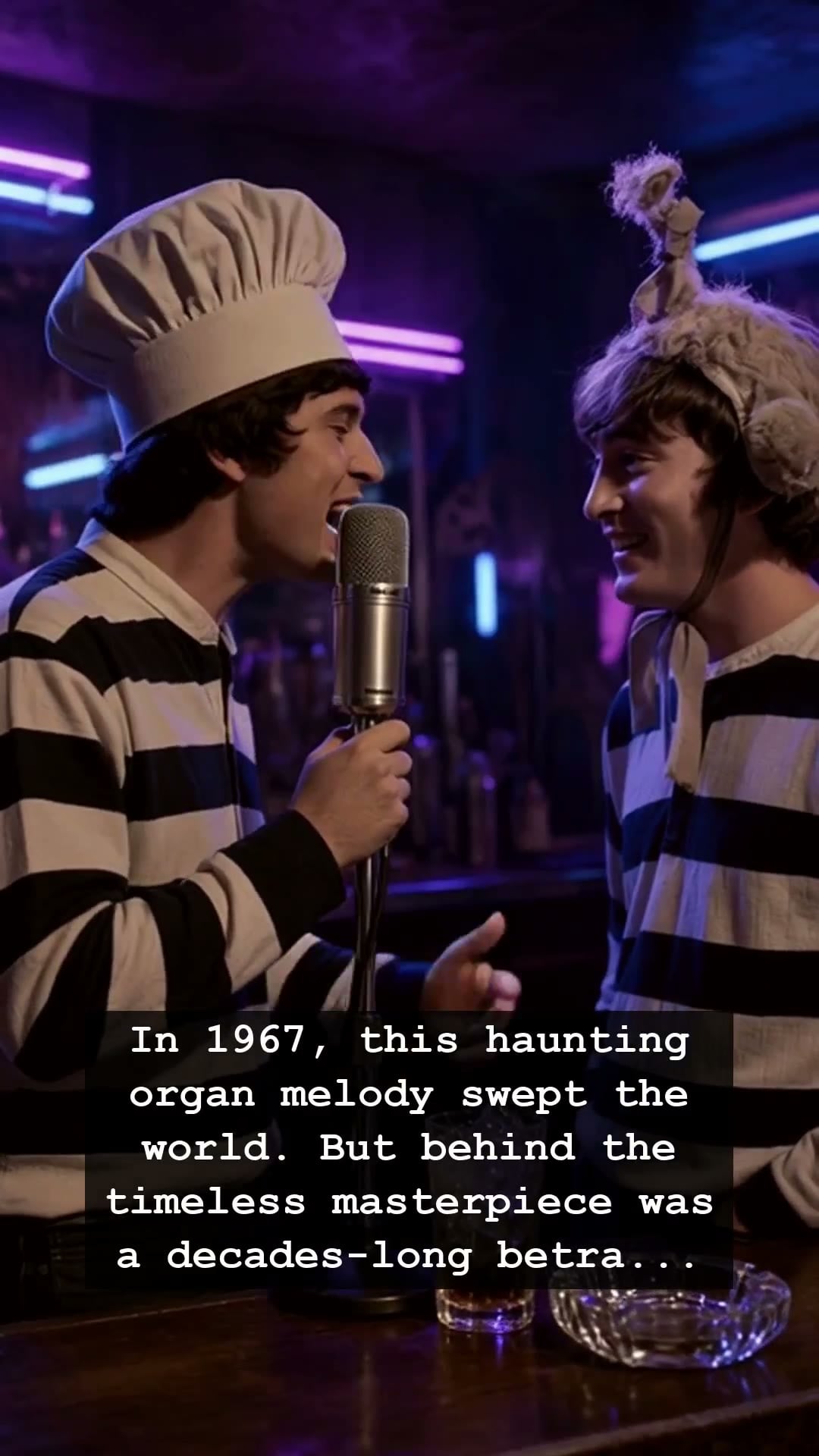
The summer of 1967 is forever etched into the collective memory as the Summer of Love. Across the airwaves, amidst the haze of incense and the counterculture spirit of Woodstock, one melody stood out like a ghost in the machine. It was A Whiter Shade of Pale, a haunting, Bach-inspired organ anthem that seemed to suspend time itself. For millions, it was the definitive sound of a generation, a track that felt both ancient and revolutionary. But beneath the ethereal, melancholic beauty of the Procol Harum masterpiece, there existed a cold, calculated betrayal that would remain buried in the shadows of the music industry for nearly four decades.
While Gary Brooker and Keith Reid were long celebrated as the geniuses behind the song, the man who actually crafted that iconic, soul-stirring organ melody was left out in the cold. Matthew Fisher, the shy, classically trained organist who introduced the world to that distinct, shimmering Hammond sound, had his creative soul erased from the official credits. For years, the public believed a narrative of singular genius, while Fisher watched from the sidelines as the song generated millions in royalties and became a permanent fixture in the soundtrack of the twentieth century. It was a classic tale of rock and roll exploitation, where the fragile egos of bandmates outweighed the reality of artistic contribution.
To listen to A Whiter Shade of Pale today is to be transported back to a world of Jukeboxes and hazy living rooms. The song possesses a gravity that few tracks from the era managed to capture, blending the complexity of baroque music with the raw, emotional hunger of sixties soul. It was the moment the organ became the lead voice of rock, pushing the boundaries of what a pop song could achieve. Yet, the story of Procol Harum is not just one of creative triumph; it is a cautionary tale about the blurred lines between friendship and commerce. The tension between the band members eventually reached a breaking point, echoing the internal fractures seen in so many legendary groups of the era.
It took until 2005 for the scales of justice to finally tilt, as a legal battle in the British courts brought the hidden history of the composition to light. The court’s decision to recognize Matthew Fisher as a co-writer was a seismic shift, a moment where history was rewritten to honor the forgotten architect of a classic. It was a vindication that came far too late for the band to ever truly mend, but it served as a poignant reminder that behind the velvet curtains of fame, the reality is often far more jagged and complicated than the liner notes suggest.
Procol Harum remains a titan of the progressive rock era, and A Whiter Shade of Pale will always be their undisputed masterpiece. As the music fades into the nostalgia of the past, we are left to wonder how many other unsung heroes helped build the sonic landscape of our lives. Next time you hear those opening chords, remember the ghosts in the studio and the long, bitter fight for the truth.