
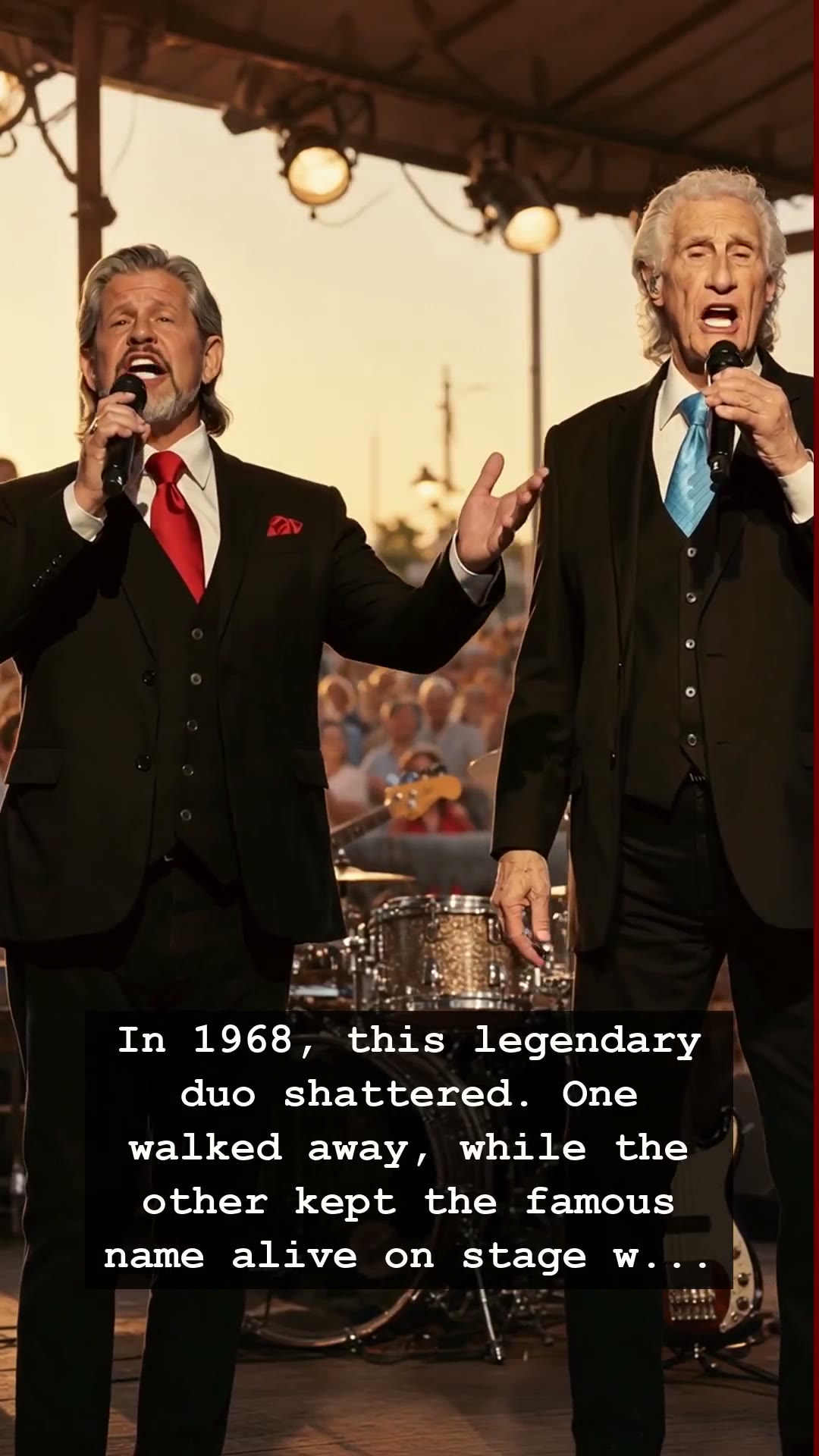
It was 1968, a year defined by social upheaval, the neon glow of shifting musical landscapes, and the haunting echo of a jukebox playing the final notes of a golden era. For the millions of fans who were captivated by the sweeping, operatic power of The Righteous Brothers, the silence that followed was deafening. Bill Medley and Bobby Hatfield were not just a duo; they were the architects of blue-eyed soul, voices that commanded the airwaves from the smoky clubs of Southern California to the international stage. Yet, behind the velvet harmonies and the towering success of hits like You’ve Lost That Lovin’ Feelin’, a slow, corrosive friction was tearing the partnership apart.
The public saw the polished suits and heard the seamless melodies, but the reality backstage was far grittier. Medley, the baritone with the soul-shaking depth, felt the crushing weight of the industry’s relentless pace and the ego-driven clashes that often accompany superstardom. In a move that shocked the music world, he simply walked away. While the world was busy tuning in to the burgeoning era of psychedelia and the rise of television spectacles, The Righteous Brothers shattered into two distinct, lonely halves. It was a dramatic exit that left fans reeling, questioning how the masters of soulful longing could end their own story with such cold indifference.
What followed was perhaps even more surreal than the breakup itself. Determined to keep the brand alive, Bobby Hatfield made the controversial decision to continue performing under the name The Righteous Brothers, but he did so alongside a complete stranger. Imagine the heartbreak of the faithful audience, walking into a concert venue expecting the electric chemistry of the original pair, only to witness a hollow reconstruction. It was a testament to the ego and the desperate grasp for past glory that often haunted the 1960s music scene, where the name on the marquee often held more power than the soul of the performance itself.
This era, sandwiched between the innocence of early rock and the decadence of the late seventies, was rife with such stories of artistic burnout and personal alienation. The Righteous Brothers represented the pinnacle of emotional vulnerability in music, yet they were not immune to the toxic pressures of fame. Their tragedy serves as a stark reminder of the cost of legacy. As we look back through the lens of nostalgia, listening to those timeless tracks on vintage vinyl, it is hard not to wonder what might have been if the tension hadn’t reached a breaking point.
Decades later, their music remains an essential pillar of the American songbook, transcending the drama of 1968. Their story remains a cautionary tale of how quickly the lights can dim when the harmony shifts to discord. Whether you are a long-time listener or a newcomer discovering the depth of blue-eyed soul, The Righteous Brothers remind us that even the most beautiful music is often forged in the fires of human imperfection. Take a moment today to listen to their work again, and you might just hear the ghosts of the friendship they once shared.