
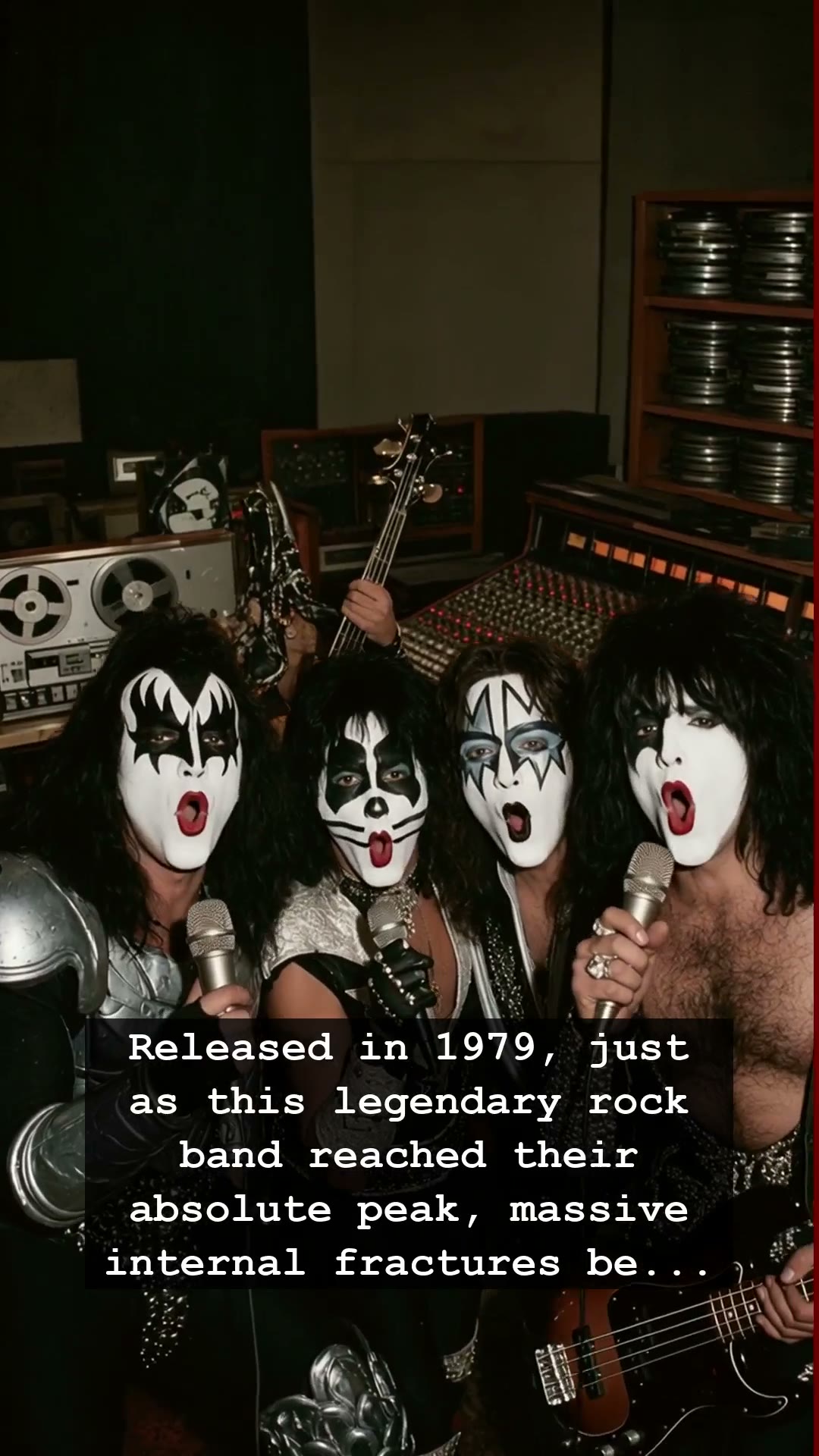
The year was 1979, and the world was painted in the neon glow of a decade coming to an explosive end. KISS, the fire-breathing, face-painted titans of rock, stood at the absolute pinnacle of their fame. They were everywhere—on lunchboxes, comic books, and blaring from the stereos of every teenagers bedroom. Yet, behind the greasepaint and the pyrotechnics, the band was rotting from the inside out. While fans were busy spinning their hit records on vinyl, the men beneath the makeup were drifting into a cold, calculated isolation that would soon tear the foundation of the group apart forever.
To understand the magnitude of KISS at this time, one must recall the atmosphere of the late 70s. The jukeboxes were humming with the excess of the era, and stadiums were becoming cathedrals for Arena Rock. KISS had mastered the art of the spectacle, turning every concert into a surrealist nightmare of blood, smoke, and sheer volume. But fame, as it often does, acted as a wedge rather than a glue. By 1979, the camaraderie that once defined the band had been replaced by resentment. The excessive touring schedules, the grueling pressure of maintaining their monstrous public personas, and the inevitable ego clashes began to consume the brotherhood they once claimed to share.
The fractures were not merely artistic; they were deeply personal. As the band climbed higher, the air became thinner, and the substance abuse that plagued the rock scene became a constant shadow over their studio sessions. The legendary discipline that had helped KISS conquer the charts was now being eroded by late-night disputes and creative territorialism. One moment they were legends capturing the collective soul of a generation, and the next, they were strangers trapped in the same dressing room, hiding behind elaborate masks that felt less like costumes and more like prison cells.
It is fascinating how we often misremember these icons. We look back at the photos from 1979 and see invincible gods of rock, but the reality was a fragile, human disintegration. The pressure to remain the biggest band in the world meant that their internal chaos was carefully guarded from the media. The public saw the flash and the fire, but they missed the slow, agonizing silence growing between the members. It was a classic tale of the dark side of stardom, where the very thing that made them famous—the total dedication to the KISS brand—ultimately robbed them of the band they had started as.
Today, we look back at the anthems from that era not just as music, but as relics of a shattered dream. The legacy of KISS remains untarnished for most, but those who dig deeper find a cautionary tale of how the weight of extreme success can dismantle even the most powerful brotherhood. As you put on your favorite vintage track tonight, listen closely to the energy. It is not just talent you are hearing; it is the sound of a band desperately trying to hold onto the magic before the clock struck midnight.