
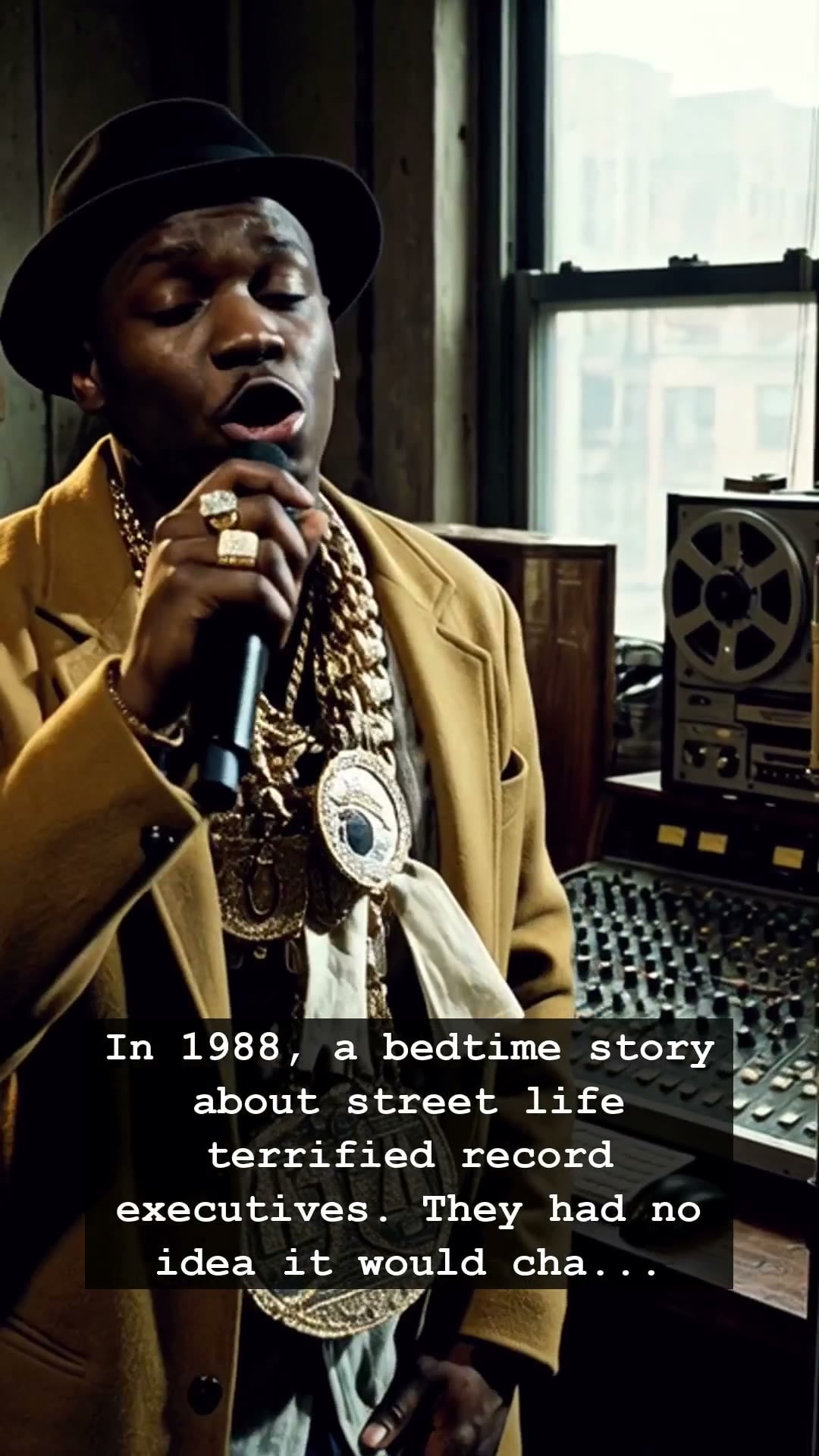
In the neon-soaked autumn of 1988, a quiet tension gripped the halls of New York’s biggest record labels. Executives were terrified of a track that sounded like a simple nursery rhyme, yet carried the cold, jagged edge of the streets. They thought it was too raw, too narrative, and perhaps too dangerous for the mainstream airwaves. They were wrong. The man behind this chilling, iconic sound was Slick Rick, a storyteller whose velvet-smooth voice masked the brutal realities of urban survival. His debut album, The Great Adventures of Slick Rick, didn’t just drop—it shattered the industry, proving that rap could be as cinematic as a Hollywood thriller.
At the center of this cultural earthquake was Children’s Story, a cautionary tale that evolved into the most sampled beat in hip-hop history. Slick Rick, draped in his signature gold chains and eye patch, possessed a charisma that felt like a bridge between the classic soul of the seventies and the gritty awakening of the late eighties. While the world was busy obsessing over the rise of the Walkman and the evolving influence of MTV, Slick Rick was crafting a new language. He wasn’t just a rapper; he was a master of cadence, turning a bedtime fable into a cautionary parable about the traps of street life. His delivery was sophisticated yet accessible, inviting listeners into his world with a wink and a warning.
What made the work of Slick Rick so revolutionary was its refusal to conform to the standard party-heavy rap of the era. He injected a dark, storytelling element into hip-hop that resonated deeply with a generation caught between the remnants of the disco scene and the burgeoning golden age of lyrical depth. Behind the scenes, the drama was just as intense as the music. The pressures of newfound fame, the legal battles that would later define his career, and the constant scrutiny of the public eye all served to heighten the mystery surrounding the artist. Yet, every time he stepped to the microphone, the noise of the industry faded, leaving only the hypnotic clarity of his voice.
Decades later, the influence of Slick Rick remains inescapable. From the golden era of boom-bap to the modern trap movement, his DNA is woven into the fabric of contemporary music. Producers continue to hunt for that specific snare hit or that rhythmic bounce that defined his sound. It is a testament to his artistry that a song originally feared by cautious executives would eventually become a pillar of American music history. He transformed the hip-hop landscape by showing us that there is power in a well-told story, no matter how harsh the truth might be.
As we look back through the lens of nostalgia, we are reminded that true legends are not just those who sell the most records, but those who change the way we listen to the world around us. Slick Rick carved his name into the annals of history not by screaming, but by whispering a story that everyone had to stop and hear. So, next time you hear that familiar, haunting beat, close your eyes and remember the man who turned a nursery rhyme into a revolution. The story never really ends, does it?