
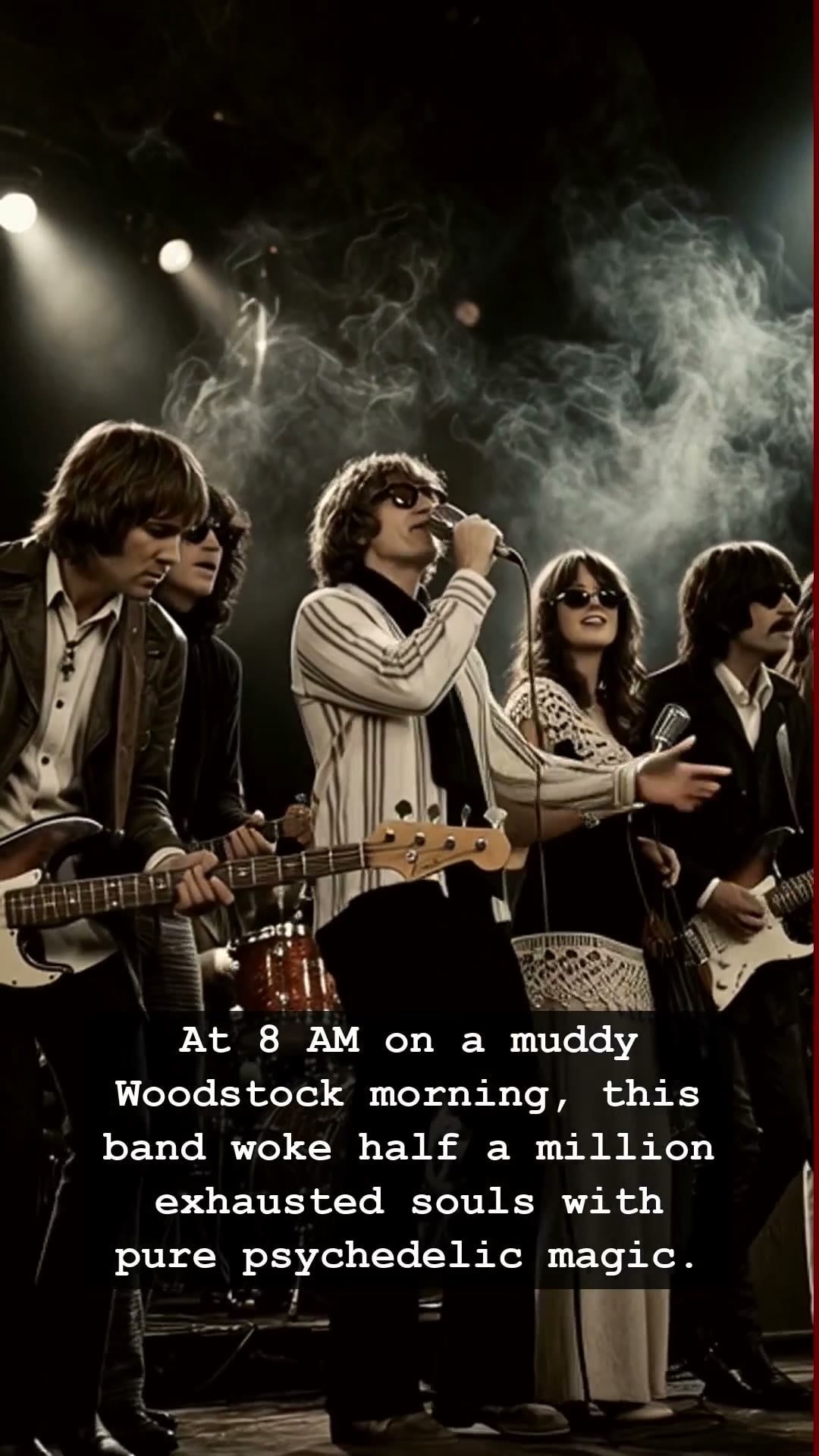
It was 8:00 AM on a Sunday in August 1969, and the world was covered in a thick, eerie mist of mud and exhaustion. Half a million souls lay scattered across the fields of Bethel, New York, their spirits dampened by days of rain and the overwhelming weight of counterculture chaos. Then, out of the hazy morning light, the sharp, jagged chords of Jefferson Airplane sliced through the silence. It was not just a performance; it was a sensory explosion that dragged a sleeping generation back to life, marking one of the most iconic, surreal chapters in rock history.
Jefferson Airplane, the architects of the San Francisco psychedelic sound, were never meant to play at that hour. They were supposed to capture the midnight fire, but scheduling delays forced them into the dawn. As Grace Slick, the fierce siren of the era, gripped the microphone, the transformation was instantaneous. The band was frayed, tired, and chemically fueled by the excesses of the time, yet they delivered a set that felt like a bridge between the dream of the sixties and the harsh reality of the decade’s end. To those who were there, it felt as though the band was soundtracking the very birth of a new sun.
Behind the legendary set lay the intense internal pressure that defined Jefferson Airplane. While they were the darlings of the Summer of Love, the band was a pressure cooker of clashing egos and creative tension. The transition from the acid-drenched experimentation of their early days to the harder, more introspective sound heard at Woodstock was a reflection of a group constantly tearing itself apart to stay relevant. They were icons of the counterculture, yet they existed in a precarious orbit of fame, substance dependency, and the relentless demands of a music industry that was only just beginning to turn rock into big business.
The magic of that morning remains etched in the collective memory of a generation that grew up with the crackle of vinyl and the hiss of the airwaves. When you hear the echo of their electric guitars today, you are transported back to a time before digital noise, back to the era of the Walkman and the communal spirit of the festival circuit. Jefferson Airplane did not just play music; they manifested the zeitgeist of an era that believed, even if just for one fleeting weekend, that music could change the trajectory of human history.
Decades later, the legend of Jefferson Airplane continues to haunt and inspire. They remain the gold standard for psychedelic rock, a reminder of a time when the stakes felt higher and the melodies felt deeper. Whether you were there in the mud or discovered their haunting anthems through the dusty grooves of a lost record, their influence is undeniable. As the sun sets on another era of music, we look back at that muddy morning in 1969 and wonder: are we still chasing that same psychedelic dream?