
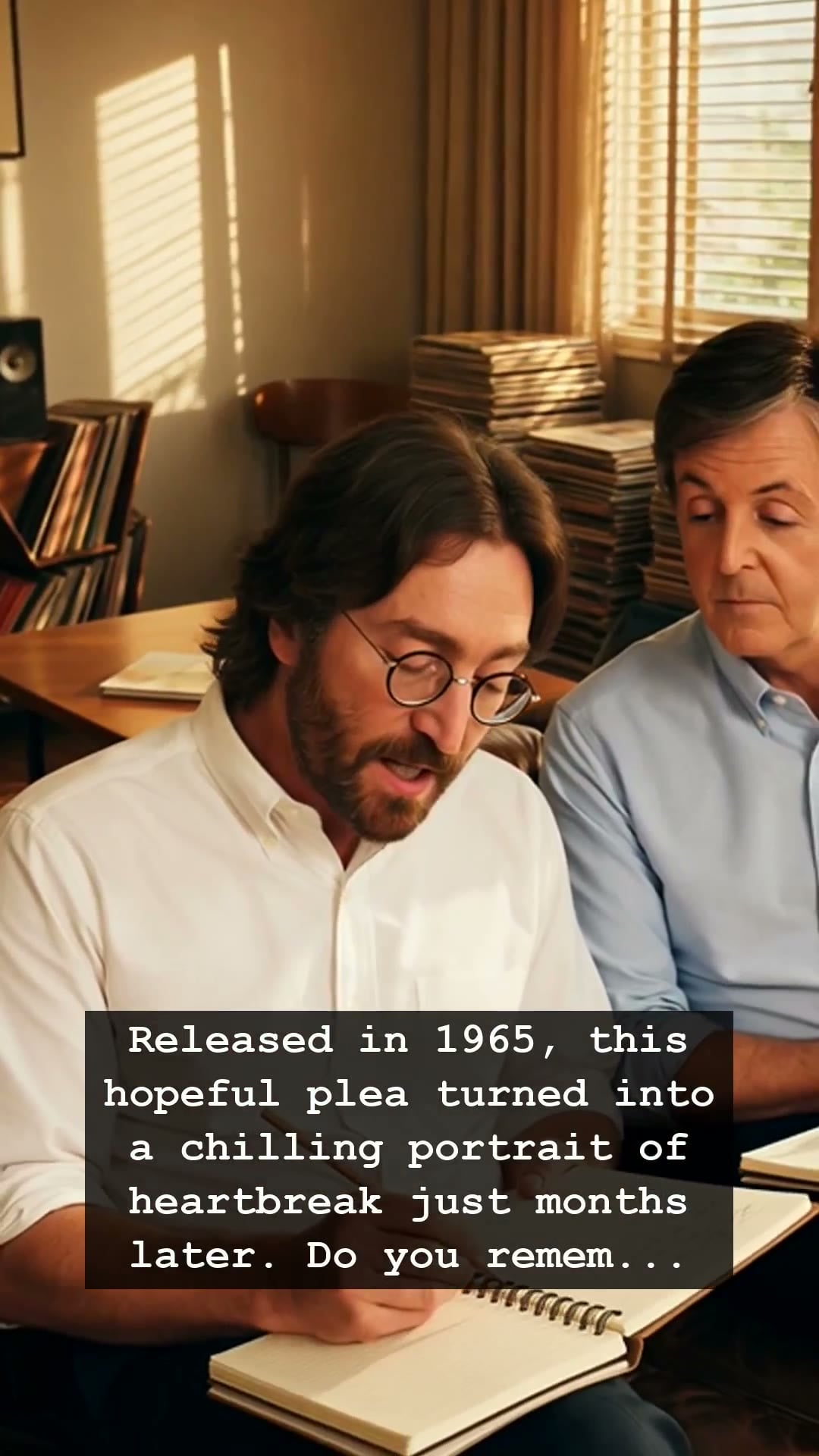
It began as a melody captured in a dream, a haunting tune that Paul McCartney feared he had subconsciously stolen from someone else. When The Beatles released Yesterday in 1965, it was hailed as a hopeful plea, a desperate acoustic ballad longing to turn back the clock. But for those who lived through the golden age of the mid-sixties, the song quickly morphed from a gentle request for reconciliation into a chilling portrait of inevitable romantic collapse. While the world was caught in the frantic fever of Beatlemania, the lyrics mirrored a deeper, more personal erosion taking place behind the closed doors of a band on the brink of shifting from global icons into isolated, weary individuals.
The genius of The Beatles lay in their ability to make the private seem universal. In 1965, the airwaves were dominated by the vibrant, high-energy sounds of the British Invasion, yet Yesterday stood as a minimalist anomaly—just a man, his guitar, and a string quartet. This was a radical departure for a group known for their electric, stadium-filling anthems. It was a moment of vulnerability that resonated deeply in the era of the Jukebox and the burgeoning cultural revolution. Fans huddled around their transistor radios, feeling the weight of the song’s lyrics as if they were their own, oblivious to the fact that their favorite idols were also struggling with the isolation that fame had thrust upon them.
Behind the scenes, the story was far more turbulent. The recording of the track marked a significant divide in the group. John Lennon, George Harrison, and Ringo Starr were initially skeptical of McCartney recording a solo track with orchestral accompaniment, marking one of the first times The Beatles stepped outside their standard four-man configuration. It was a subtle, artistic crack in the foundation that would eventually widen into the chasm leading to their breakup. The song captured a nostalgia for a time before the crushing weight of public scrutiny, back when love was simple and the future was not yet defined by the chaos of constant touring and media madness.
As the months ticked by after its release, the song became synonymous with the heartbreak of a generation. It mirrored the collective disillusionment that would soon come to define the late sixties as the dreamy optimism of early pop began to fade into the more complex, cynical landscapes of rock history. Every time McCartney hit those opening chords, it wasn’t just a performance; it was a snapshot of a fleeting, golden moment that was already disappearing into the rearview mirror of history.
Today, Yesterday remains one of the most covered and enduring songs in music history, a testament to the songwriting prowess that propelled The Beatles to the top of the world. It serves as a haunting reminder that even at the height of fame, the deepest scars are often the ones we carry in silence. Whether you are revisiting the vinyl records of your youth or discovering the magic for the first time, this song invites you to pause and reflect on the moments that define our own personal histories. Take a walk down memory lane and listen once more; you might be surprised at what you hear hidden between the notes.