
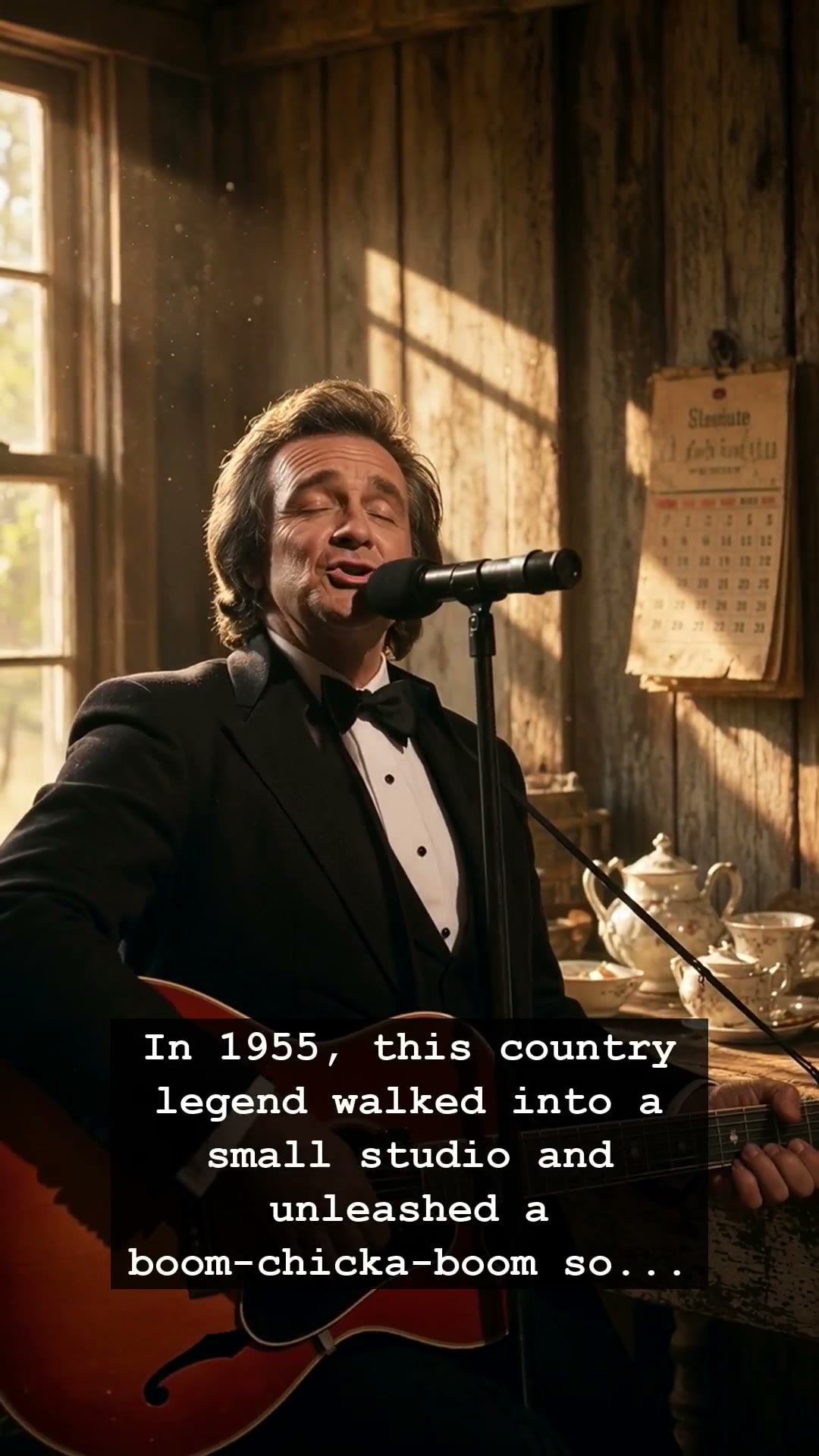
In 1955, the air in Memphis was thick with the scent of cheap cigarettes and the buzzing promise of something revolutionary. A young, gaunt man with eyes like polished obsidian walked into the legendary Sun Records studio. He wasn’t there to follow the polished, syrupy standards of Nashville’s elite; he was there to unleash a sound that rattled the very foundations of American country music. When Johnny Cash first strummed those strings, he didn’t just play a tune; he channeled the ghosts of a thousand train tracks and the relentless, driving heartbeat of the common man. It was the birth of the boom-chicka-boom rhythm, a sonic freight train that arrived at a station Nashville wasn’t ready for.
At the time, the country music establishment was obsessed with pristine arrangements and high-gloss production values that smoothed over the rough edges of human experience. When Johnny Cash arrived, he brought the grit of his upbringing—the dark, dusty reality of poverty and labor. Executives were baffled, even terrified. This was not the music they knew how to market to the masses. It was too raw, too haunting, and deeply human. But beneath that apprehensive exterior, there was an undeniable magnetic pull. Johnny Cash was not merely an artist; he was an outlaw spirit masquerading as a folk singer, capturing the restless soul of a generation standing on the precipice of the rock and roll explosion.
While the jukeboxes of the mid-50s were filled with crooners, Johnny Cash stood apart, clad in his signature black. His presence was an omen of the coming decade of rebellion. He didn’t need elaborate studio gimmicks or synthesized polish. He had the power of his narrative and the rhythm of his life. This era, framed by the lingering tension of post-war uncertainty and the burgeoning youth culture, found a hero in him. He carried the weight of the forgotten, the imprisoned, and the broken, turning his performances into cathartic rituals that would eventually lead to iconic moments at Folsom Prison and beyond.
What makes the legend of Johnny Cash so enduring is that he never compromised his truth for the sake of chart positions or critical acclaim. The dramatic tension in his music mirrored the internal conflict of his personal battles, from his struggles with substance abuse to his search for spiritual redemption. He transformed the American stage into a confessional booth. Whether he was playing to a handful of people in a small club or in front of massive crowds during the later years of his career, the intensity remained the same—a piercing stare and a voice that sounded like a deep, tectonic shift.
Today, when we look back at the trajectory of American music, we see the echoes of that 1955 session everywhere. From the roots of rock and roll to the authentic storytelling of modern Americana, the influence of Johnny Cash is a permanent fixture in our cultural DNA. He proved that you don’t need to fit into the industry mold to reach the pinnacle of success; you simply need to own your shadow. As the world moves faster and the digital age clouds our past, the memory of that raw, boom-chicka-boom beat remains a grounding force. Next time you hear a record crackle on an old turntable, listen closely for the ghost of the Man in Black, still walking the tracks, waiting for the whistle to blow.