
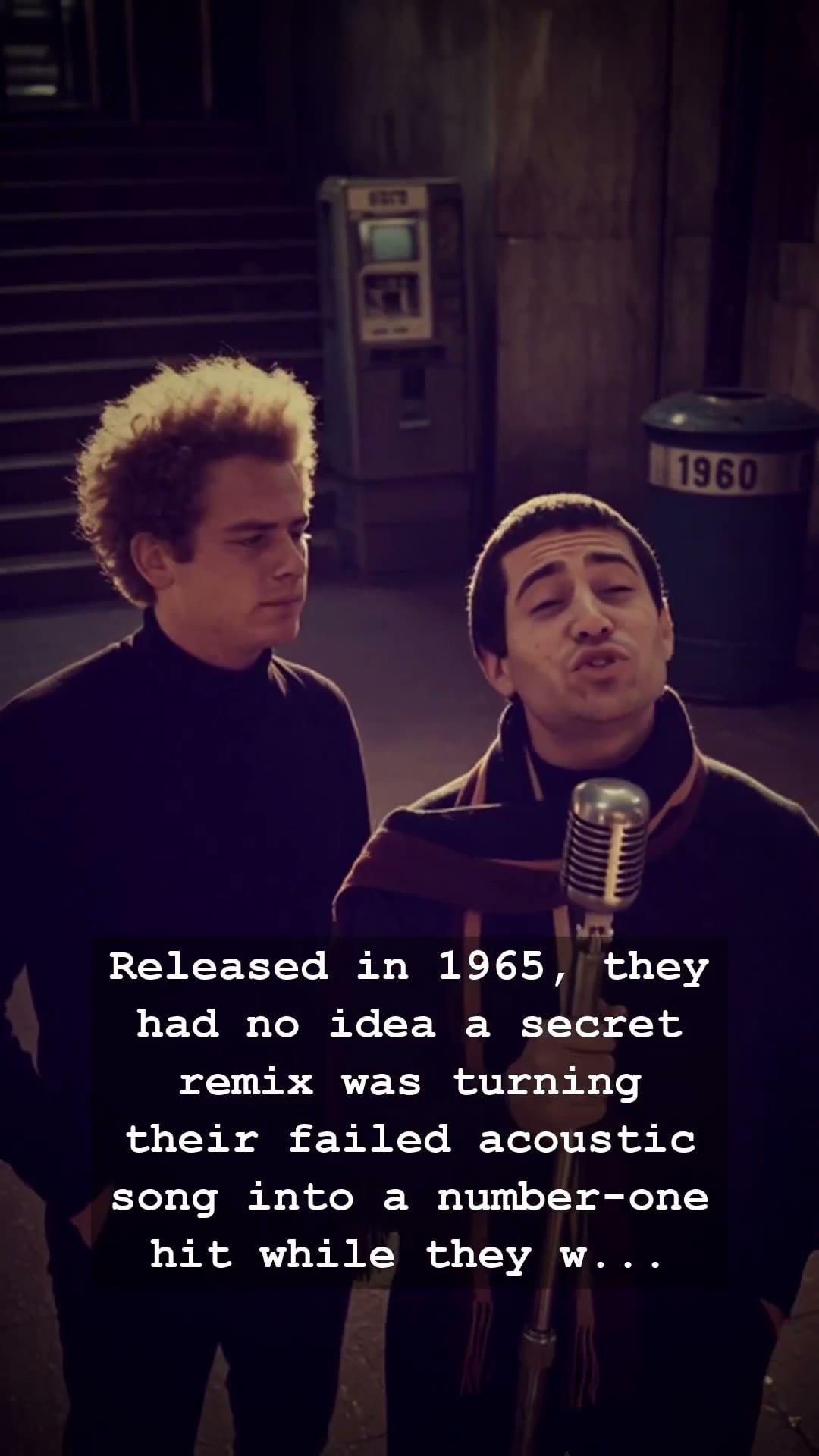
In the dusty corners of 1965, a folk duo by the name of Simon and Garfunkel was on the verge of fading into the obscurity of failed dreams. Their debut album had flopped, the acoustic version of The Sound of Silence had vanished into the ether, and the two friends had essentially parted ways. Paul Simon was living in England, chasing a bohemian dream, while Art Garfunkel had returned to his studies at Columbia University. They were convinced their music careers were over, completely unaware that a quiet revolution was happening in a New York recording studio behind their backs.
Without their permission or knowledge, a producer at Columbia Records decided to take their lackluster acoustic folk track and breathe new, forbidden life into it. He added an electric guitar, a bass line, and drums, turning the gentle ballad into a haunting piece of folk-rock. This secret remix hit the airwaves while the duo was thousands of miles apart. When the song began to climb the charts, moving rapidly toward the number-one spot, neither Paul nor Art had any idea they were becoming the faces of a new American sound. It was the ultimate irony; the song that was meant to signify their defeat became the catalyst for their global dominance.
This was the dawn of the mid-sixties, a time when the Jukebox in every diner was shifting from the sweet melodies of early rock to the introspective, electrified folk that defined the era. The success of The Sound of Silence was not just a commercial win; it was a cultural lightning strike that forced Simon and Garfunkel back together. Their reunion was born out of this strange, technological manipulation—a stark reminder of how disconnected artists were from the machinery of the music industry back then, before the instant feedback loop of the modern digital age.
As the song skyrocketed, Simon and Garfunkel had to navigate the jarring transition from struggling folk singers to international pop icons. The tension between their artistic integrity and the massive commercial demand became a defining hallmark of their career. They were suddenly the voice of a generation, yet their relationship was constantly tested by the pressures of fame and the haunting reality that their greatest success had started as a clandestine studio experiment. The drama behind their rise is a perfect snapshot of an era where studio wizardry could redefine destiny.
Today, the legacy of Simon and Garfunkel remains etched in the collective memory of anyone who lived through the golden age of vinyl and radio. Their story serves as a poignant reminder that history is often written in the shadows, far from the spotlight, by unexpected turns of fate. Whether you first heard their harmonizing voices through a crackling transistor radio or a polished Walkman, the impact of that secret remix still resonates today. It is a testament to the fact that sometimes, the most enduring art is born from the chaos we least expect.