
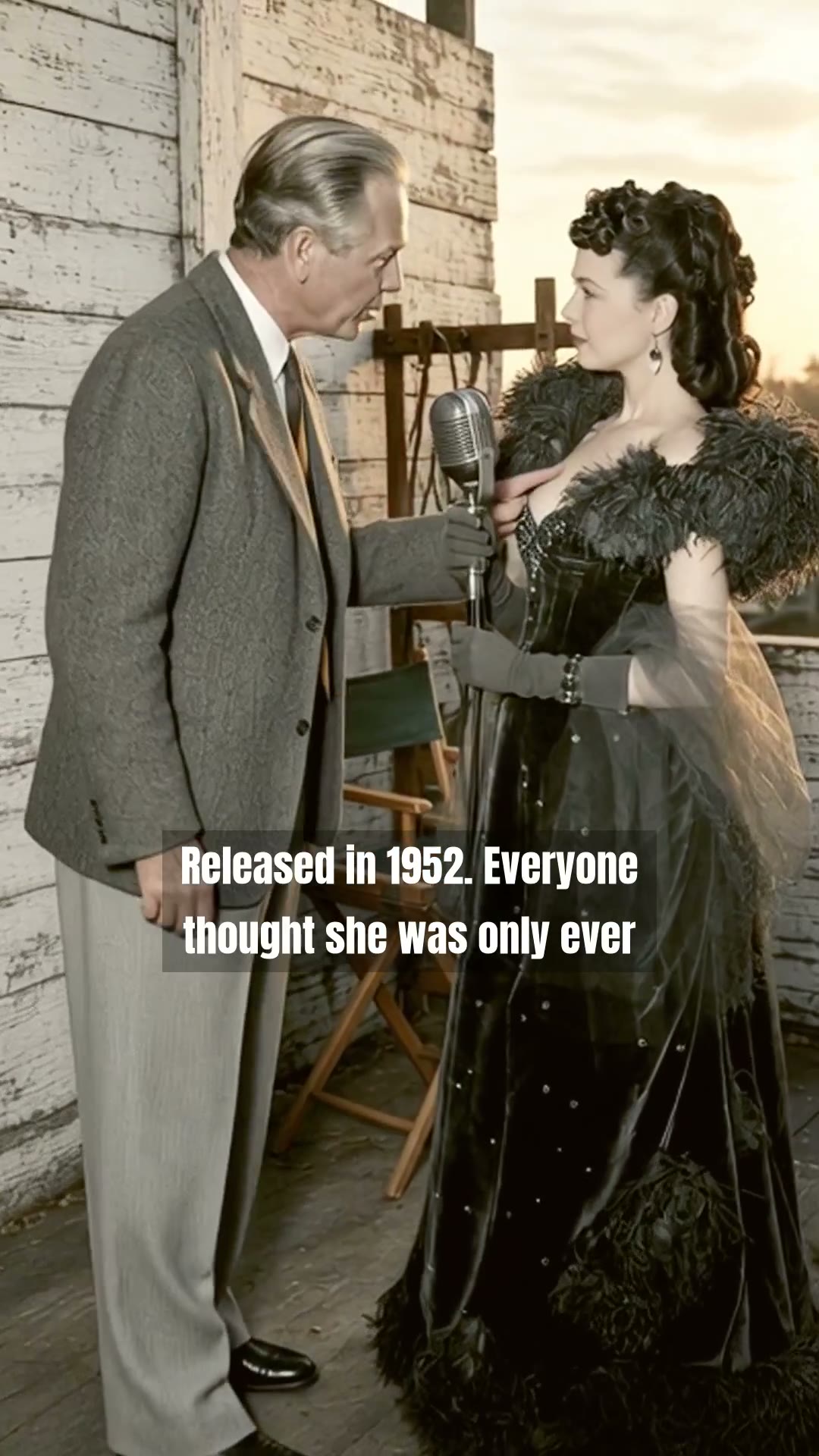
For many, the mention of Vivien Leigh conjures the lush, rolling hills of Tara and the stubborn, green-eyed gaze of Scarlett O’Hara. It was a role that etched her into the fabric of the Golden Age of Hollywood forever. Yet, to categorize her legacy solely by the silhouette of a Southern belle is to overlook the profound, jagged beauty of the woman who breathed life into so many other shadows. Nowhere is this truer than in her transcendent, haunting performance in the 1952 masterpiece A Streetcar Named Desire, a role that proved her talent was not merely a lightning strike, but an enduring, flickering flame of pure, unadulterated emotion.
By 1952, the world expected the glamour of the Silver Screen, the polished perfection of a starlet who could wear a hoop skirt with effortless grace. Instead, Vivien Leigh delivered a portrayal of Blanche DuBois that felt dangerously raw, a stark departure from the typical blockbuster roles of that era. Method acting was beginning to change the landscape of film, bringing a psychological intensity that challenged both the audience and the actors. Leigh did not just play Blanche; she inhabited her. She channeled a fragile, deteriorating grace that left audiences breathless, capturing the exact moment when a dream finally gives way to the harsh, unforgiving light of reality.
Watching the film today, one cannot help but be struck by the courage it took for a star of her magnitude to strip away all vanity. In an era before the digital polish of modern cinema, her performance relied entirely on the architecture of her face—the way her eyes darted with uncertainty or the slight, trembling tremor of her hands. It was a performance defined by profound vulnerability, a stark contrast to the strength she displayed in her previous iconic roles. It remains one of the most heartbreaking depictions of human frailty ever captured on celluloid, a testament to her dedication to the craft that often went beyond what the studios demanded.
Vivien Leigh was a woman of immense complexity, often battling the internal storms that mirrored the turbulence of the characters she chose to portray. Her commitment to the theater and the screen was total, a lifelong dance with the art of performance that demanded everything she had to give. Those who saw her in the fifties often recall not just her beauty, but the uncanny intelligence that sat behind her gaze. She was a bridge between the classic elegance of old Hollywood and the psychological depth that defined the later decades of the twentieth century.
Even as the years have passed and our screens have grown wider, the resonance of her work has not faded. We look back at the Oscar nights of yesteryear and remember the legends, but we truly cherish those who dared to show us the broken pieces of the human heart. Vivien Leigh remains an eternal icon, a reminder that true art is not about being remembered for one role, but about the bravery to show the world the many different colors of the soul. Her legacy is etched deep into the walk of fame of our collective memory, a beautiful, melancholy melody that continues to play long after the house lights have dimmed.