
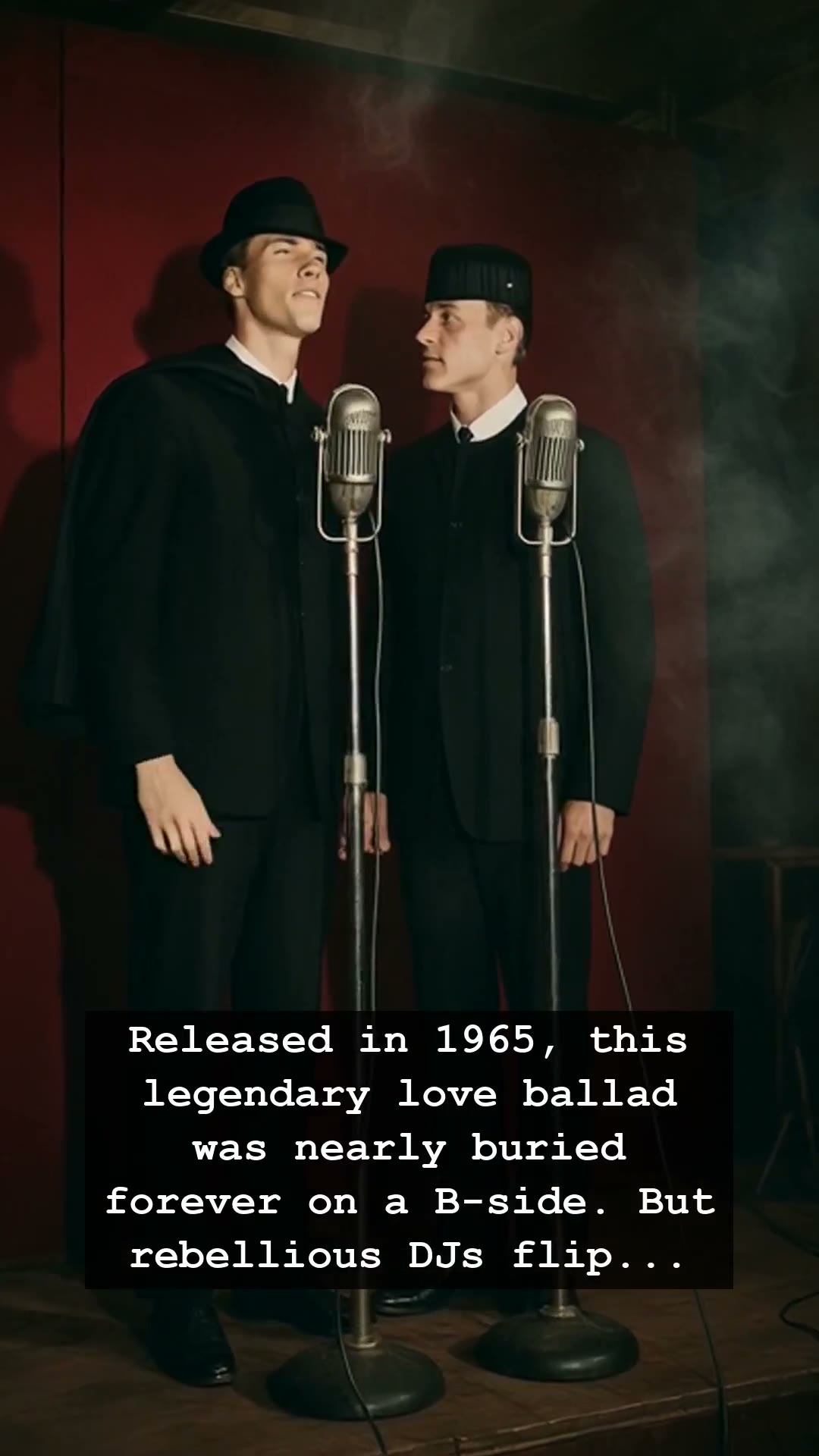
Imagine a humid summer night in 1965, the air thick with the smell of exhaust and anticipation. You are sitting in a booth at a local diner, the jukebox flickering with neon light, waiting for that one song to cut through the hum of conversation. When the opening notes of Unchained Melody finally begin to pulse through the speakers, time seems to freeze. It is a moment of pure, cinematic magic, yet few people know that this immortal anthem was never intended to reach the world’s ears. The Righteous Brothers, a duo defined by their blue-eyed soul and towering vocal range, were almost forced to watch their greatest masterpiece fade into total obscurity before it ever stood a chance.
In the high-pressure world of mid-60s recording studios, producers held all the cards, acting as gatekeepers to the airwaves. Phil Spector, the legendary but notoriously controlling producer behind the track, had relegated Unchained Melody to the lowly position of a B-side. It was meant to be the forgotten filler on a 45-rpm record, a discarded scrap of music left to gather dust in the shadow of the A-side. The industry giants of that era cared little for the raw, emotional vulnerability that Bill Medley and Bobby Hatfield poured into their performance. To the executives, it was simply product, and the product was destined for the bargain bin of history.
However, the power of music often transcends the boardroom. Across the country, rebellious radio DJs, tired of playing the rigid hits chosen by major labels, began flipping the records. They heard something in the sweeping intensity of Bobby Hatfield’s vocal delivery that the executives missed. As the track gained traction on the airwaves, the public reacted with an overwhelming intensity that no amount of corporate marketing could manufacture. The song became a runaway phenomenon, catapulting The Righteous Brothers into a level of fame that changed their lives forever. It proved that a soul-stirring performance could defy even the most suffocating industry gatekeeping.
The success of the song remains a testament to the golden era of American music, a time when a simple needle drop on a turntable could ignite a national obsession. The Righteous Brothers possessed a unique ability to bridge the gap between pop and soul, creating a sound that felt both intimate and grand. Their partnership, while often fraught with the typical tensions of two massive talents sharing a single spotlight, produced a level of authenticity that listeners today still crave. It was a time of Walkmans, late-night radio, and the genuine discovery of music that felt like a secret between the listener and the performer.
Today, we look back at this moment as a pivotal turning point in rock and roll lore. The story of how Unchained Melody defied its B-side fate is a reminder that the best music often finds its own way to the heart. Whether you remember hearing it for the first time on a crackling transistor radio or discovering it through the lens of classic cinema, the song retains its haunting power. The Righteous Brothers did more than just record a hit; they captured the vulnerability of the human condition in a way that remains etched in our collective memory. Take a moment today to put on the record, close your eyes, and listen to the song that refused to be buried.