
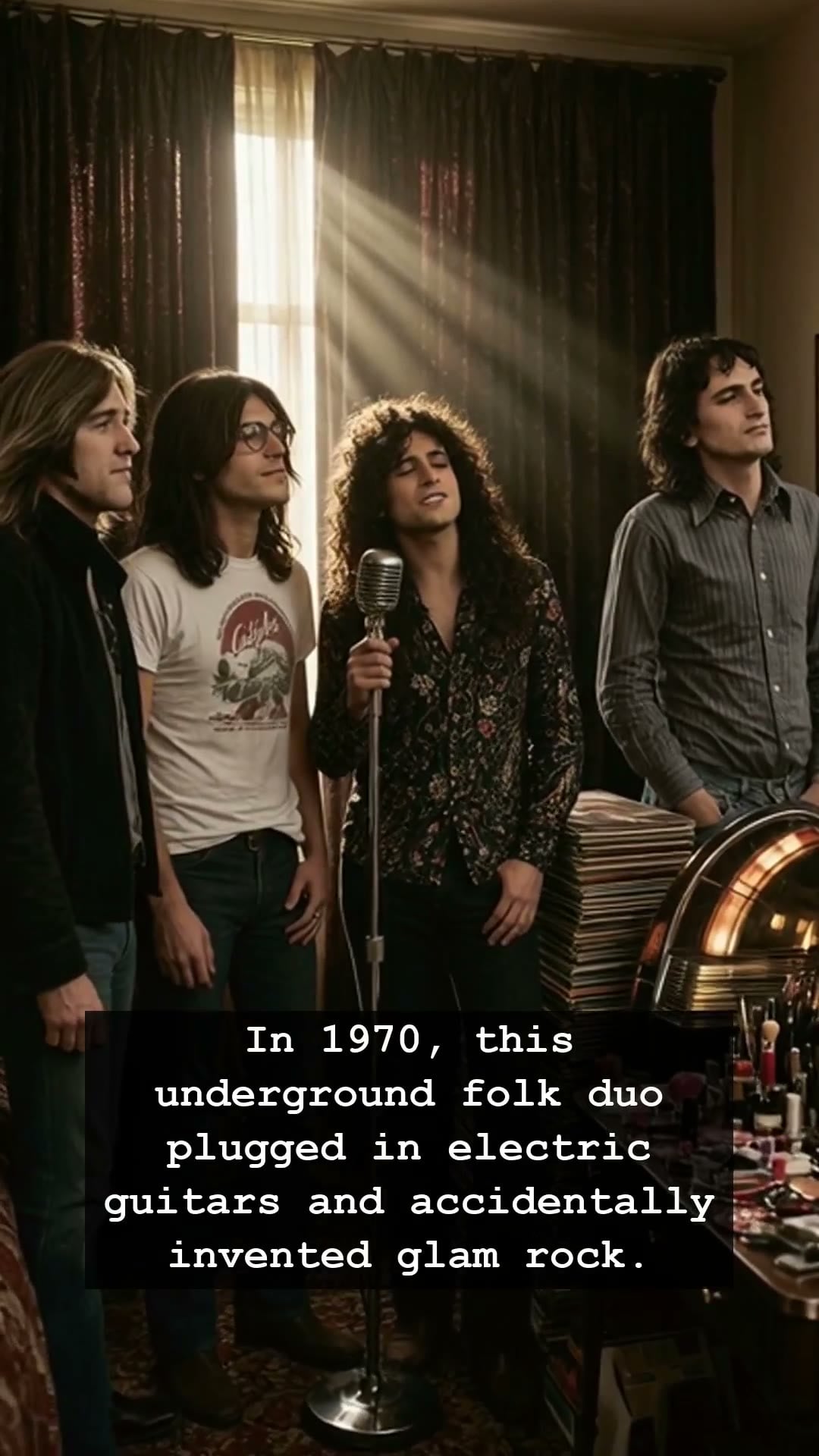
It began as a desperate gamble in a dimly lit studio in 1970. Marc Bolan, the mastermind behind the underground folk duo Tyrannosaurus Rex, looked at his acoustic guitar and realized that the whimsical, bohemian folk sound was failing to capture the imagination of a restless generation. With a flick of a switch and a distortion pedal, he traded his ethereal folk roots for a high-voltage, electric roar. By simply plugging in and shortening the name to T. Rex, Bolan didn’t just pivot his sound; he accidentally birthed the glittering, dangerous, and high-fashion world of glam rock, forever altering the trajectory of popular music.
Before the glitter and the platform boots, the late sixties were fading into a haze of burnout. The hippie dream was splintering, and the music industry felt stagnant. Then came the arrival of T. Rex. Suddenly, the charts were no longer dominated by earnest protest songs but by the pulsating, primal beat of Ride a White Swan. Marc Bolan stood at the center of this storm, draped in velvet, shimmering in glitter, and wearing an attitude that screamed stardom. It was a visual and sonic revolution that hit the British charts like a lightning strike, proving that rock and roll could be theater as much as it could be music.
Behind the shimmering sequins of T. Rex lay a story of intense creative obsession and the dark weight of sudden fame. Bolan was a man possessed, driven by an almost manic need to be a superstar. The studio atmosphere was thick with ego and innovation, as the band crafted a sound that felt alien, space-age, and deeply sexual. For those who spent their nights under the neon pulse of clubs or glued to their radios waiting for the next hit, T. Rex represented a forbidden escape. It was the birth of a subculture where identity was fluid, and the stage was a place for transformation rather than mere performance.
This era was defined by the sensory overload of the early seventies, a time before the cold digitization of the modern age. It was the era of the Jukebox, the crackle of vinyl on a turntable, and the fashion of the street. T. Rex became the soundtrack to a generation that wanted to feel something shiny and sharp. Bolan’s influence was undeniable, paving the way for everyone from David Bowie to the flamboyant icons of the late glam metal movement. He turned rock into a pageant, teaching his audience that being a rock star was not just about the notes you played, but the shadow you cast while playing them.
Decades later, the legacy of T. Rex remains etched into the foundation of music history. Even now, the opening chords of Get It On or Telegram Sam carry that same electric charge, evoking memories of a time when rock music felt dangerous and vital. Whether you discovered them through a dusty record sleeve or a faded memory of a radio broadcast, the magic of that transition from folk to the glitz of the glam era is timeless. Marc Bolan’s tragic early end only added to the myth, ensuring that he remains forever young in our collective memory, permanently suspended in the spotlight of his own creation. Do you still remember that first time you heard that T. Rex sound and realized the world had changed?