
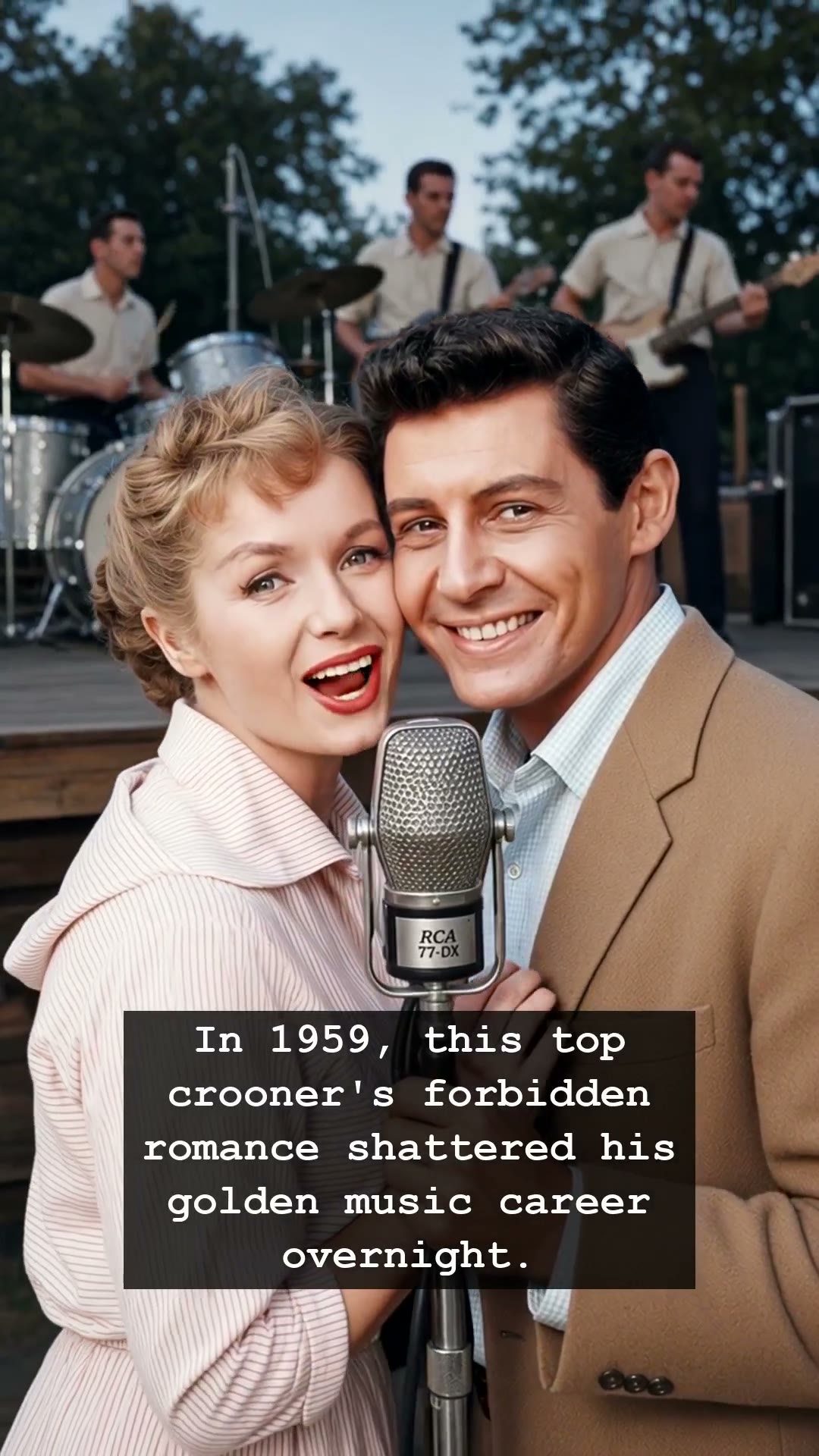
In 1959, the airwaves were dominated by the smooth, melodic crooning of Eddie Fisher. He was the golden boy of the post-war era, a man who could command a sold-out theater with a single note and leave millions of American housewives swooning by their Jukebox machines. He was married to the ultimate sweetheart of the screen, Debbie Reynolds, and together they embodied the wholesome, untouchable perfection of 1950s Hollywood. But behind the glitz and the velvet curtains, a catastrophic collision of passion and betrayal was waiting to unravel the fabric of his meticulously crafted life. All it took was one invitation from a grieving widow, and his career plummeted from the stratosphere into an abyss of public scorn.
That widow was none other than the legendary Elizabeth Taylor, who had recently lost her husband, the film producer Mike Todd, in a tragic plane crash. Eddie Fisher was Todd’s best friend, the man tasked with comforting the woman who was quickly becoming the world’s most dangerous screen siren. What started as a gesture of kindness soon curdled into a scandalous, forbidden affair that shocked the nation. To the American public, Eddie Fisher was not just an adulterer; he was a pariah who had betrayed his best friend’s memory and his own picture-perfect family. The moral outrage was instantaneous and suffocating, marking the end of his status as a radio darling.
At the height of the pre-Beatles era, your personal life was your brand. When the news broke, the backlash was seismic. Sponsors dropped him, radio stations pulled his records, and the man who had topped the charts with hits like Oh! My Pa-Pa found himself a social exile. It was a brutal reminder that in the golden age of American entertainment, the illusion of morality was often more valuable than the talent itself. Elizabeth Taylor, with her violet eyes and magnetic charm, survived the scandal largely unscathed, but Eddie Fisher was left with nothing but the remnants of a shattered legacy.
Walking through the history of this period, one can almost hear the crackle of a radio playing his once-beloved ballads. The tragedy of Eddie Fisher is a quintessential tale of mid-century celebrity, where a single headline could erase years of hard-won success. It was a time when the lines between the performer and the person were nonexistent, and the audience demanded total purity from their idols. Looking back from our modern perspective, it feels like the final death rattle of an innocent, rigid era before the wild, untethered cultural shifts of the 1960s took hold.
Today, the memory of their union lingers as a haunting artifact of mid-century gossip. It was a messy, public implosion that serves as a cautionary tale of how quickly the spotlight can turn into a burning, destructive force. Even decades later, the name Eddie Fisher is forever linked to that fateful moment in 1959. As we look back at the photos and hear the echoes of those old vinyl records, we are reminded that fame has always been a dangerous game, one that often demands everything in exchange for a fleeting moment of passion.