
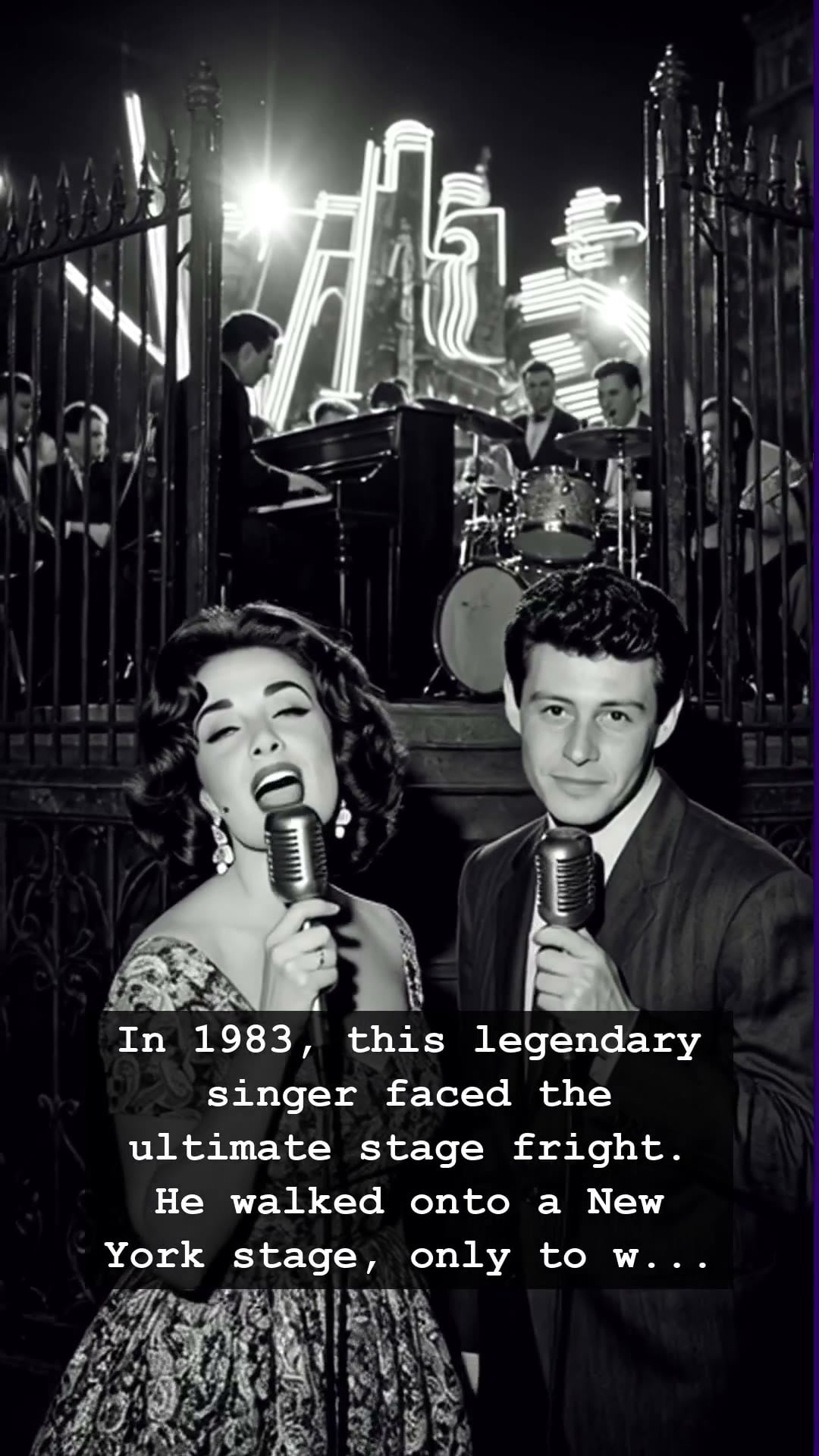
It was 1983, a year defined by the neon glow of the nascent MTV era and the synthetic pulse of drum machines. Yet, in a dimly lit corner of a New York stage, a different kind of history was being written—a quiet, crushing tragedy that would signal the end of an era for the golden age of American crooners. Eddie Fisher, the man whose velvet voice once commanded the airwaves and topped the charts with an almost religious fervor, stepped into the spotlight for what was billed as a triumphant comeback. But the man who emerged from the wings was a shadow of the superstar who had captivated millions in the fifties. As the opening notes hit the air, Eddie Fisher froze. The weight of decades of tabloid scandals, fractured marriages, and a voice weathered by time pressed down on him, and with a single, haunting motion, he walked away. He never returned to the professional stage again, leaving behind a silence that echoed louder than any standing ovation.
To understand the magnitude of that 1983 moment, one must look back to the mid-century landscape of jukeboxes and smoke-filled ballrooms. Eddie Fisher was the ultimate heartthrob, a quintessential icon of post-war Americana. Before the British Invasion and the psychedelic rebellion of the late sixties, it was the smooth, emotive delivery of singers like Eddie Fisher that anchored the nation’s musical identity. He was the golden boy of his generation, living a life that seemed plucked from a Hollywood script. Yet, the same magnetism that made him a household name also made him a lightning rod for tragedy. His tumultuous personal life—most notably his marriage to Elizabeth Taylor—became a public obsession, turning the singer into a prisoner of his own fame. The headlines did not just report his life; they slowly eroded the private man behind the polished tuxedo.
By the time the eighties arrived, the musical landscape had shifted dramatically. Disco was fading, synth-pop was taking over, and the industry had little room for the traditional vocalists who had defined the fifties. Eddie Fisher was trying to navigate a world that felt alien to his roots, a world that prioritized visual spectacle over raw vocal purity. This professional alienation, coupled with the long-term psychological toll of intense public scrutiny, created the perfect storm of stage fright. When he walked away that night in New York, he wasn’t just abandoning a performance; he was walking away from the suffocating pressures of a lifetime in the spotlight. It was a final, desperate act of autonomy for a man who had been public property for over thirty years.
Today, we look back at the career of Eddie Fisher not just for his hits, but for the stark reality of his decline. He serves as a poignant reminder of the darker side of fame during the mid-century golden age. While we romanticize the era of vinyl records and live orchestras, the reality for artists like Eddie Fisher was often defined by grueling schedules and a loss of personal agency. His departure in 1983 remains a heartbreaking bookmark in musical history—a moment where the man finally chose peace over the relentless demand for one more song.
Perhaps it is time we remember him not for the scandal, but for the moments when his voice still had the power to make the world stand still. Even as the culture moved toward the loud, synthesized future of the late twentieth century, the echo of his classic ballads remains. Eddie Fisher was the last vestige of a fading dream, and his final walk off the stage reminds us that even the brightest stars are human, capable of breaking under the weight of a spotlight that never truly dims. Let us remember the music, and respect the man who finally decided it was time for the curtain to fall.