
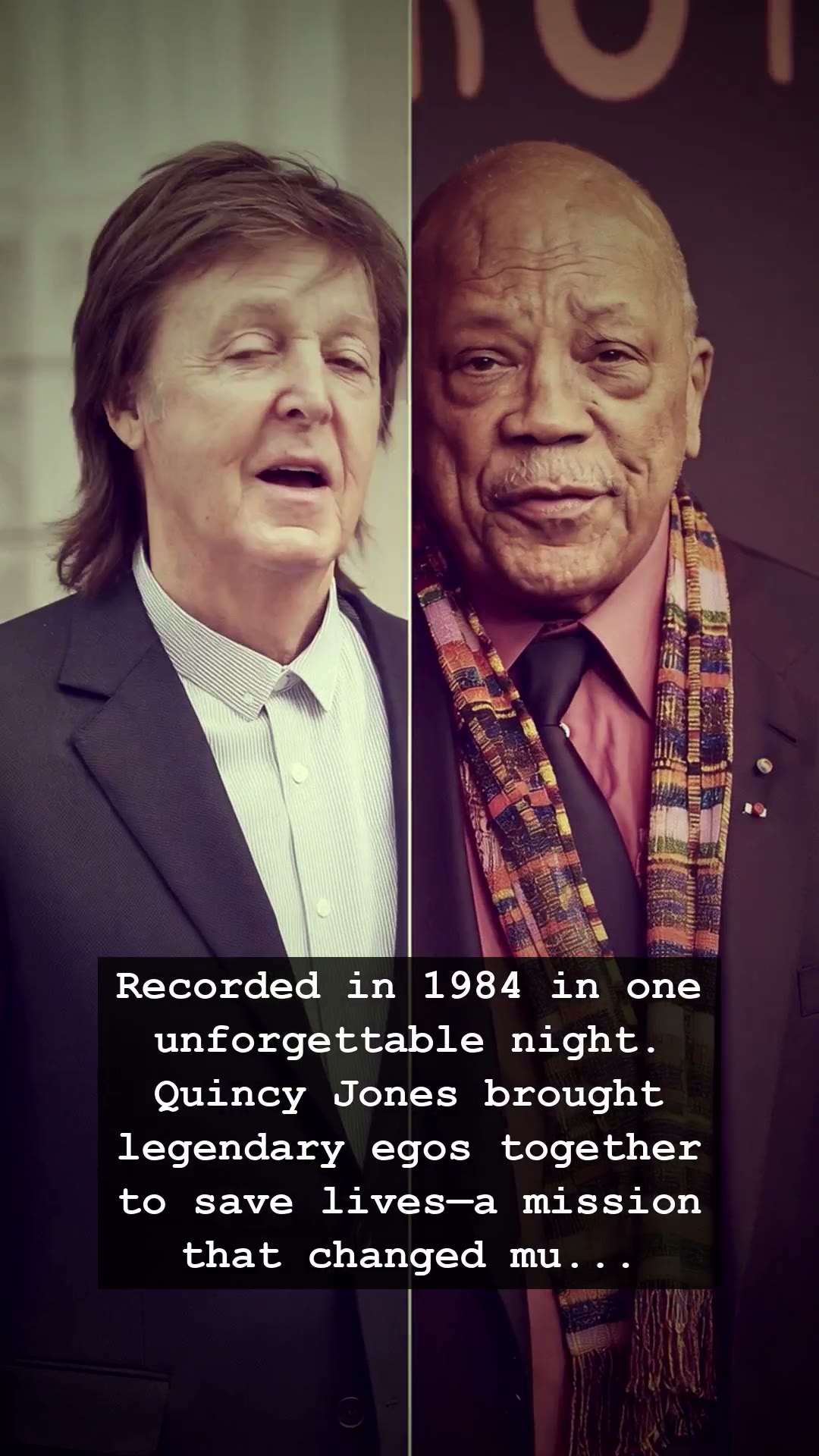
It was January 1984, and the air in Los Angeles was thick with the kind of volatile energy that usually precedes a disaster. But inside A&M Studios, a different kind of history was being written. Quincy Jones, the maestro who had already shaped the landscape of modern sound, faced a challenge that would have broken a lesser producer: corralling the biggest, most fragile egos in the music industry into a single room. The mission was simple in theory—to record a charity single to combat famine in Ethiopia—but in practice, it was a social minefield where one wrong word could shatter the entire project.
Quincy Jones knew that to make magic happen, he had to enforce a rule that sounded almost insulting to the stars arriving at the studio: Check your egos at the door. Imagine the scene: Michael Jackson, Bruce Springsteen, Diana Ross, Bob Dylan, and Cyndi Lauper, all standing under the harsh fluorescent lights of the studio, stripped of their entourages and their usual pedestals. The legendary producer stood at the helm, a calm anchor in a storm of superstardom, guiding them toward a singular purpose. It was a pressure cooker environment, yet Quincy Jones navigated the tension with the finesse of a master chess player, ensuring that every voice, from the raspy grit of Dylan to the soaring heights of Lionel Richie, served the song rather than their own fame.
This was the height of the MTV era, a time when music was becoming as much about visual spectacle as it was about the melody. The studio walls were papered with the dreams and anxieties of a generation watching the world suffer from afar. Quincy Jones understood that the audience didn’t want to see celebrities acting like divas; they wanted to see humanity. As the hours stretched deep into the night, the glamour faded, replaced by the exhaustion and the raw vulnerability of people who were genuinely trying to make a difference. The exhaustion, the sweat, and the sheer grit captured that evening created a sound that would define the mid-eighties.
The resulting anthem, We Are the World, became more than just a hit record; it became a cultural phenomenon that proved music could serve as a bridge between tragedy and hope. Behind the polished final mix, there remained the memory of that frantic night. It stands as a testament to the influence Quincy Jones commanded, not just through his arrangements, but through his ability to unite competing forces for a common good. In an age of high-production excess and synth-pop synthesizers, this moment felt strangely, beautifully human.
Today, we look back at that session as the ultimate moment of unity in popular music history. Quincy Jones didn’t just produce a song; he facilitated a miracle of cooperation. As we revisit these tracks on our vintage turntables or digital playlists, we aren’t just hearing harmonies; we are hearing the echo of a night where, for a few hours, the giants of music decided to put everything aside for something much bigger than themselves. Perhaps it is time we all take a page from the Quincy Jones playbook and remember what can happen when we simply listen to one another.