
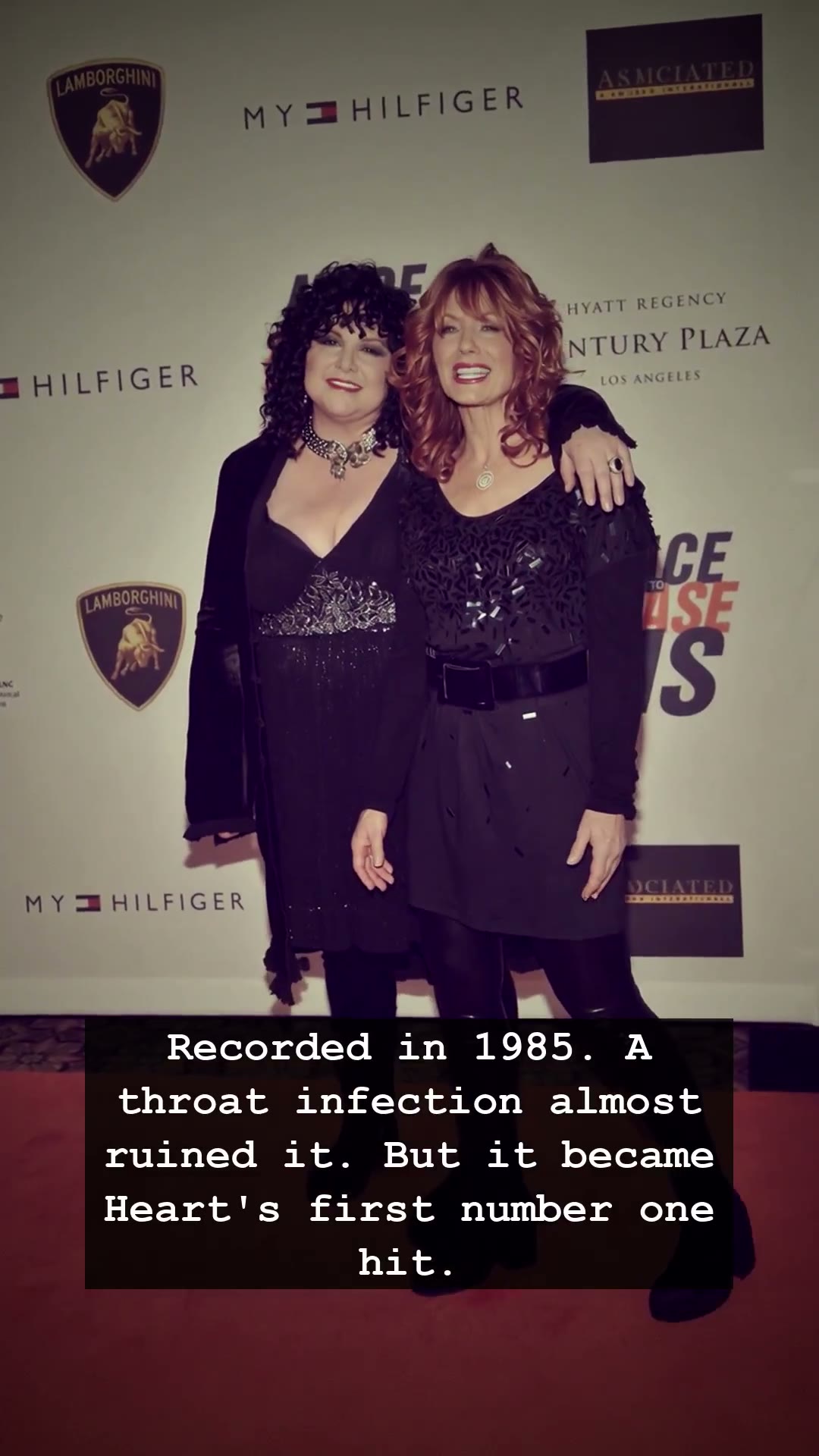
It was 1985, a time when synthesizers defined the airwaves and the music industry was obsessed with perfect, polished production. For the rock band Heart, the pressure to evolve after years of classic rock success was mounting. They were in the studio, crafting what would become their self-titled album, a record that would shift their trajectory forever. Yet, one of their most iconic tracks nearly didn’t happen because of a simple, cruel twist of biological fate: a severe throat infection that threatened to silence Nancy Wilson just as she stepped up to the microphone.
Imagine the scene in the studio. The air was thick with tension, a common byproduct of the high-stakes environment of eighties recording sessions. Nancy Wilson, usually known for her melodic, clear delivery, found her voice ravaged by sickness. Most producers would have called for a break or brought in a session singer to preserve the perfection of the track. But sometimes, the most haunting moments in music history are born from the very things that are supposed to ruin them. The infection forced a rasp, a smoky and desperate quality into her voice that turned a standard pop-rock song into an emotionally charged masterpiece.
This track was These Dreams, the song that finally handed Heart their first number one hit on the Billboard Hot 100. It wasn’t just another power ballad to fill the airwaves of the MTV era; it was a testament to the raw, human element that often gets scrubbed away by studio technology. When you listen to those verses today, you are not hearing a carefully manicured pop performance. You are hearing the literal friction of a voice fighting against its own limitations. That fragility adds a layer of depth that allowed the song to resonate with millions of listeners across the globe, cementing its status as an eighties classic.
Looking back, the mid-eighties represented a strange crossroads for many bands who had emerged from the seventies. For Heart, it was about proving they could survive in a landscape dominated by new technology and changing tastes. The success of this specific record was a turning point, proving that their grit and musicality could transcend the synthetic barriers of the time. While the walkman became the symbol of personal music consumption during this decade, it was the actual voice of Nancy Wilson—cracked, tired, and soulful—that truly captured the hearts of a generation.
Even decades later, the story of this song serves as a reminder that vulnerability is often the secret ingredient to greatness. We spend so much time searching for flawless art, yet we are most moved by the art that carries the scars of its creation. Every time those first notes play, we aren’t just hearing a chart-topping hit; we are hearing the sound of a musician refusing to let a moment of pain stop her from reaching the top. It remains a timeless piece of rock history, proving that even a broken voice can sing the most beautiful melody of a lifetime.