
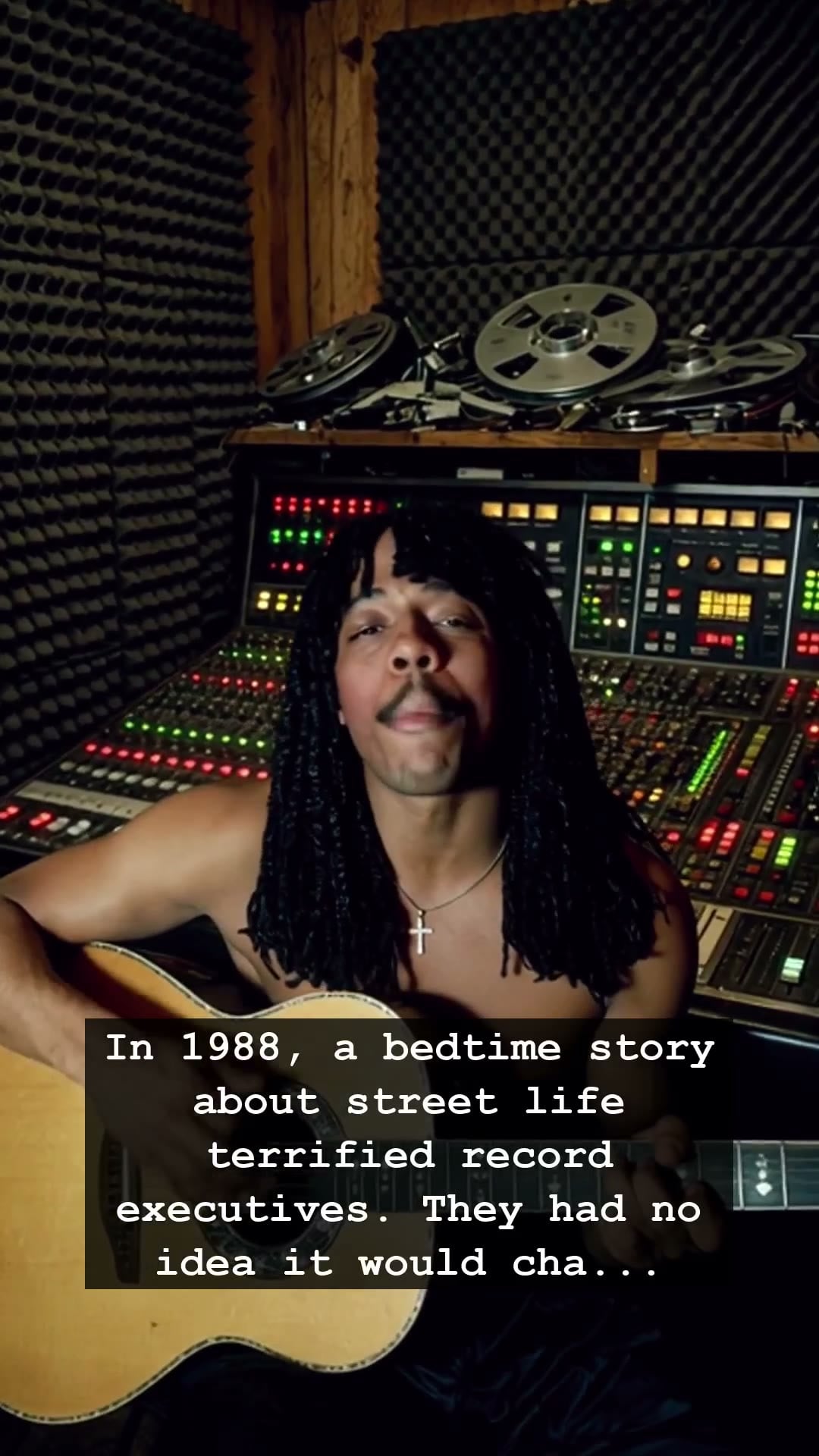
In the sweltering summer of 1988, the music industry was obsessed with the shiny, polished surfaces of MTV pop stars, but deep within the gritty heart of the Bronx, a different kind of legend was whispering a lullaby. Executives at Def Jam were terrified. They looked at a young storyteller named Slick Rick and saw a liability. How could a nursery rhyme about street life, gunfights, and betrayal possibly sell records? To the suits in their high-rise offices, it was a risky, dark gamble. To the streets, it was the raw, unfiltered truth of survival. They had no idea that this single narrative experiment would go on to reshape the entire landscape of hip-hop.
Slick Rick was never your average rapper. With his signature eye patch and a voice that glided over beats with the elegance of a refined gentleman, he was a master of the narrative form. When he dropped the track Children’s Story, he didn’t just spit bars; he painted a cinematic masterpiece of urban cautionary tales. The beat was sparse, cold, and hypnotic, echoing through the Walkman headphones of teenagers across America. It wasn’t the high-gloss production of a studio concert; it was a gritty, street-level fable that felt more real than anything on the radio at the time. By taking the structure of a childhood bedtime story and injecting it with the harsh reality of the crack epidemic era, Slick Rick created a paradoxical masterpiece that felt both familiar and deeply unsettling.
The genius of the track lies in its deceptive simplicity. As Slick Rick weaves the story of a young kid tempted by the lure of easy money and street crime, the listener is pulled into a dark theater of the mind. The brilliance of his delivery turned a grim warning into the most sampled rhythm in hip-hop history. Artists from Snoop Dogg to Jay-Z would later return to this well, mining the cadence and the soul of the track to define their own legacies. It served as a bridge between the party-centric roots of the early eighties and the complex, socially conscious storytelling that would eventually dominate the nineties.
Reflecting on this era brings back the scent of vinyl dust and the static of a Jukebox in a corner bar. Slick Rick was the ultimate outsider, an artist who refused to compromise his vision for the sake of mainstream palatability. Even as his own life became entangled in the very legal dramas that he warned against in his lyrics, his artistic integrity remained a beacon of authenticity. He taught a generation of listeners that hip-hop wasn’t just about the beat; it was about the power of the word, the weight of the moral, and the courage to tell a story that makes people look over their shoulders.
Today, we look back at the eighties not just as a period of neon synthesizers and excess, but as a crucible for voices like his. The legacy of Slick Rick is etched into the DNA of modern music, a reminder that the most dangerous stories are often the ones that ring the most true. So, next time you hear that familiar, looping bassline, lean in a little closer. The bedtime story is still playing, and we are still learning the lesson.