
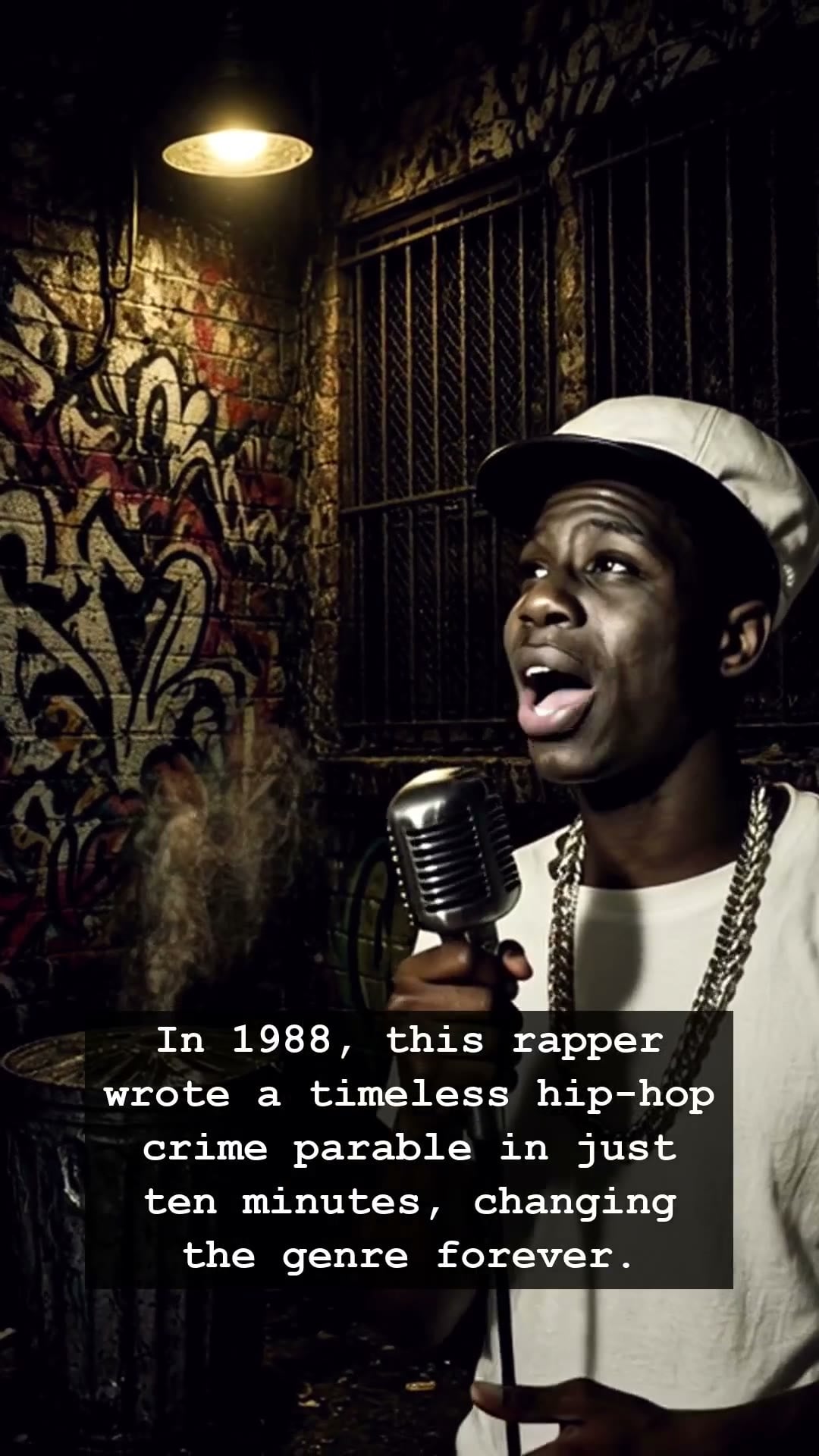
The year was 1988, a time when the rhythmic hum of the city was changing. MTV was cementing itself as the cultural heartbeat of the nation, and the golden era of hip-hop was reaching a fever pitch. Amidst this sonic explosion, a young visionary named Slick Rick stepped into a recording studio with nothing but a cool demeanor and a story unfolding in his mind. In a feat that sounds almost mythical today, he penned a timeless crime parable entirely from his head in just ten minutes. That swift burst of creative genius became Children’s Story, a track that would transcend the era of the boombox and the Walkman to become a cornerstone of lyrical storytelling.
Slick Rick did not just write a rap song; he crafted a morality play that resonated with the gritty streets of the late eighties. With his signature eyepatch and a voice that could pivot from playful to menacing in a single breath, he commanded the microphone like a seasoned narrator. While other artists of the era were caught up in the rising intensity of the underground scene, Slick Rick chose to weave a cautionary tale about a young boy led astray by the allure of quick money and the shadows of the criminal underworld. The track felt like a movie, vivid and immediate, etched into the consciousness of listeners who were hungry for substance over style.
To understand why this moment remains so pivotal, you have to remember the landscape of 1988. It was a time when hip-hop was evolving from simple party anthems into a powerful narrative medium. Slick Rick stood at this intersection, utilizing his British-born flair and rhythmic wit to humanize characters that were often reduced to headlines. His ability to build suspense, define characters, and deliver a chilling resolution in under four minutes showcased a rare gift for narrative structure. It was pure, unadulterated talent, captured on tape before the pressure of the industry could complicate the creative spark.
Decades later, the influence of that studio session remains etched in the DNA of modern rap. You can hear the echoes of his flow in the work of countless storytellers who followed in his footsteps. Slick Rick turned the art of the rap verse into a literary device, proving that a song could be as complex and moralizing as a classic novel. This wasn’t just a track for the jukebox; it was a societal mirror reflecting the dangers that lurked in the neighborhoods of a changing America. The legend of that ten-minute session persists because it captured a moment where raw talent met a profound need for truth.
As we look back at the relics of the late twentieth century, it is easy to see why we remain tethered to the magic of the eighties. The world was louder, the stakes felt higher, and the music served as our only true guide through the chaos. Slick Rick, with his effortless cool and unmatched lyrical dexterity, gave us a story that we never forgot. Perhaps it is time to dig out that old record, find a quiet corner, and listen once more to the man who transformed a fleeting studio moment into an eternal piece of hip-hop history.