
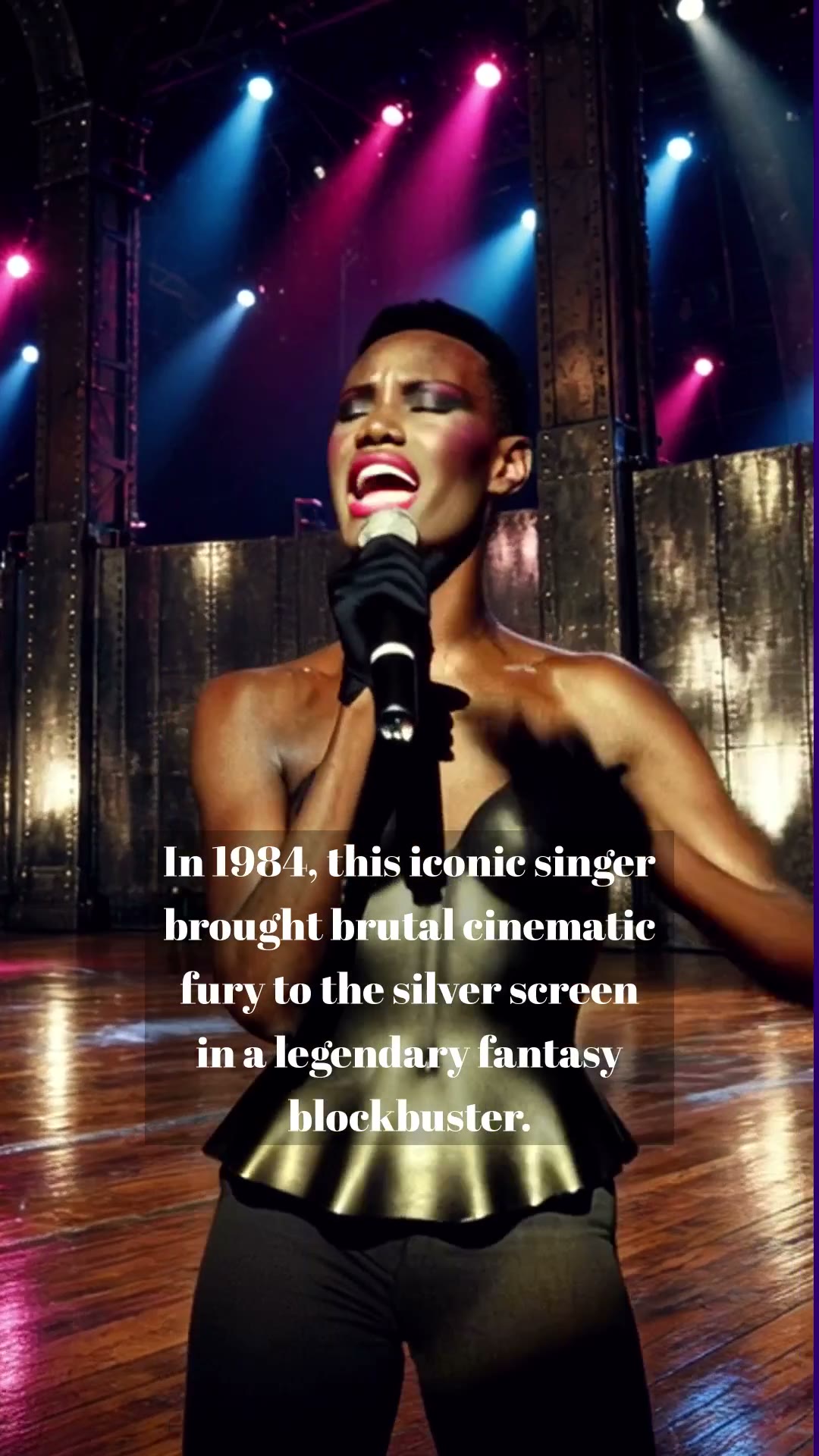
The year 1984 remains etched in the collective memory of cinema lovers as a time of bold, practical effects and daring storytelling. It was an era when the silver screen demanded not just actors, but icons who could command a frame with a single glance. While many music stars attempted to cross over into the film industry, few possessed the raw, unfiltered intensity of Grace Jones. When she stepped into the role of Zula in the fantasy blockbuster Conan the Destroyer, she did more than just fulfill a casting requirement; she shattered the expectations of what a musician could achieve in a high-stakes cinematic environment.
Before that fateful year, audiences knew Grace Jones primarily as a groundbreaking force in music, a statuesque enigma who defined the visual landscape of the late seventies and early eighties. To see her trade the microphone for a spear felt like a radical departure, yet it was a masterstroke of casting. She brought a visceral, almost prehistoric power to her performance, moving with a panther-like grace that turned a standard fantasy archetype into something profoundly haunting. Her presence on set was a testament to the Method Acting spirit, where the lines between reality and artifice blurred under the heat of the Moroccan sun where the film was largely lensed.
There is a specific, lingering memory for those of us who sat in velvet-seated theaters back in the mid-eighties: the way the screen seemed to tighten every time Grace Jones appeared. She did not need dialogue to dominate a scene. In an age dominated by sweeping orchestral scores and the gritty, palpable texture of VHS tapes that we would later wear out in our living rooms, her performance stood out as a sharp edge of reality in a world of fantasy. She demanded that the audience take her seriously, not as a pop star slumming it in Hollywood, but as a dedicated artist willing to sacrifice comfort for the sake of a legendary role.
This performance in 1984 serves as a vibrant reminder of a time when the Hollywood studio system was willing to take risks on unconventional talent. It was a Golden Age of sorts for blockbusters that relied on physical prowess and atmosphere rather than the glossy digital polish we see today. Grace Jones represented that fleeting moment where the worlds of high-fashion, music, and epic cinema collided perfectly. Her commitment to the physicality of the role reminded us that the best actors are those who pour their entire essence into the craft, leaving a mark that persists long after the credits roll.
Decades later, looking back at her work, we find a performance that has aged with incredible dignity. Grace Jones didn’t just participate in a film; she elevated the genre with a rare, brutal cinematic fury that still resonates with anyone who values authentic artistry. Her transition from the stage to the screen is a story of grit, artistic evolution, and the enduring magic of the cinema. As we revisit these classic titles on our well-loved tapes, it is the fierce, unforgettable icons like Grace Jones who keep the spirit of 1984 burning bright in our hearts.