
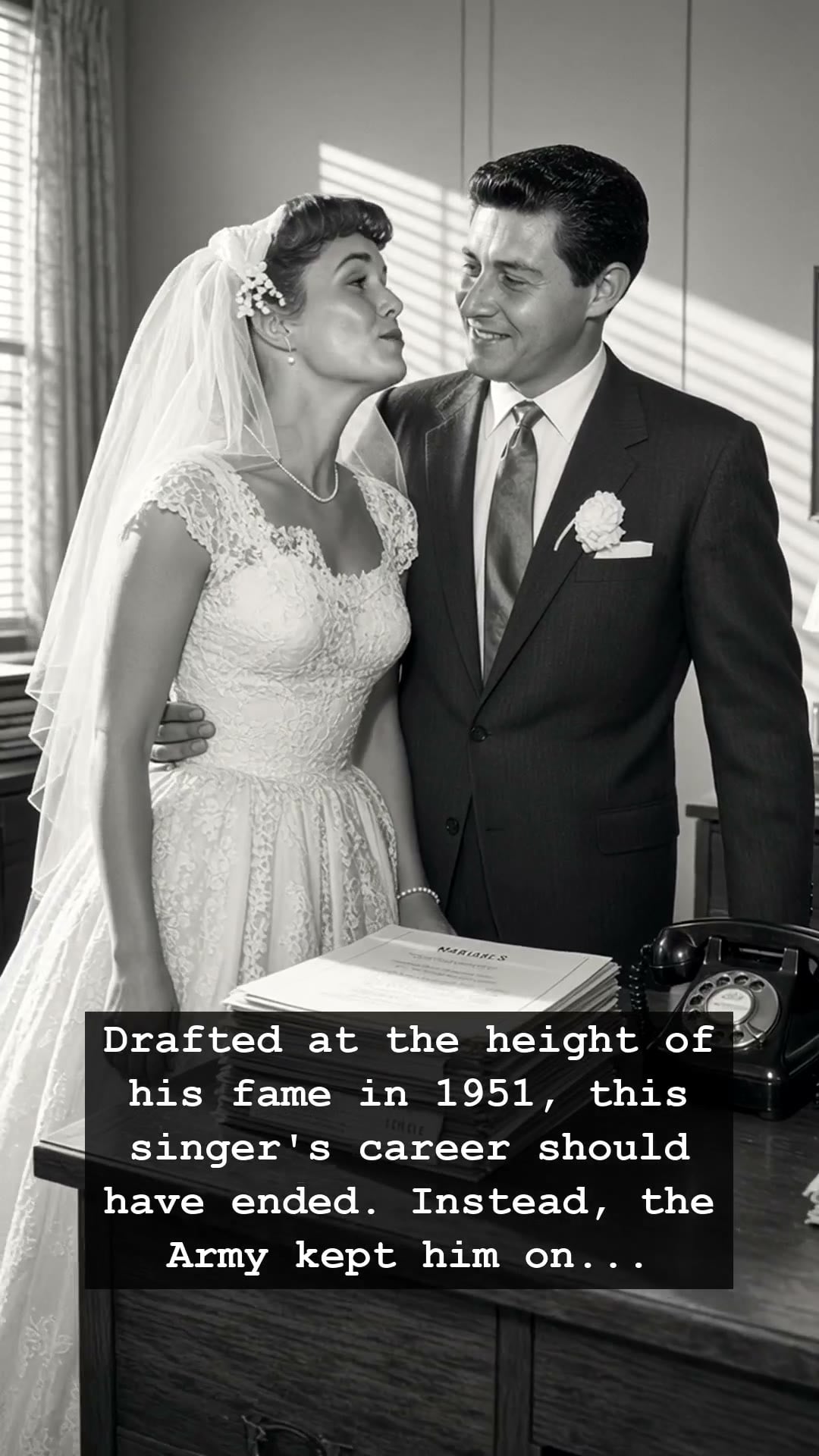
In 1951, the world of American pop music was defined by the velvet croon of Eddie Fisher. He was the quintessential golden boy, a jukebox idol whose face adorned bedroom walls across the nation. At the absolute zenith of his fame, with hit songs cascading from every radio station, the inevitable letter arrived from Uncle Sam. It was the draft notice, a cold piece of paper that threatened to silence one of the most recognizable voices of the post-war era. For most artists, being pulled into the United States Army meant a tragic, premature end to a burgeoning career, leaving them to fade into the obscurity of military uniforms and barracks life.
Yet, the story of Eddie Fisher was anything but typical. Instead of letting his star flicker out, the United States Army took the unprecedented step of recognizing his cultural power. They transformed him into their official soloist, a strategic move that kept him in the limelight even while he served his duty. From the confines of a military base, he continued to release chart-topping records, essentially bridging the gap between the battlefield and the glitzy world of television and vinyl records. It was a bizarre, high-stakes arrangement that highlights just how much influence an individual artist held during the golden age of American music.
Imagine the scene: a soldier in full fatigues, yet simultaneously a household name heard in every living room via the burgeoning magic of television. This was the dual life Eddie Fisher navigated, a fascinating anomaly in an era where celebrity was strictly regulated. While his peers were struggling with the transition to civilian life or fading away, Fisher remained a constant, comforting presence on the airwaves. This intervention by the military wasn’t just about morale; it was a testament to his sheer vocal talent and the era’s obsession with the perfect, clean-cut American male archetype.
However, beneath the polished surface of his records lay the mounting pressure of a fame that was both accelerated and carefully managed. The rigid structure of the Army provided a stark backdrop to his soaring success, a contrast that few modern artists would ever experience. As the years progressed and the culture shifted toward the rebellious energy of the coming rock and roll explosion, the era of Eddie Fisher would eventually be viewed through a nostalgic lens—a simpler time of orchestral arrangements and earnest performances that anchored a generation through global uncertainty.
Today, listening to those timeless tracks, one can still hear the sincerity that propelled him to the top. His story remains a captivating chapter of musical history, a perfect intersection of fame, duty, and the unstoppable power of a great voice. It serves as a reminder of how the music of the mid-century wasn’t just entertainment; it was a cultural force that could transcend even the most rigid structures of military service. Do you still find yourself drifting back to those golden days when Eddie Fisher ruled the charts?