
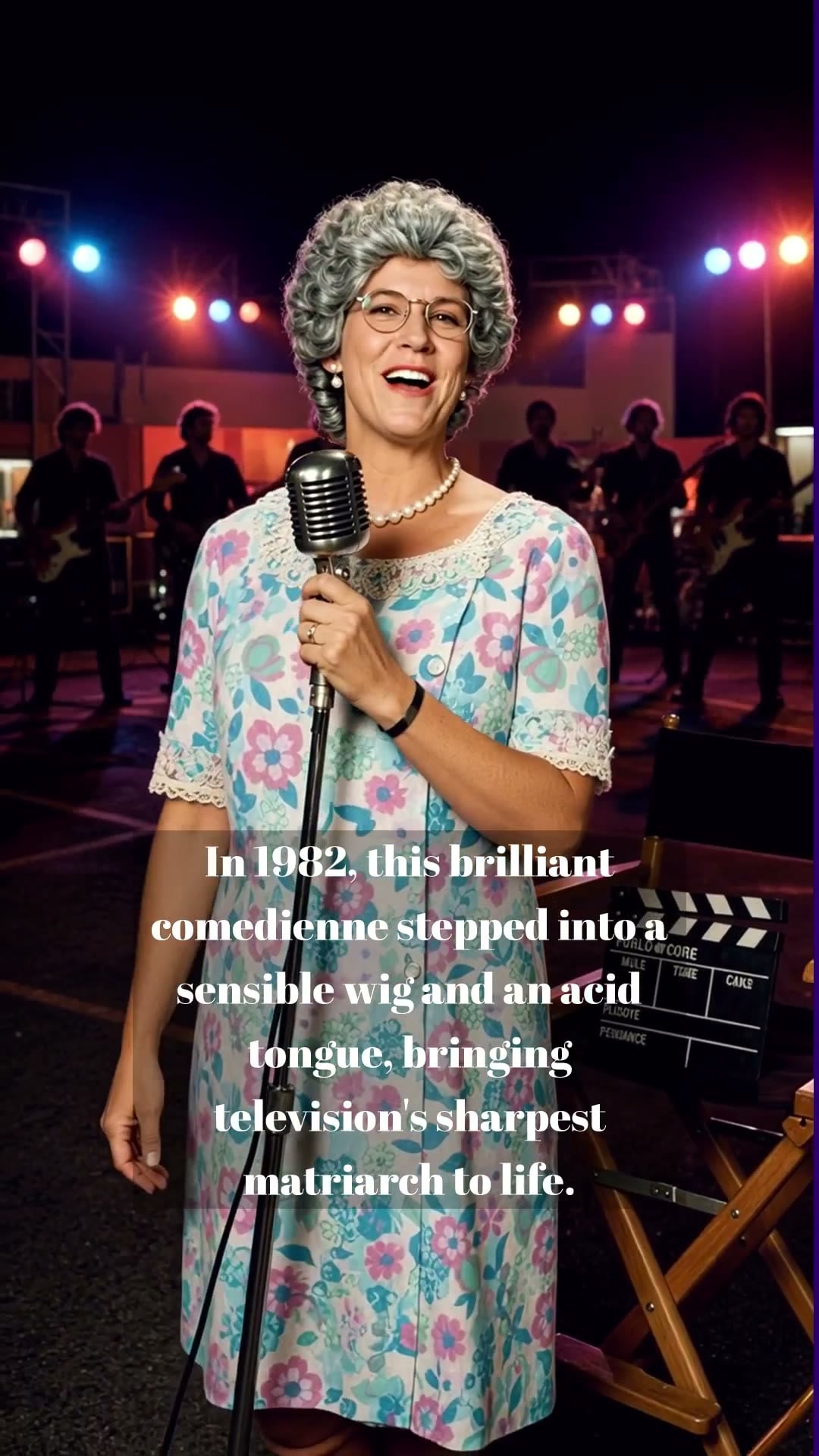
In the landscape of classic television, certain characters become so ingrained in our cultural consciousness that they feel less like performances and more like eccentric relatives we have known our entire lives. Such was the magic brought forth by Vicki Lawrence in 1982. With the simple addition of a sensible, silver-gray wig and a posture that radiated both weary endurance and razor-sharp wit, she stepped into the role of Thelma Harper, better known as Mama. It was a transformation that transcended mere makeup and costume, becoming a definitive staple of the American living room during an era where sitcoms were the heartbeat of the nation.
To understand the brilliance of Vicki Lawrence, one must look back at the vibrant studio culture of the 1970s and 80s. Before she became the matriarch of the Harper clan, Vicki Lawrence was already a powerhouse, having cut her teeth on The Carol Burnett Show. Working alongside legends like Harvey Korman and Tim Conway, she developed a mastery of timing that rivaled the best of the Method Acting greats. She learned that comedy was not just about the punchline; it was about the silence that preceded the explosion of laughter. When she brought Mama to life on the screen, she infused the character with an acid tongue that could dismantle anyone in her path, yet she always managed to leave a tiny, flickering window open to a hidden heart of gold.
The genius of Vicki Lawrence lay in her ability to make us wince and cheer in the same breath. In the heyday of the VHS era, families would gather around their bulky television sets to record these moments, ensuring that Mama’s biting retorts could be revisited time and again. There was a profound humanity in her portrayal that resonated with Gen Xers and Baby Boomers alike. We all knew a Mama—someone who spoke her mind without a filter, protected her own with a ferocious intensity, and lived by a code forged in simpler, harder times. Through Vicki Lawrence, the archetypal American grandmother was deconstructed and reimagined into a comic icon that defied the soft-focus tropes of the decade.
As we look back at the evolution of television, it is easy to forget the sheer dedication required to sustain such a character over many years. Vicki Lawrence did not merely play a role; she inhabited a legacy. She proved that a woman’s voice, even when sharp enough to cut through the noise of a changing Hollywood, could become the anchor of a massive cultural phenomenon. Her work stands as a testament to the power of the sitcom to reflect our own lives back to us, filtered through the lens of humor and profound affection.
Today, as we scroll through endless digital content, there is a lingering warmth in remembering the simplicity and the sheer talent of the Golden Age of television. Vicki Lawrence reminds us that at the core of every great performance is an artist who deeply understood the audience. She didn’t need grand spectacle to capture our hearts; she only needed a chair, a wig, and an impeccable sense of timing. We invite you to look back on those classic moments and celebrate the woman who made the world laugh, one sharp, unforgettable quip at a time.