
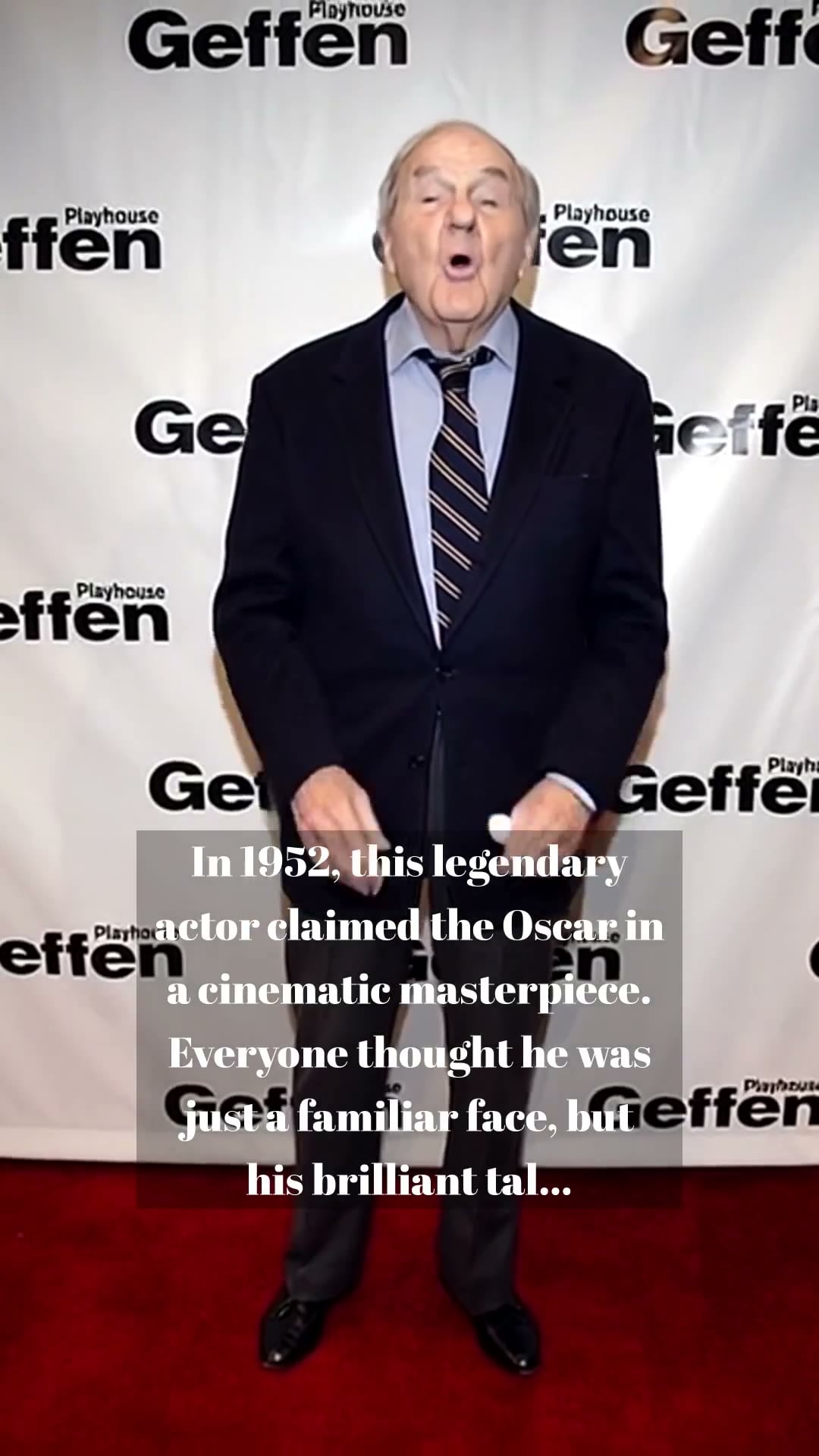
In the vast gallery of Hollywood history, there are stars who blaze with a supernova intensity, and then there are the steady, guiding lights whose presence defines the very soul of the craft. Karl Malden belonged to that rare, indispensable category. While audiences of the 1950s often recognized his face from a dozen different corners of the silver screen, it was the landmark year of 1952 that finally pulled the veil back on his true, staggering talent. When Karl Malden walked onto the Oscar stage to accept the Academy Award for Best Supporting Actor for his role as Mitch in A Streetcar Named Desire, it wasn’t just a win for a performer; it was a profound acknowledgement of the transformative power of Method Acting.
To understand the magnitude of that 1952 victory, one must step back into the transformative era of the Golden Age of Hollywood. It was a time when the studio system was beginning to shift, and a new wave of authenticity was cresting. Karl Malden, a product of the Group Theatre and the burgeoning influence of the Actors Studio, brought a raw, human fragility to his roles that felt strikingly modern. In a film dominated by the volcanic presence of Marlon Brando and the luminous intensity of Vivien Leigh, it was the quiet, desperate longing in Karl Malden’s performance that provided the heartbeat of the story. He did not merely play a character; he inhabited the loneliness of a man seeking salvation in a world he did not fully understand.
Throughout the decades that followed, from the intense dramas of the 1960s to the high-stakes thrills of 1970s blockbusters and the warm, familiar glow of his television tenure, Karl Malden remained a constant. He was the quintessential character actor, a master of nuance who could elevate a scene simply by leaning into a silence or shifting his gaze. For those of us who grew up hunting for his familiar features on the spines of our VHS tapes, his career served as a masterclass in professional integrity. He never chased the ephemeral vanity of stardom; instead, he chased the truth of the human condition, leaving a legacy that is etched into the cinematic firmament.
What makes his contribution so enduring is the humility he maintained despite his undeniable genius. In an industry often prone to ego and excess, Karl Malden walked his own path, perhaps best symbolized by his long, storied career that bridged the gap between the black-and-white classics and the technicolor revolutions. He understood that a great performance is not about standing out, but about fitting perfectly into the tapestry of the story. This is why, even years after his passing, a rewatch of his work feels like visiting an old friend who has a lifetime of wisdom to share.
As we look back at the flicker of those old projectors and the hum of the VCR, we find ourselves returning to performers like Karl Malden. They remind us of a time when the craft of acting was treated with a reverent, almost sacred, dedication. His life and work remain a bridge to a bygone era, inviting us to slow down, pay attention, and appreciate the small, honest gestures that define greatness. May we always keep the light of his artistry burning, just as brightly as he did on that historic night in 1952.