
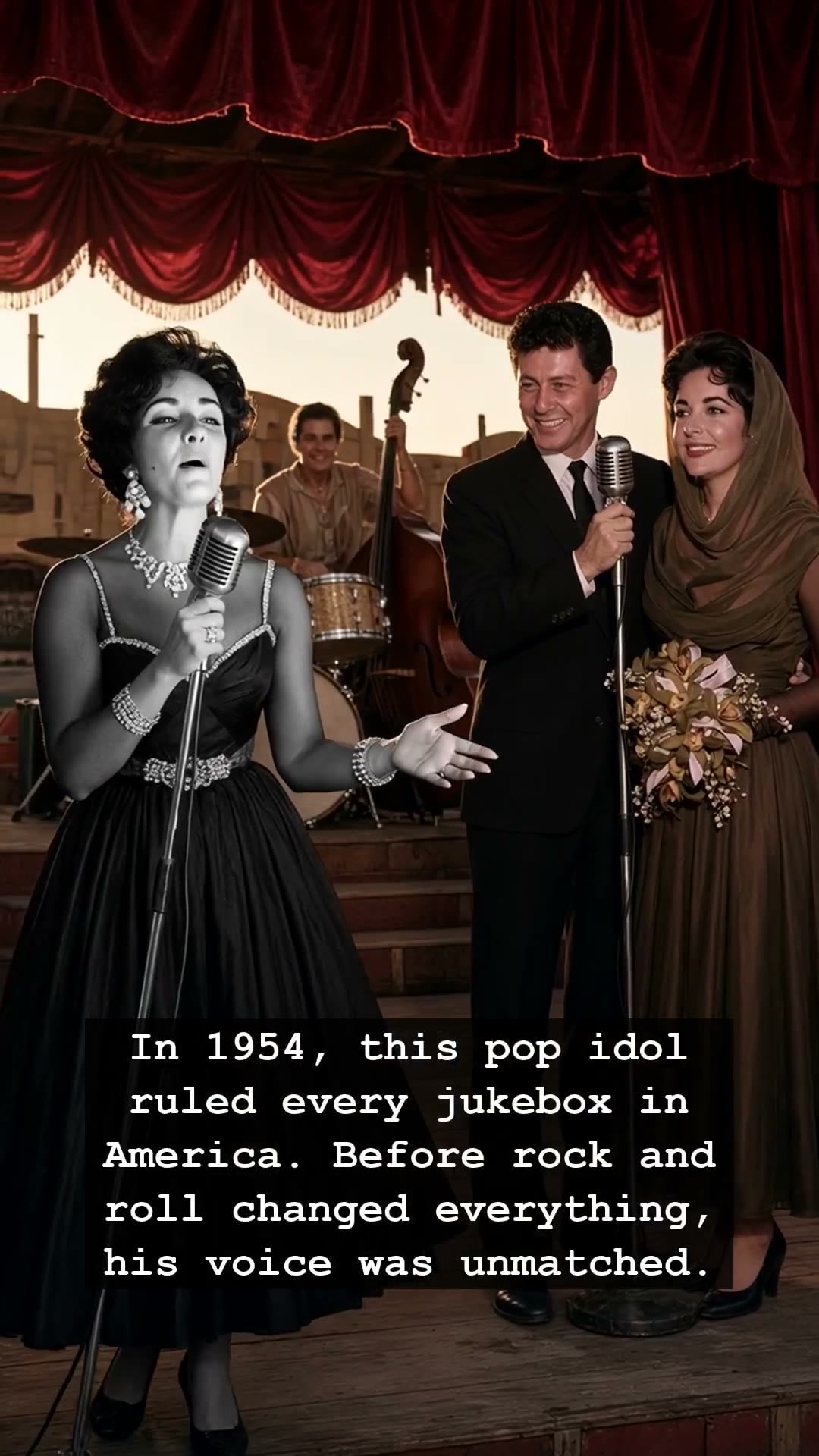
In 1954, the airwaves belonged to one man. Long before the rebellious static of electric guitars tore through the fabric of American culture, Eddie Fisher was the undisputed king of the jukebox. His voice, a pristine, melodic tenor, resonated in every soda fountain and ballroom from coast to coast. To the post-war generation, Eddie Fisher was not just a singer; he was the embodiment of a dream, a polished icon of romance whose face graced magazine covers and whose records sold in the millions. He was the soundtrack to a quieter, more innocent era, yet the very perfection that launched him to the stratosphere would eventually become the anchor that dragged him into the shadows.
The world of the early 1950s was a place of radio crooners and star-studded screen idols, and Eddie Fisher reigned supreme. He walked the line between pop stardom and Hollywood royalty, living a life that seemed plucked straight from a technicolor film. But fame in that golden age was a fragile, high-pressure glass house. The transition from the sweet, orchestrated ballads of his peak to the raw, untamed energy of the emerging rock and roll movement was sudden and unforgiving. As artists like Elvis Presley began to vibrate through the speakers of the newly minted youth culture, the sophisticated charm of Eddie Fisher felt, to some, like a relic of a fading, outdated past.
Yet, the drama of Eddie Fisher was rarely confined to the recording studio. His personal life, plagued by high-profile romances and deeply public scandals, became a tabloid obsession that threatened to eclipse his musical legacy. Behind the glimmering veneer of his performances lay a man struggling against the crushing weight of public expectation and the volatility of his own choices. The transition from a beloved sweetheart to a controversial figure in the eyes of the media was a swift, jarring descent. It is a cautionary tale of how the machinery of celebrity can build a pedestal one day, only to dismantle it with ruthless efficiency the next.
Looking back, the story of Eddie Fisher remains a compelling chapter in American music history. He represents the final stand of the traditional crooner before the cultural explosion of the mid-fifties redefined what it meant to be a star. When we listen to his old records today, we are hearing more than just a man singing a song; we are hearing the heartbeat of a nation that was about to undergo a permanent, seismic shift. The glitz of his era, the roar of the crowd, and the inevitable sting of rejection serve as a poignant reminder that even the brightest lights can flicker out.
Today, Eddie Fisher is remembered as both a talent of his time and a protagonist in a classic Hollywood tragedy. He was a man caught between two worlds—the stability of the past and the uncertainty of the future. As the melodies of that decade continue to echo in our collective memory, perhaps it is time to look past the headlines and appreciate the voice that once held an entire country in its thrall. Does the ghost of his velvet smooth sound still stir a sense of nostalgia in your heart?