
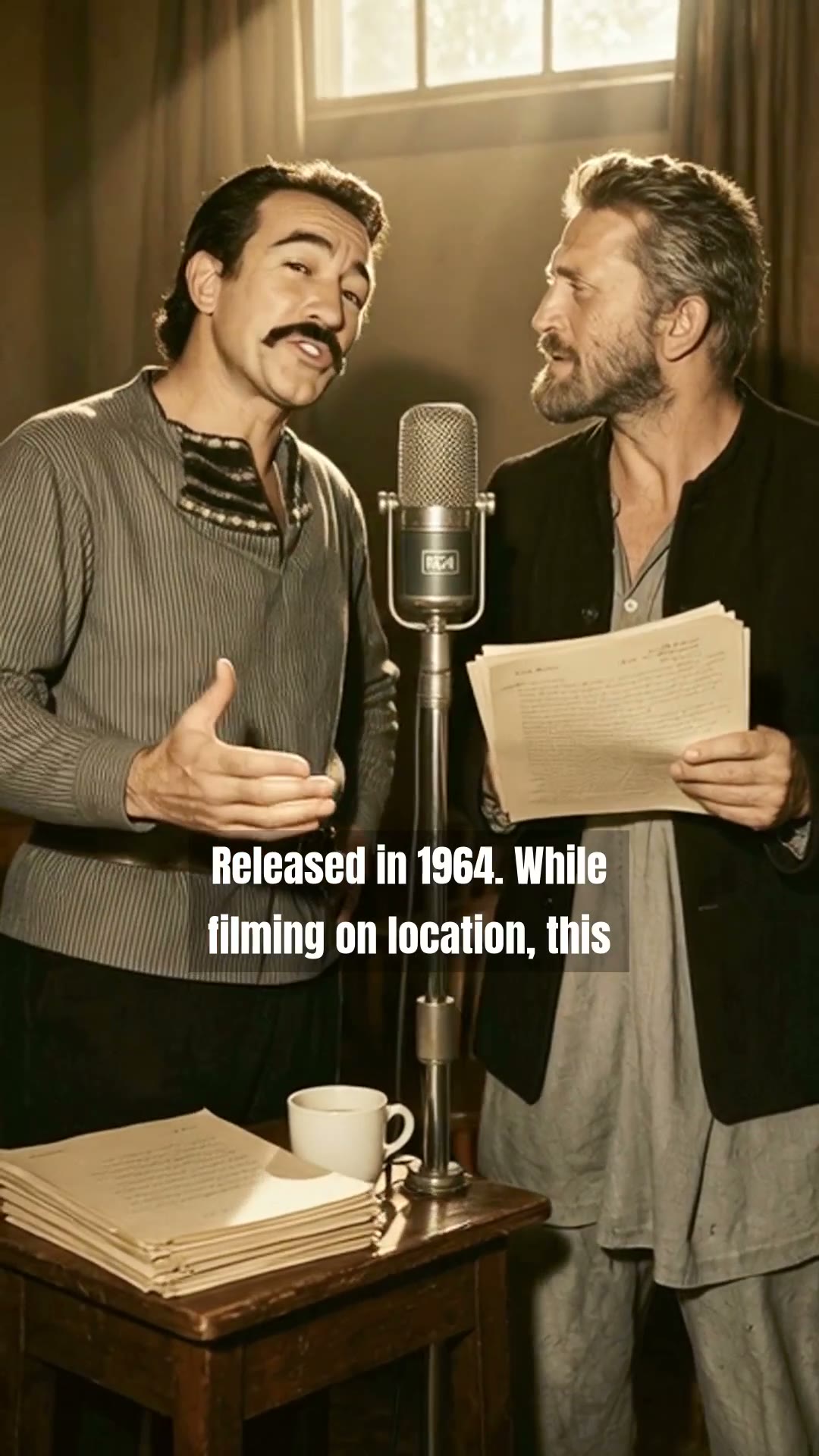
There is a specific kind of magic found in the archives of mid-century cinema, a golden era where the physical toll of acting was worn as a badge of honor. Among the giants who walked the silver screen, few possessed the raw, earth-shattering intensity of Anthony Quinn. He was not just a performer; he was a force of nature who understood that art often reveals its truest form when faced with the unexpected. While many remember his long list of Oscar-nominated roles, it is a single, breathless moment from 1964 that solidified his legend in the pantheon of Method Acting icons, proving that a master can turn pain into poetry.
During the filming of Zorba the Greek in 1964, the production was pushed to its absolute limits under the Cretan sun. The climactic final scene, where Zorba teaches his companion the art of the dance, was meant to be the crescendo of the film. However, disaster struck just before the cameras began to roll. Anthony Quinn shattered his ankle in a freak accident. On any other set in the modern era, production would have been halted for months. But this was a different time, a period defined by a commitment to the craft that often superseded physical comfort. Instead of retreating to a trailer, the legendary actor chose to embrace the limitation.
Rather than canceling the sequence, Anthony Quinn decided to incorporate his injury directly into the performance. He recognized that the character of Zorba—a man defined by his stubborn refusal to let life get the better of him—would not simply stop dancing because of a broken bone. With a limp that felt entirely natural to the character’s rugged spirit, he improvised a series of gliding, rhythmic steps. This spontaneous adaptation transformed a standard dance scene into a profound, life-affirming cultural phenomenon. It was no longer just a scene; it was a testament to the resilience of the human soul.
This iconic moment serves as a poignant reminder of why we remain so deeply connected to the cinema of the 1950s through the 1990s. Beyond the gloss of the Golden Age and the weight of the VHS tapes that lined our living room shelves, it was the humanity behind the lens that truly mattered. Anthony Quinn brought a visceral truth to his roles that transcended the script. Whether he was commanding an Oscar night stage or sweating under the Mediterranean heat, he demanded our undivided attention. His work was never about perfection, but about the beautiful, messy pursuit of honesty.
Today, as we look back on the legacy of stars like Anthony Quinn, we are not just reminiscing about old movies; we are honoring a period of artistic bravery. His ability to turn a shattered ankle into an iconic cinematic stride remains a masterclass in improvisation. It is a story that still resonates because it reminds us that even when we are broken, we can still find a way to dance. Do you remember the first time you saw him move across that screen?