
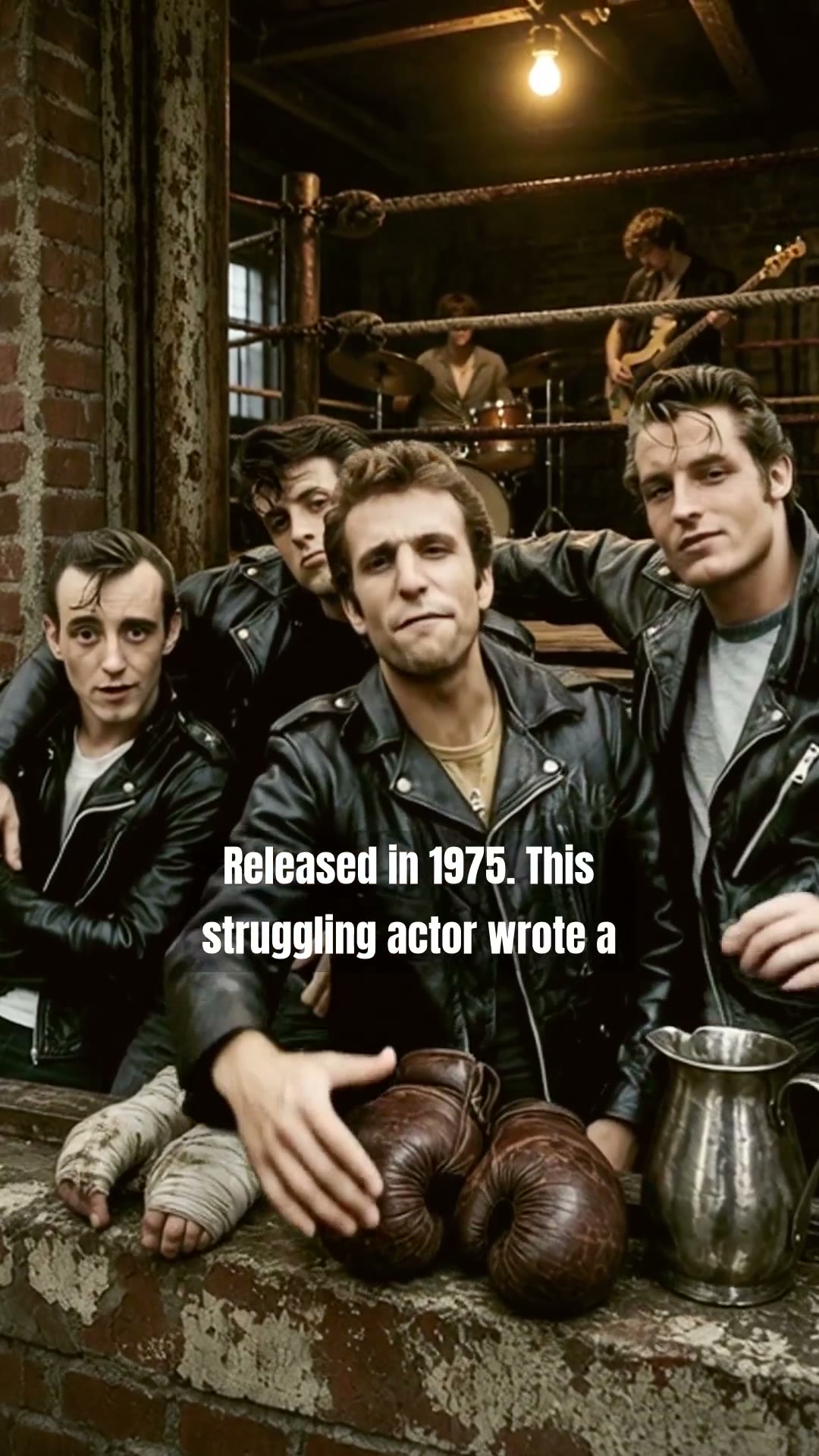
In the mid-1970s, the landscape of the Golden Age was fading, giving way to the gritty, authentic spirit of New Hollywood. Amidst this transition, a struggling actor named Sylvester Stallone found himself living in a cold apartment with little more than a dream and a typewriter. The story of how he penned the script for Rocky in just three short days remains one of the most inspiring chapters in cinema history. It was a time before the digital age, when stories were forged in the heat of passion and the raw desire to be seen, rather than through algorithms or focus groups.
At the time, studios were desperate for the next big blockbuster, and when Sylvester Stallone presented his screenplay, producers immediately saw its commercial potential. They offered him a small fortune for the rights to the script, but they wanted a bankable, established star to play the role of the underdog boxer, Rocky Balboa. To the executives, it was just business. To Sylvester Stallone, it was his entire identity, his soul on the page. He famously refused to sell unless he was the one cast as the lead, a gamble that risked his immediate livelihood for the sake of his artistic integrity.
That stubbornness paid off, and when the film hit screens in 1976, it changed everything. It became a cultural phenomenon that defined a generation, earning ten Oscar nominations and taking home the trophy for Best Picture. It wasn’t just a movie; it was a testament to the power of human spirit, mirroring the very struggle the actor had faced in his own life. This wasn’t the polished, studio-manufactured glamour of the past, but the gritty reality of the streets, captured on film for a public hungry for authentic storytelling.
Many of us remember the feeling of heading down to the local video rental shop, scanning the shelves for that iconic VHS tape with the black-and-white cover. Watching Sylvester Stallone transform into the Italian Stallion under the neon lights of Philadelphia became a ritual for millions of families across America. It was the era of the method acting movement, where actors poured their real-world pain and exhaustion into their performances, making every punch thrown on screen feel earned and every victory feel personal.
Even decades later, the legacy of that moment persists. It reminds us that behind the glitz of the Walk of Fame and the grandeur of Oscar Night, Hollywood is fundamentally a business built on individual faith. Sylvester Stallone taught a generation that having the courage to bet on yourself, even when you have nothing left to lose, is the truest form of art. His journey from an unknown, struggling writer to a legendary screen icon continues to inspire anyone who has ever felt like an underdog in their own life.
As we look back on the golden decades of cinema, we find that the stories which endure are the ones born from genuine struggle. Sylvester Stallone did more than just write a script; he wrote a blueprint for resilience. Today, as we revisit the films that shaped our youth, let us hold onto the grit and heart that defined that special time in American cinema. After all, the greatest performances are never just about acting, but about the pieces of our own lives we leave on the silver screen.