
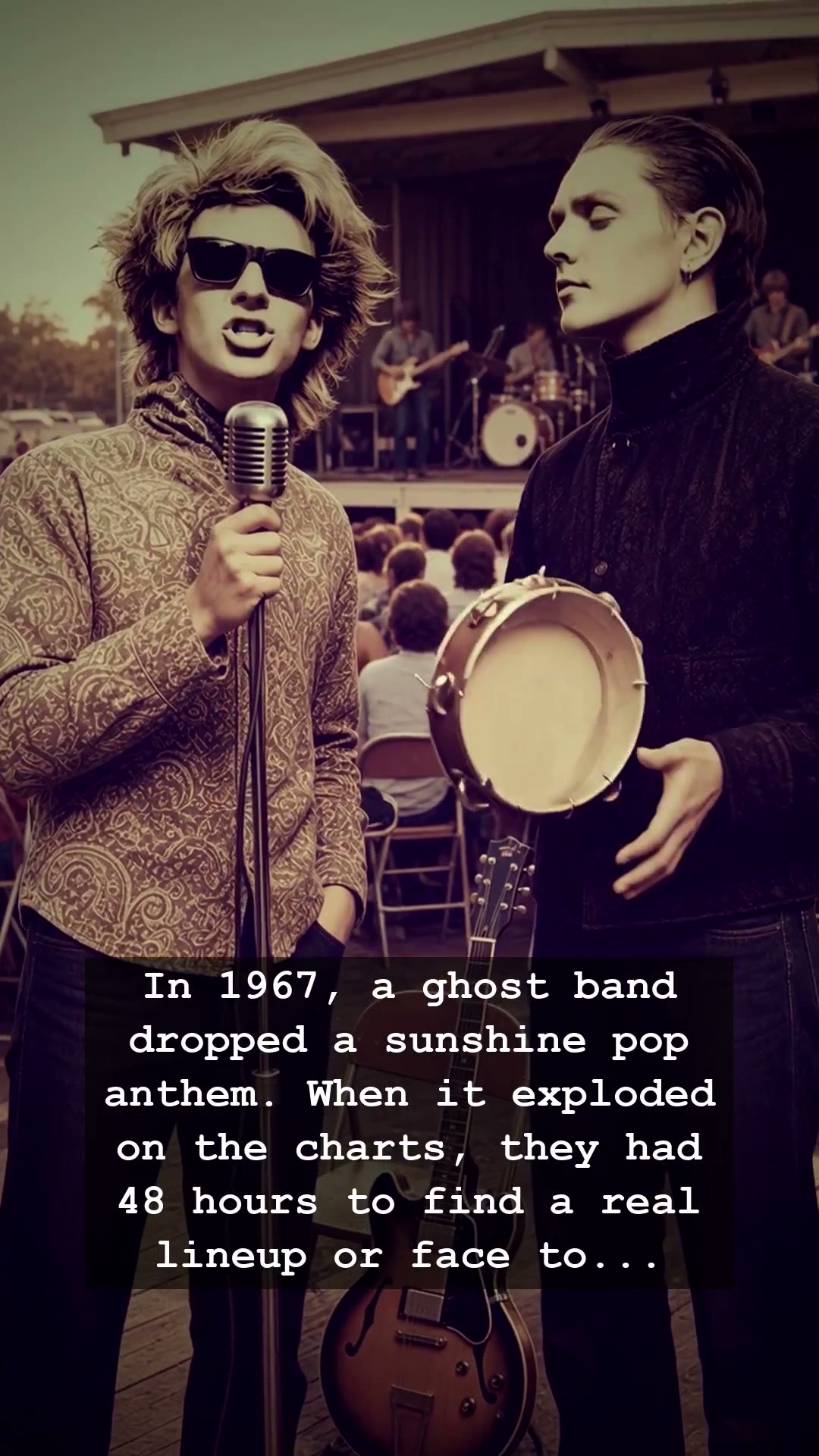
The year was 1967. The air was thick with the scent of patchouli, the streets were painted in kaleidoscope colors, and the Summer of Love was in full swing. Somewhere in a cramped, smoke-filled recording studio, a group of anonymous session musicians captured the ultimate sunshine pop anthem, Let’s Go to San Francisco. They were never intended to be a real band; they were a collective of voices and instruments assembled by producers John Carter and Ken Lewis for a one-off experiment. But when the track hit the airwaves, it didn’t just chart; it exploded, climbing the British charts and capturing the hazy, idealistic spirit of an entire generation. Suddenly, the music industry found itself with a runaway hit on its hands and absolutely no one to stand on a stage and perform it.
With the song gaining momentum, the pressure from television producers and venue managers became suffocating. The record label realized they had a massive problem: they had a ghost band, not a real group. They were given a terrifying ultimatum of just forty-eight hours to find a presentable lineup, or they would face total humiliation on live national television. It was a chaotic scramble that felt like a scene out of a frantic backstage comedy. Producers had to scrape together a group of session singers and musicians who had barely rehearsed, forcing them to adopt the persona of The Flower Pot Men overnight. They were essentially musical chameleons, tasked with breathing life into a track that had existed only as a studio illusion hours prior.
The resulting performance was a masterclass in professional deception. The newly minted members of The Flower Pot Men stood under the bright, unforgiving lights of the television studio, miming to the bright harmonies of a song they hadn’t even truly lived. While the audience saw a cohesive, glowing group of flower children perfectly synchronized to the rhythm, behind the curtain, it was pure adrenaline and panic. This was the dark reality behind the polished veneer of 1960s pop; a world where a song could be a cultural phenomenon before the people singing it had even been properly introduced to one another.
Looking back, the story of The Flower Pot Men remains a fascinating snapshot of an era defined by rapid change and industry opportunism. It reminds us that behind many of the tracks spinning on our dusty Jukeboxes lay a complex web of studio wizardry and high-stakes maneuvering. The Flower Pot Men were a product of their time, a transient spark of pop magic that prioritized the sound over the soul of the band. Yet, their legacy endures not because of their authenticity, but because they perfectly captured the fleeting, innocent optimism of a world on the brink of a revolution.
Today, when we hear those bright, reverberating chords, we aren’t just listening to a pop song; we are hearing the frantic heartbeat of a industry in a rush. The Flower Pot Men eventually faded into the archives of musical history, leaving behind a hit that defined a summer and a story that exposes the beautiful, chaotic artifice of pop fame. Their tale stands as a testament to the magic of the studio, proving that sometimes, the most enduring legacies are born from the most unexpected of blunders. Turn up the volume on that classic record, lean back, and enjoy the ghost of a summer that never truly ended.