
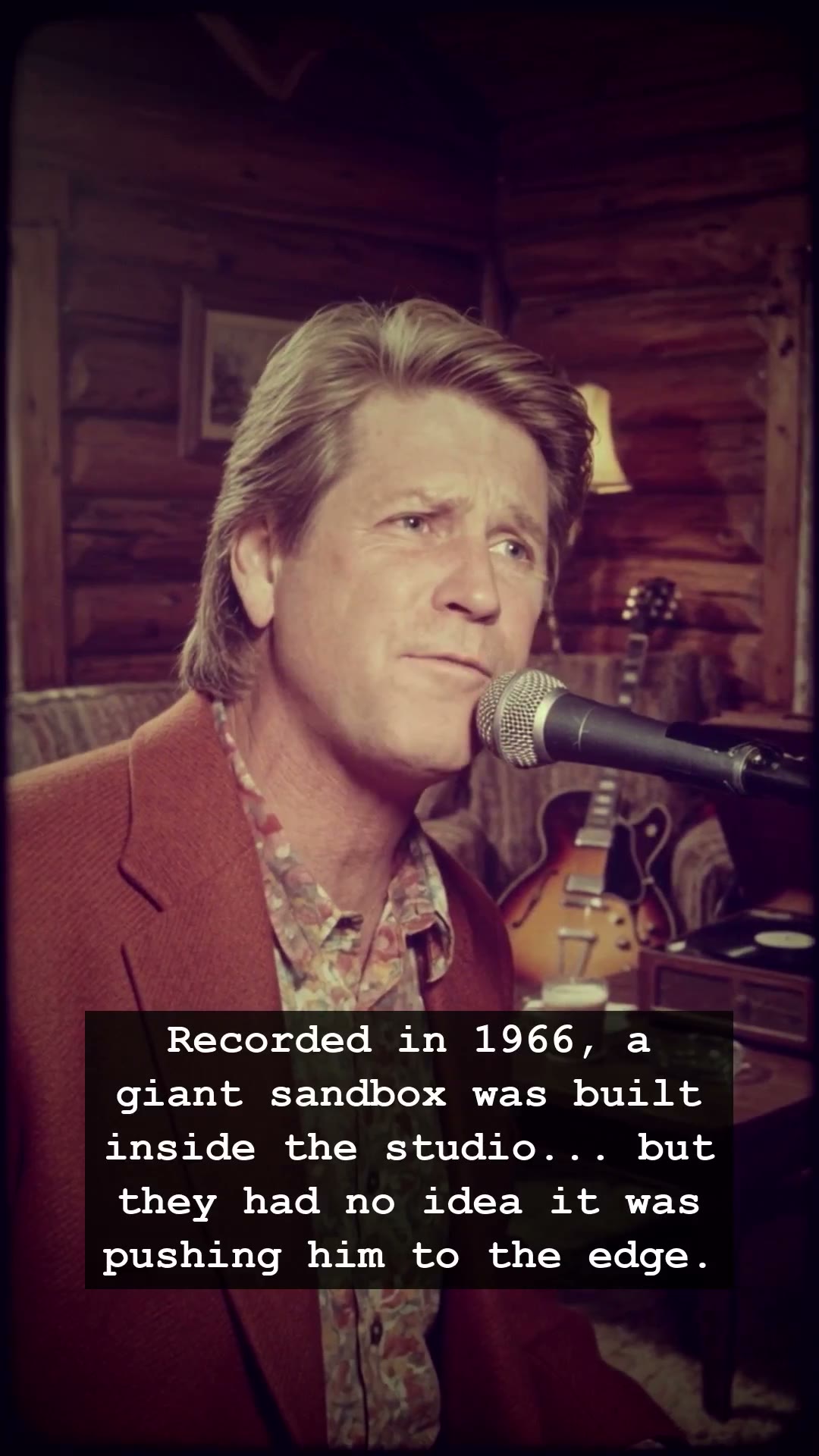
In 1966, the air inside Western Recorders studio was thick with the scent of sawdust and unfulfilled ambition. While the rest of the world was dancing to the upbeat rhythms of the British Invasion, Brian Wilson, the creative soul of The Beach Boys, was busy constructing a literal sandbox on the studio floor. He wanted to feel the earth beneath his feet, a tactile connection to his imagination as he composed what would become the masterpiece known as Pet Sounds. It was an eccentric move that seemed like a stroke of artistic genius at the time, but for those closest to the music, it was the first crack in the foundation of a brilliant mind slowly drifting toward the edge of sanity.
The Beach Boys had defined the sound of American optimism for years, with harmonies that smelled of sea salt and sunshine. Yet, behind the scenes, the pressure to evolve beyond the surf-rock sound was consuming Brian Wilson. He was no longer just the boy next door singing about fast cars and waves; he was an auteur haunted by the need to create the perfect sonic landscape. The sandbox was more than just a peculiar workspace; it was a desperate attempt to manifest his internal world physically, a sanctuary where he could retreat as the weight of expectation began to crush him.
This era marked a haunting pivot point in music history. The Beach Boys were moving from the polished, radio-friendly hits of the early 60s into the complex, layered arrangements that defined the psychedelic revolution. The recording process became a grueling, obsessive affair. Wilson’s perfectionism meant that his fellow band members, used to the spontaneity of their earlier sessions, struggled to keep up with his increasingly erratic demands. The studio became both a laboratory and a cage, reflecting the dark side of artistic evolution where the lines between visionary brilliance and personal collapse blurred into something entirely new.
The legacy of this period continues to fascinate music lovers because it represents the raw, often uncomfortable reality of creativity. The Beach Boys proved that behind the most harmonious melodies often lie the most discordant personal struggles. When we listen to the lush, orchestral textures of Pet Sounds today, we aren’t just hearing a collection of pop songs; we are hearing the frantic heartbeat of a man reaching for the infinite while his own life was beginning to unravel. It is a reminder that the art we cherish often carries the weight of the artist’s deepest pain.
Today, we look back at the era of analog tape and vinyl with a sense of profound longing, but we must also acknowledge the toll that such artistic bravery took on the legends of the 1960s. The story of The Beach Boys is one of enduring beauty born from immense sorrow. As the needle drops on those familiar, haunting harmonies, take a moment to imagine that giant sandbox in the middle of a Los Angeles studio—a quiet, grainy memorial to a genius who reached too far, yet gave us a piece of his soul that will never fade.