
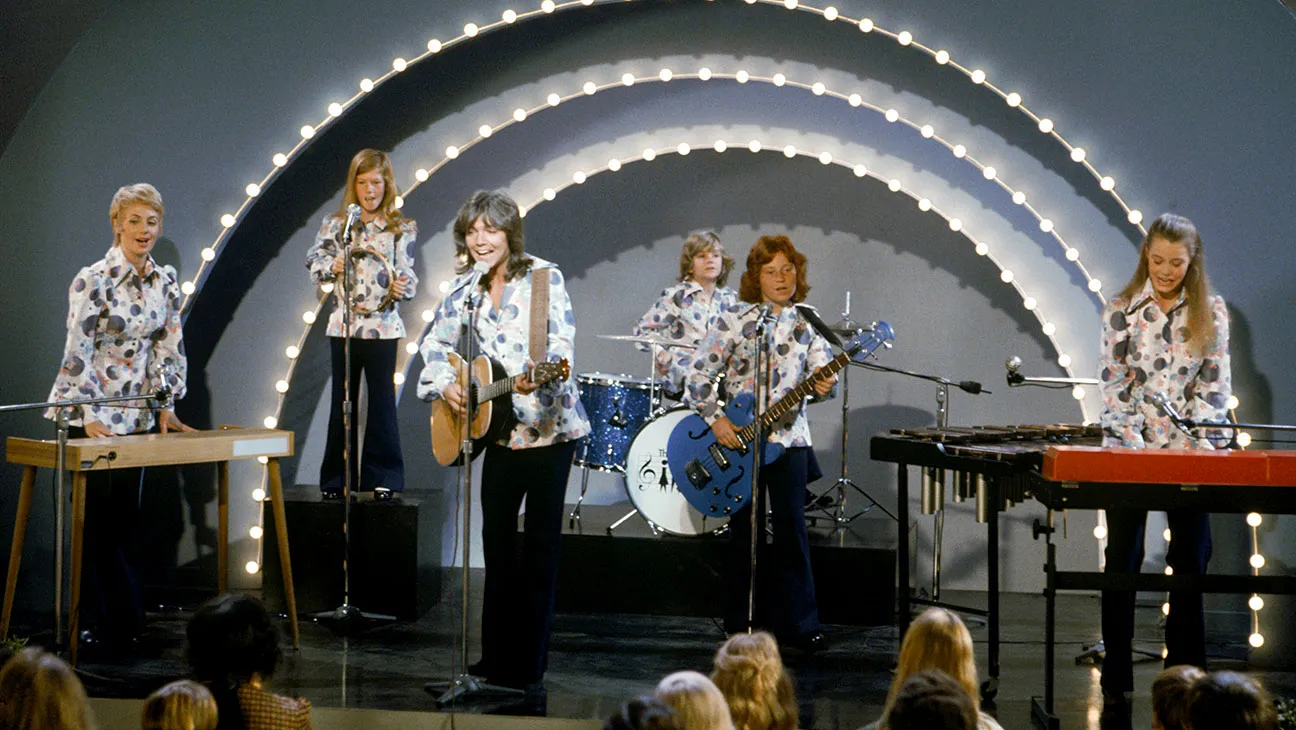
In 1970, America was introduced to a musical dream painted in bright colors and harmonious melodies. The Partridge Family arrived on our television screens, offering a sanitized, cheerful escape from the turbulent headlines of the Vietnam War and social unrest. With their colorful school bus and chart-topping hits like I Think I Love You, they became the ultimate symbol of the idealized American household. Yet, for those who lived through the golden age of television, the contrast between the polished facade and the grueling reality of their existence remains a chilling, hidden chapter of pop culture history.
While the audience saw a family band sharing joy under the warm glow of the studio lights, the reality for the cast was far more isolating. For young actors like Danny Bonaduce and David Cassidy, the transition from child stars to global icons was a fast-tracked path into a labyrinth of immense pressure and emotional exhaustion. Behind the catchy lyrics and the bubblegum pop aesthetic, there was no real family unit. Instead, there was a corporate machine churning out content, often at the expense of the mental health and childhoods of its stars. The bright, sunny set of The Partridge Family often felt more like a gilded cage than a creative home.
David Cassidy, the heartthrob who carried the weight of the show on his shoulders, became the focal point of a hysteria that he was never prepared to handle. The fame was suffocating, and the constant demand for perfection led to deep-seated resentment and a struggle for identity that would plague him long after the bus had stopped running. While teenagers across the nation were hanging posters of him in their bedrooms, Cassidy was grappling with the loneliness of being a commodity. The disconnect between his private self and the public idol created deep emotional wounds that were hidden well from the cameras but simmered just beneath the surface.
Beyond the leading man, the rest of the cast faced their own trials in an era that lacked the support systems of today. The relentless schedule of filming, recording, and touring left little room for genuine human connection. The Partridge Family was a business entity designed to sell records and merchandise, and the human cost was often overlooked by producers chasing the next big hit. It is a cautionary tale of the dark side of 1970s fame, where the glitz of the spotlight often obscured the struggles of those standing directly in its glare.
Today, when we hear those familiar opening chords, we are transported back to a simpler time, yet we are also reminded of the fragility of the icons we idolized. The legacy of The Partridge Family is not just the music or the fashion; it is a reminder that even the most perfect images often hide the most complex human stories. As we look back, it is essential to remember that behind the smiles, there were real lives defined by the relentless, often unforgiving, nature of celebrity. It is a haunting, yet deeply human, piece of music history that refuses to fade away.