
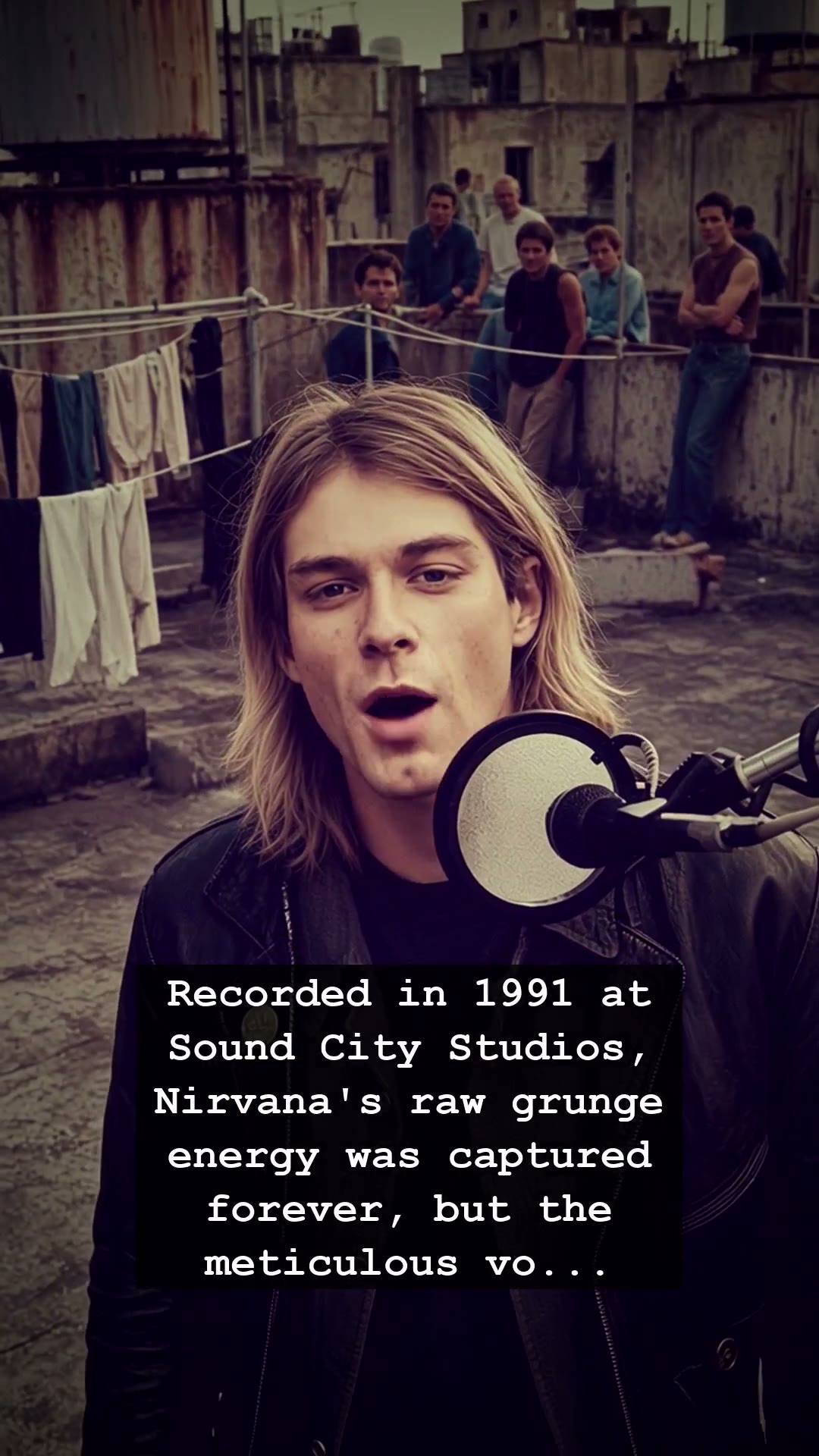
In the damp, dimly lit corridors of Sound City Studios in 1991, rock and roll was gasping for its final breath. The neon-soaked excess of the eighties was fading into a hazy memory, leaving behind a vacuum that demanded something jagged, authentic, and terrifyingly raw. Nirvana, led by the enigmatic Kurt Cobain, arrived at that legendary facility not to polish a diamond, but to drag the listener through the mud. While history remembers the explosive guitar feedback that defined an entire generation of disaffected youth, there is a ghost hiding in the mixing board—a meticulous vocal alchemy that transformed mere noise into the haunting masterpiece of the grunge movement.
We often romanticize the image of Nirvana as a band that stumbled into greatness by pure, unbridled accident. However, the truth is far more calculated. Inside that legendary Los Angeles studio, Cobain was not just screaming; he was layering. Behind the primal, throat-shredding bellows that sent shockwaves through the industry, Kurt Cobain and producer Butch Vig were busy stacking vocal tracks like a sonic fortress. This vocal layering was the secret weapon that gave the band its thick, claustrophobic atmosphere. It was a paradox—a sound that felt like it was captured in a dirty basement, yet possessed a precision that made it soar through the crackling speakers of every transistor radio and Sony Walkman across the globe.
This sonic architecture was the defining moment for alternative rock. At a time when MTV was desperate for the next big visual spectacle, Nirvana provided something visceral. The studio sessions at Sound City were intense, marked by a palpable tension that mirrored the psychological fragility of the frontman. As the tracks piled up, the songs evolved from garage-band jams into anthems of alienation. There was a dark, almost religious devotion to the craft of songwriting happening beneath the surface, a stark contrast to the hollow theatrics that had dominated the radio waves for the previous decade.
Yet, the beauty of the Nirvana legend lies in the intersection of that studio perfection and the inevitable decay that followed. The grit wasn’t just a stylistic choice; it was the manifestation of a soul at war with its own sudden, massive success. The layering was a veil, a way to build a wall of sound that protected the vulnerability of the lyrics. Every echoed vocal line was a haunting reminder that Cobain was both the architect of his own fame and its most reluctant prisoner. It was this dual nature—the technical genius and the raw, human despair—that allowed the music to transcend its time.
Decades later, the recordings from Sound City still resonate because they capture a rare instance where the cultural zeitgeist collided perfectly with artistic honesty. Nirvana didn’t just record an album; they ignited a wildfire that burned through the plastic veneer of the music industry. As we look back, the legacy of these sessions serves as a testament to the idea that true art is often found in the tension between chaos and control. The songs endure not because of their volume, but because of the ghosts that inhabit the gaps between the layers, whispering a story that refuses to be silenced by the passing of time.