
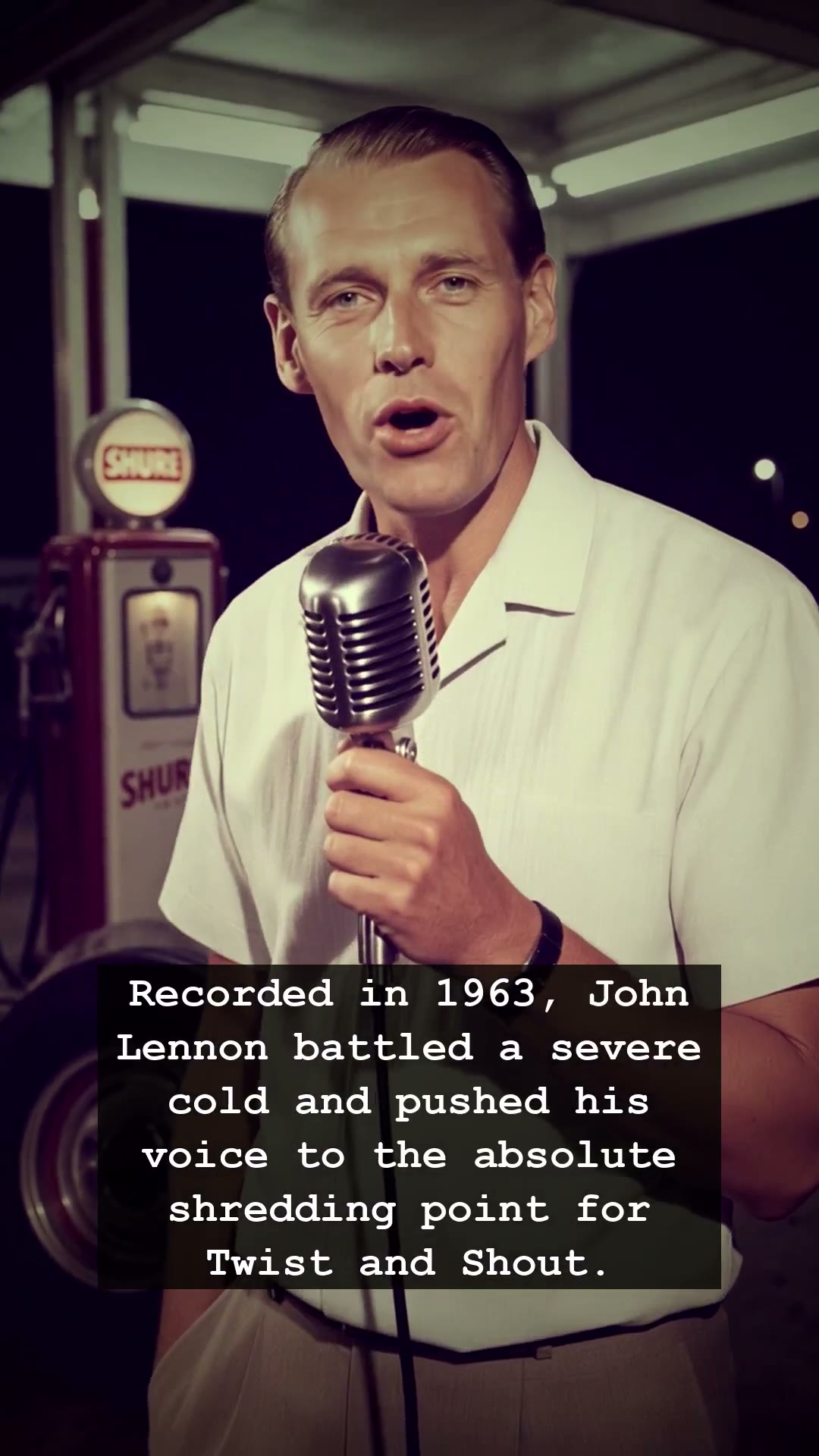
It was February 1963, and the world was standing on the precipice of a cultural revolution. Inside the cramped, cigarette-smoke-filled confines of Abbey Road Studios, the four lads from Liverpool were racing against the clock to complete their debut album, Please Please Me, in a single, marathon session. But for John Lennon, the pressure was not just about the technical deadline; it was about a body that was failing him at the most critical moment of his nascent career. He was suffering from a wretched cold, his throat was raw, and his voice was flickering like a dying candle in the wind. Yet, for the final track of the night, John Lennon insisted on recording a blistering cover of the Top Notes’ rhythm and blues staple, Twist and Shout.
Most producers would have suggested a postponement, fearing that a subpar vocal performance would ruin the record. But the studio atmosphere was electric, defined by the era of the Jukebox and the burgeoning hope of a new generation. John Lennon understood something his peers did not: that rock and roll was never meant to be pretty. He grabbed a pack of milk to soothe his throat, stripped away all his inhibitions, and approached the microphone with the desperation of a man who had nothing left to lose. As the tape began to roll, he let out a guttural, primal scream that wasn’t just singing; it was the sound of a musician pushing his physical vessel to the absolute brink of total destruction.
That session resulted in one of the most iconic vocal performances in the history of music. The recording captures the exact moment John Lennon shredded his vocal cords, his voice cracking and tearing as he hit those high, raspy notes. It was an act of pure, unadulterated musical violence against his own anatomy. When the track ends, you can almost hear the exhaustion, the pain, and the sheer triumph of a performer who left every ounce of his humanity on the studio floor. It stands as a testament to the raw energy that defined the early sixties, a time before auto-tune and digital perfection, where talent was measured by the grit in one’s soul.
Decades later, the legacy of that session continues to resonate. While listeners today enjoy the clean, remastered versions through modern devices, the ghost of that 1963 recording still haunts the track. It reminds us that behind the polished image of a superstar, John Lennon was a man driven by a relentless, often agonizing obsession with his craft. The song remains a masterclass in emotional delivery, proving that sometimes the greatest art is born not from comfort, but from the limits of our own endurance.
Whenever you hear those opening chords today, think of the man behind the microphone, fighting off a fever while single-handedly rewriting the rulebook for rock and roll. It was a singular moment of magic that transformed a simple cover into a timeless anthem of defiance. John Lennon taught us that if you are going to bleed for your art, you might as well make sure the world hears the roar.