
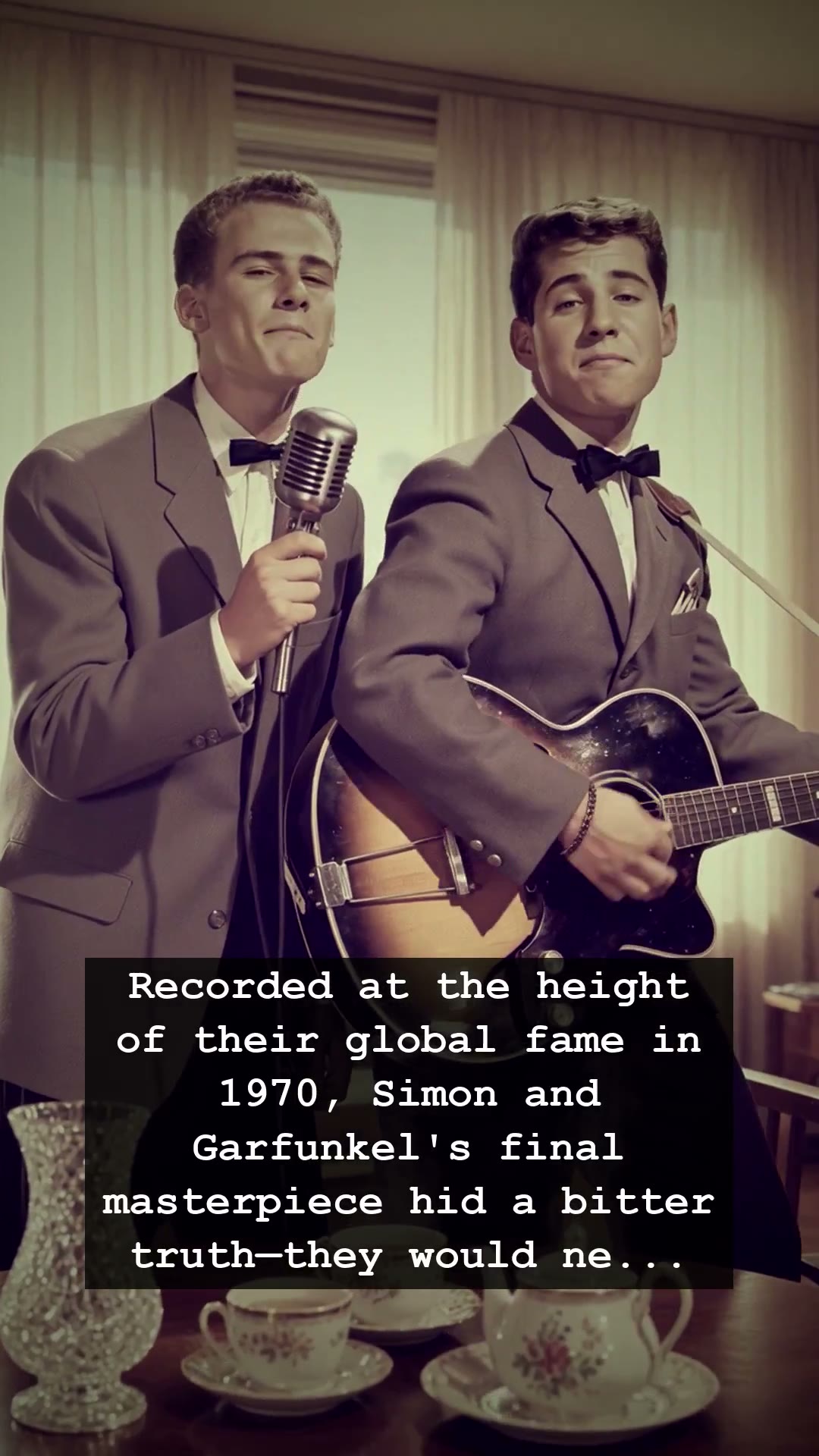
It was 1970, a year that felt like the closing of a golden door for the music industry. As millions tuned into their radios and played their vinyl records on heavy, wood-paneled stereos, the world was obsessed with the sweet, harmonic perfection of Simon and Garfunkel. They were the voices of a generation, masters of folk-rock whose melodies defined the cultural landscape. Yet, at the very moment they reached the summit of their global fame with the release of Bridge Over Troubled Water, the duo was quietly disintegrating from within. They were sitting on top of the world, but for Paul Simon and Art Garfunkel, the foundation had already crumbled into dust, leaving behind a silence that would haunt music history for decades.
The public saw two friends weaving magic, but behind the scenes, the dynamic was a pressure cooker of creative friction and bruised egos. The recording sessions for what would become their final masterpiece were a battlefield of conflicting visions. Paul Simon, the brilliant songwriter who felt his craft was overshadowed by the ethereal beauty of Art Garfunkel’s voice, carried a heavy burden of resentment. Meanwhile, Art Garfunkel, finding himself increasingly drawn to the silver screen, felt his own artistic contributions sidelined. The studio air, once filled with the seamless blend of their two distinct voices, had turned stagnant and cold, reflecting the deep, irreparable fissures in their partnership.
This wasn’t just a breakup; it was the symbolic end of an era of harmony. Just as the folk-rock movement was giving way to the grittier, raw energy of the coming decade, Simon and Garfunkel turned their backs on the fame that had consumed their private lives. The tragedy of their split lies in the irony that their greatest musical achievement was also their final act of collaboration. They reached the highest peak of critical and commercial success—sweeping the Grammy Awards—only to realize that the person standing next to them was becoming a stranger. It serves as a stark reminder of the dark side of fame, where the weight of public expectation can suffocate the intimacy that birthed the art in the first place.
Looking back, their songs remain tethered to the pulse of the late 1960s, a time of profound social change and personal searching. The way their voices intertwined captured a sense of melancholy that resonates just as strongly today as it did on a turntable in a dimly lit living room fifty years ago. Whether it was the raw, acoustic simplicity of their early days or the lush, orchestral arrangements of their swan song, Simon and Garfunkel defined a sound that felt both timeless and fragile. They proved that the most beautiful harmonies often come from the most complicated souls.
Even now, when we listen to those iconic tracks, we are reminded of how ephemeral greatness truly is. Their story is a bittersweet tapestry woven from the threads of artistic genius and human frailty. While they would go on to have successful solo careers, the chemistry they forged during those brief, turbulent years in the studio remains a ghost that continues to captivate new generations of listeners. It leaves us wondering: what other masterpieces were lost to the shadows when the music finally stopped playing for the duo who taught a generation how to harmonize with their own solitude?