
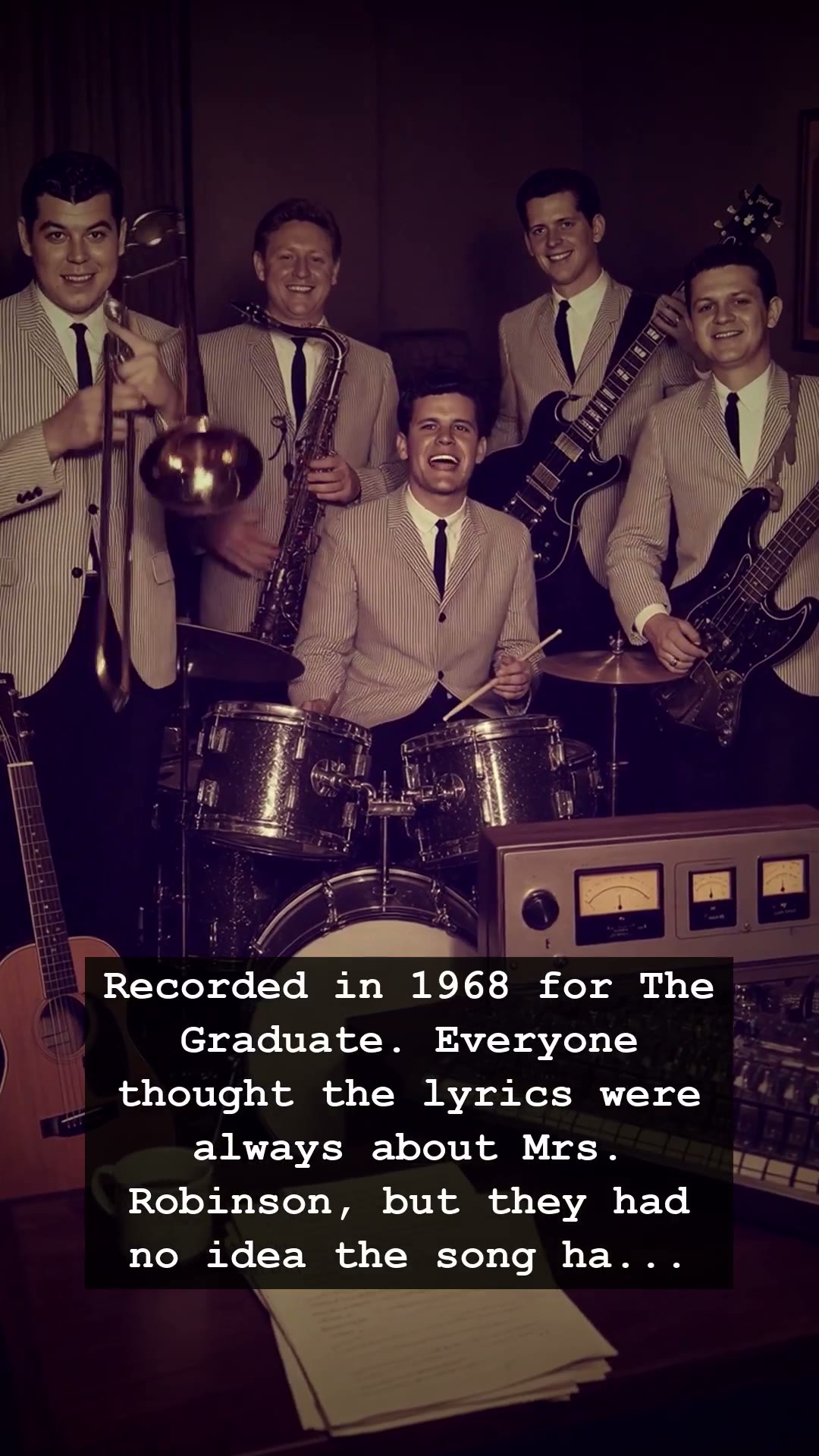
It was 1968, a year defined by social upheaval, the hum of the FM radio, and the flickering glow of the television set. In the midst of this shifting cultural landscape, a duo was busy crafting a song that would become the heartbeat of a generation. Simon and Garfunkel, already known for their intricate harmonies and poetic sensibilities, were tapped to provide the soundtrack for the film The Graduate. The world fell in love with a track that seemed to capture the suburban malaise and sexual ambiguity of the decade: Mrs. Robinson. But if you think that catchy refrain was always about a scorned woman named Mrs. Robinson, you have been listening to a carefully curated myth for over fifty years.
Paul Simon, a man whose lyrical genius was often hidden behind a unassuming demeanor, had originally penned a song titled Mrs. Roosevelt. It was a tribute, or perhaps a lament, for the former First Lady, a figure representing a fading era of American idealism. The melody was there, the rhythmic acoustic guitar work was present, but the soul of the track felt incomplete. It was a fragment of a song, struggling to find its place in the fast-paced, disillusioned world of the late sixties. Little did anyone know, a spontaneous backstage encounter would pivot the entire course of pop music history.
During the filming of The Graduate, Paul Simon found himself in a quiet, candid moment with actress Anne Bancroft, who played the titular seductress. As the two discussed the film’s narrative, a simple suggestion from the star turned the tide. They discussed the character’s name, her complexity, and the way she stood as an antithesis to the era’s traditional domesticity. Simon, always sharp and observant, realized that the rhythmic cadence of the name Robinson fit the melody far better than Roosevelt. With a slight adjustment to the lyrics, the political ode morphed into a cinematic icon.
When Mrs. Robinson finally hit the airwaves, it became more than just a soundtrack hit; it became a cultural touchstone. Played on portable transistor radios and heard in the haze of smoke-filled dorm rooms, the song defined the restlessness of the Baby Boomer generation. It was a period where the barrier between film and music began to dissolve, with the song and the movie becoming inseparable entities in the American imagination. The shift from a political tribute to a character study proved that Simon and Garfunkel could navigate the delicate intersection of high art and mass popularity.
Decades later, the song retains its hauntingly nostalgic charm. When those iconic opening notes strike, we are instantly transported back to a time of social change and artistic exploration. The story of how Mrs. Roosevelt became Mrs. Robinson reminds us that even the most enduring classics are often born from happy accidents and backstage whispers. As you listen to Simon and Garfunkel today, remember that behind every legendary verse lies a hidden history, waiting to be rediscovered by those willing to listen closely.