
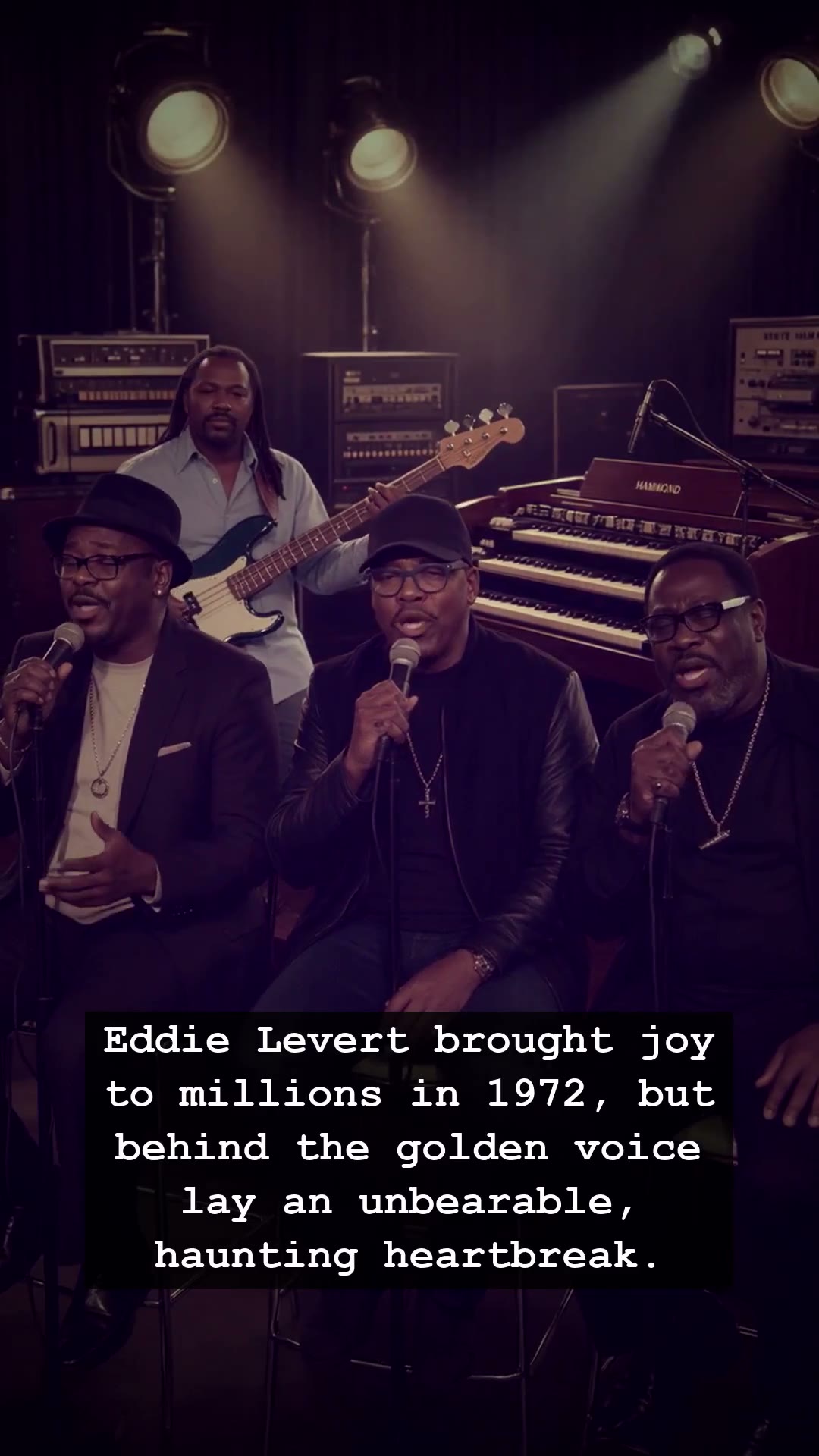
In 1972, the world was dancing to the infectious, rhythmic pulse of Love Train. It was a time when the Jukebox in every neighborhood diner was dominated by the sophisticated harmonies of The O’Jays. At the center of this musical revolution stood Eddie Levert, a man whose golden voice defined the sound of Philadelphia soul. He was the beacon of joy and optimism for millions, a performer who could command any stage from the glitzy halls of national television to the crowded soul clubs of the era. Yet, while the world moved to his beat, a silent, suffocating shadow was already encroaching on his private life, preparing to test the strength of his soul in ways no one could have imagined.
To understand the magnitude of the tragedy that would later unfold, one must first appreciate the climate of the seventies. This was an era of shimmering sequins, velvet suits, and the rise of the iconic Philadelphia International Records label. Eddie Levert and his bandmates were the architects of a sound that provided a soundtrack for hope, civil rights, and pure dancefloor escapism. Fans watching them perform on programs like Soul Train saw only the polished, magnetic charisma of a star. They could never have guessed that the man singing about universal love would eventually face the most profound, soul-shattering loss a parent can ever endure.
Tragedy struck with a cold, unrelenting speed that defied reason. Within a span of just sixteen months, Eddie Levert lost both of his talented sons, Sean and Gerald. Both young men were gifted artists in their own right, following in their father’s footsteps and carving out their own legacies in the R&B world. When they passed away, the music industry was stunned into a hollow silence. The man who had spent decades teaching the world how to find love and light in music was suddenly forced to walk through the darkest valley of human existence, carrying the weight of two sons who were taken far too soon.
The public rarely saw the tears behind the stage lights, but for those who look back at the career of Eddie Levert, the tragedy adds a layer of raw, human vulnerability to his legendary discography. It serves as a haunting reminder that behind the vinyl records and the golden eras of Motown and Philly soul, there were real lives defined by more than just chart success. The resilience he displayed in the aftermath of these losses is arguably as legendary as his vocal prowess.
Today, when we hear the classic hits of The O’Jays playing over the radio, we aren’t just listening to a catchy hook from 1972. We are listening to the endurance of a man who held onto his music when the world fell apart. Eddie Levert remains a symbol of survival, proving that even the most beautiful voices are often tempered by the deepest of sorrows. As the needle drops on those familiar tracks, take a moment to listen not just to the notes, but to the story of a man who found the strength to keep singing despite the silence left behind.