
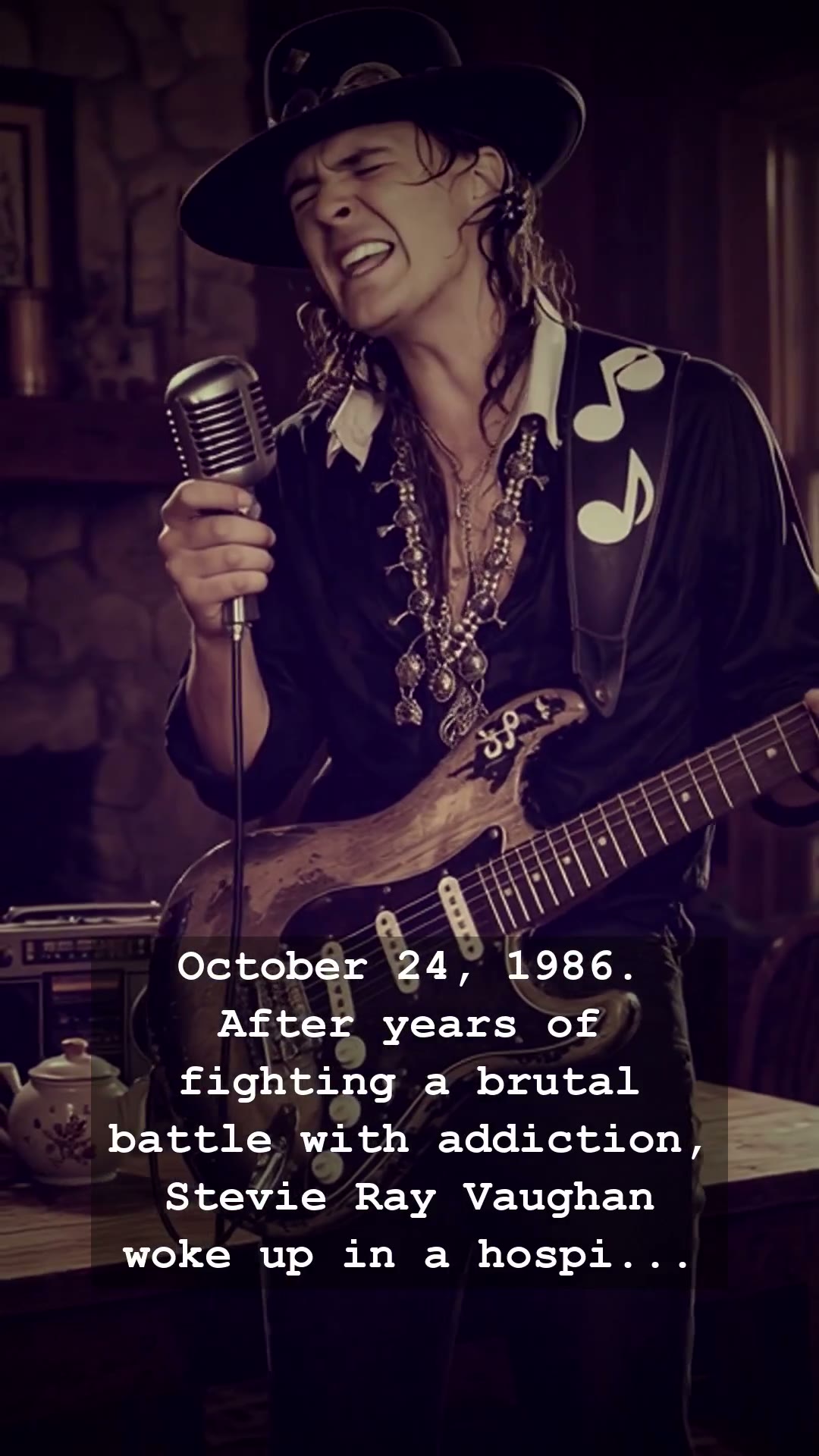
The year was 1986, a time when the neon glow of MTV and the synthetic hum of pop dominated the airwaves, yet somewhere in the shadows, the blues was fighting for its soul. On October 24, Stevie Ray Vaughan woke up in a sterile hospital bed, the harsh reality of a brutal, multi-substance addiction finally crashing down on him. For years, the Texas guitar legend had been running on fumes, fueling his lightning-fast solos with substances that nearly cost him his life. That morning, staring at the ceiling, he made a choice that would rewrite his legacy: he chose to get clean. It was not just a medical necessity; it was a profound act of spiritual reclamation for a man who had felt the devil nipping at his heels for far too long.
Stevie Ray Vaughan was never a man of half-measures. Whether he was channeling the spirit of Albert King through his battered Fender Stratocaster or tearing through a Texas shuffle, he poured every ounce of his volatile energy into his craft. In the era of hair metal excess and cold, digitized studio production, Stevie stood as a raw, trembling monument to authenticity. Before that hospital stay, his life had become a blur of whiskey-soaked tours and erratic behavior. The music industry, always hungry for the next tragedy, expected him to fade into the annals of ‘what-ifs,’ joining the ranks of fallen icons who burned out before their time.
But the return of Stevie Ray Vaughan was nothing short of miraculous. When he stepped back onto the stage, the guitar world held its breath. He wasn’t just playing; he was purging. The performance that followed wasn’t merely technical perfection; it was a fiercely transcendent display of a man reconnected with his gift. His hands, once shaking from the weight of his vices, moved with a newfound, terrifying precision. It was the birth of a sober legend, proving that the most powerful blues are not born from the bottle, but from the grit of a man who survived his own collapse.
This pivotal moment resonates even today because it represents the universal struggle between creative genius and self-destruction. Fans who grew up listening to him on their crackling cassettes or local Jukebox joints remember the shift in his tone—it became sharper, more intentional, and deeply emotional. He stripped away the noise, leaving only the pure, electric cry of the blues. He showed an entire generation that redemption is possible even at the precipice of total ruin.
Though he was tragically taken from us too soon, the story of Stevie Ray Vaughan remains a testament to the power of the human spirit. He transformed his demons into art, leaving behind a roadmap for every artist navigating the thin line between fame and oblivion. His legacy is not just in the records he left behind, but in that quiet, desperate, and heroic moment in a hospital room where he decided he wasn’t finished yet. Whenever you hear those first notes of Pride and Joy, remember the man who fought the dark to let the light shine through.