
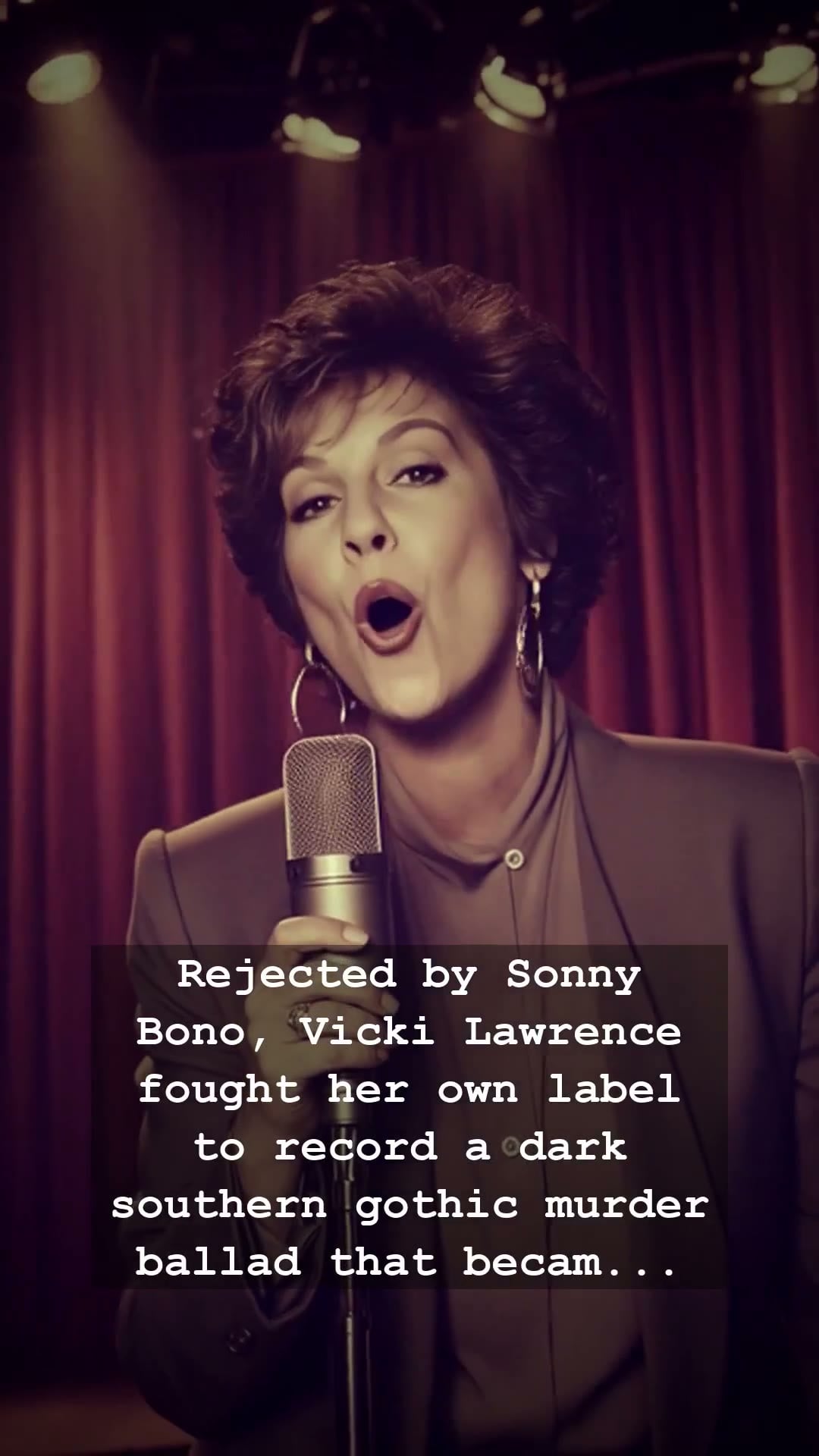
Imagine the early 1970s, a time when the jukebox was the heartbeat of every roadside diner and the radio airwaves were carefully curated by industry giants. Sonny Bono, one half of the era’s reigning power couple, sat in a high-rise office and heard a song that he deemed absolute trash. He turned it down cold, dismissing the haunting southern gothic lyrics as entirely unmarketable for the pop charts. But he didn’t count on the quiet, steely resolve of a woman who wasn’t just a television personality, but a storyteller with a vision. That woman was Vicki Lawrence, and she was about to pull off one of the greatest upsets in music history.
The song in question was The Night the Lights Went Out in Georgia. It was a dark, chilling murder ballad that felt entirely out of place in the glittery, optimistic bubble of 1973. When Vicki Lawrence brought the song to her label, the executives were equally horrified. They saw a grim tale of judicial corruption, infidelity, and cold-blooded homicide; they saw a career suicide. They refused to back the project, leaving Vicki Lawrence to fight her own record label just for the chance to step into the recording booth. It was a classic clash between artistic instinct and corporate comfort, the kind of drama that defines the messy, brilliant legacy of American music.
Vicki Lawrence felt the song in her bones. She understood that underneath the polished veneer of American pop culture, people were hungry for stories that mirrored the grit of reality. She ignored the suits, pushed through the bureaucratic walls, and recorded the track. When it finally hit the airwaves, the public reaction was instantaneous and electric. The song didn’t just climb the charts; it dominated them, reaching number one on the Billboard Hot 100. It proved that the American audience was far more complex than the industry gatekeepers dared to believe.
Looking back, the success of this track remains a testament to the power of artistic defiance. The song remains a masterclass in atmospheric storytelling, painting a vivid, sinister picture of a small town where secrets are buried as deep as the bodies. For those of us who grew up listening to the crackle of the radio on long road trips, the song is a quintessential artifact of the seventies. It captures that specific, moody essence of the era—a time when music could still be dangerous, provocative, and wildly successful all at once.
Vicki Lawrence transformed a rejected demo into a cultural phenomenon, forever etching her name into the history of music legends who knew better than their bosses. Today, when you hear those opening piano chords, you are not just listening to a hit; you are listening to the sound of a woman who refused to be told no. It is a timeless reminder that sometimes, the best stories are the ones that everybody else is too afraid to tell. As the final notes fade, we are left to wonder how many other masterpieces were lost simply because the world wasn’t ready to listen.