
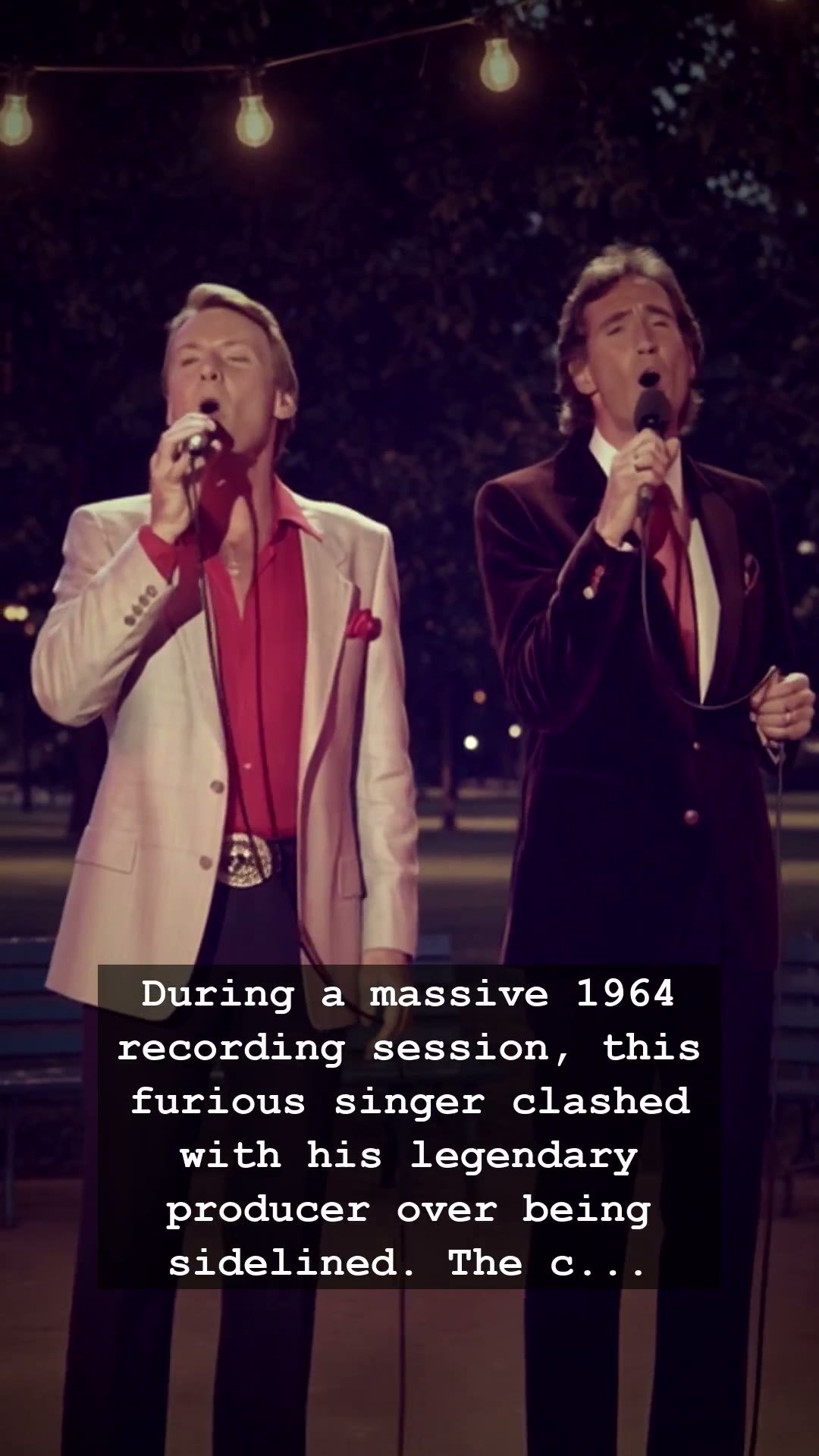
The year was 1964, and the air inside the studio was thick with cigarette smoke and the suffocating pressure of a ticking clock. Phil Spector, the eccentric genius behind the Wall of Sound, was molding a track that would soon define an era. But inside the vocal booth, tension was boiling over. Bill Medley and Bobby Hatfield, known to the world as The Righteous Brothers, were at a crossroads. As they recorded what would become their signature masterpiece, You’ve Lost That Lovin’ Feelin’, a bitter conflict erupted. Bill Medley, a powerhouse vocalist, felt increasingly sidelined by Spector’s obsessive focus on the arrangement and the production’s intricate, swirling layers. The feeling of being treated as a mere instrument rather than a collaborator was a bitter pill for a man with such a commanding voice.
The drama hit a breaking point during a particularly grueling take. Medley, frustrated by the lack of direction and the feeling of being discarded, cornered Spector. He demanded to know exactly what he was supposed to do with his voice during the track’s peculiar, low-register opening. The room went silent. Spector, never one to shy away from psychological warfare, turned his gaze toward Medley and offered a chilling, dismissive reply that cut deeper than any critique: If you don’t like it, you can leave. It was a power play designed to break the spirit of the performer, a hallmark of the volatile genius that defined the legendary sessions of the mid-sixties. For a heartbeat, the future of the duo hung in the balance, resting on whether Medley would walk out the door or submit to the madness of the studio.
He stayed, and in doing so, helped etch a moment of musical history into the Jukebox of eternity. The Righteous Brothers went on to release a song that defied the conventions of the time. While radio DJs in the era of early pop and rock were accustomed to snappy three-minute tracks, this song was long, slow, and drenched in a melancholic longing that felt almost dangerous. It was an anomaly that worked, proving that the friction between Spector’s perfectionism and the raw soul of The Righteous Brothers created an alchemy that audiences craved. It became a cultural touchstone, a track that would be played on every Walkman and transistor radio for decades to come.
Looking back, the story of The Righteous Brothers serves as a haunting reminder of the cost of classic pop perfection. Behind the lush, echoing strings and the velvet harmonies lay a world of fragile egos and intense creative battles. The success of that 1964 session proved that sometimes, the greatest art is born from the most uncomfortable collisions. Even today, hearing those iconic opening notes transports listeners back to a time when music felt like a high-stakes, life-altering experience. It is a testament to how human struggle can be transformed into a timeless sound that resonates across the generations.