
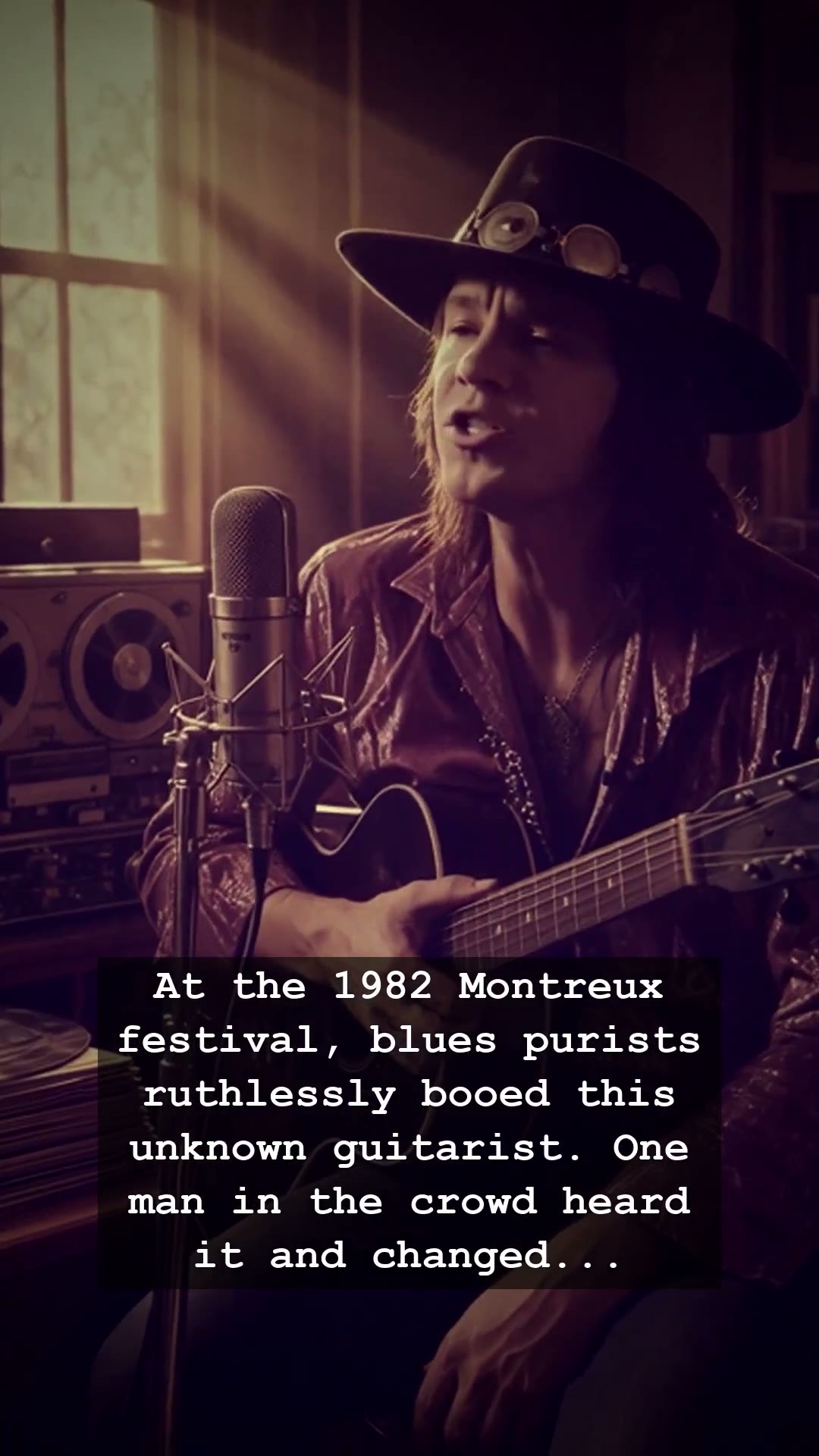
The year was 1982, and the air at the Montreux Jazz Festival was thick with an elitist tension that only true purists could cultivate. On stage stood a lanky, wide-eyed guitarist from Texas, his hat pulled low, clutching a battered Stratocaster that looked like it had survived a war. This was Stevie Ray Vaughan, a man whose fingers bled pure, lightning-charged blues. Yet, as he unleashed his soulful, scorching licks, a wave of cold hostility rippled through the crowd. The audience, expecting a polished, traditional jazz performance, reacted with a chorus of boos. It was a humiliating moment that threatened to extinguish a talent before the world ever truly heard it.
Stevie Ray Vaughan stood there, his confidence momentarily shaken by the jeers of the elitists. He was an outsider, a rough-edged rocker in a suit-and-tie environment. However, buried deep in the audience, one man stood motionless, watching the young Texan with intense focus. That man was David Bowie. Having recently seen Stevie Ray Vaughan perform, Bowie had handpicked him for his upcoming Let’s Dance album, but witnessing the raw, visceral reaction of the Montreux crowd confirmed everything he needed to know. Bowie saw the fire in Stevie’s eyes; he saw a genius being misunderstood by the very people who claimed to love music.
Following the set, Bowie sought out the dejected guitarist. He didn’t offer a hollow compliment; he offered a platform. By inviting Stevie Ray Vaughan to record the guitar work for his massive commercial breakthrough, Bowie effectively introduced the bluesman to a global audience that transcended the narrow, gatekeeping confines of jazz snobs. Overnight, the man who was booed off the stage became a beacon for a new generation of guitar heroes. The grit of the blues, once relegated to dusty clubs, was suddenly injected into the pulse of the MTV era, where synthesizers and neon lights usually reigned supreme.
The tragedy and the triumph of Stevie Ray Vaughan are forever linked to that pivotal night. It represents the duality of the music industry during the eighties—a time when corporate pop tried to mask the raw, analog soul of the blues, yet couldn’t quite stifle it. Stevie Ray Vaughan carried the weight of the Texas blues tradition into the modern era, acting as a bridge between the legends of the past and the grunge-influenced rockers of the nineties. His life was a testament to the fact that greatness is rarely recognized by the crowd; it is often found in the margins, waiting for the right moment to explode.
Years have passed, and while the Walkman has been replaced by streaming services and the dusty Jukebox is a relic of the past, the sound of Stevie Ray Vaughan remains untouchable. His story is a reminder of the fragility of fame and the necessity of artistic resilience. Every time we hear that signature distorted, soulful tone, we aren’t just hearing a guitar; we are hearing the sound of a man who refused to be silenced by the boos of the skeptics. His legacy endures, reminding us that even the darkest stages can lead to the brightest lights if you have the courage to keep playing your song.