
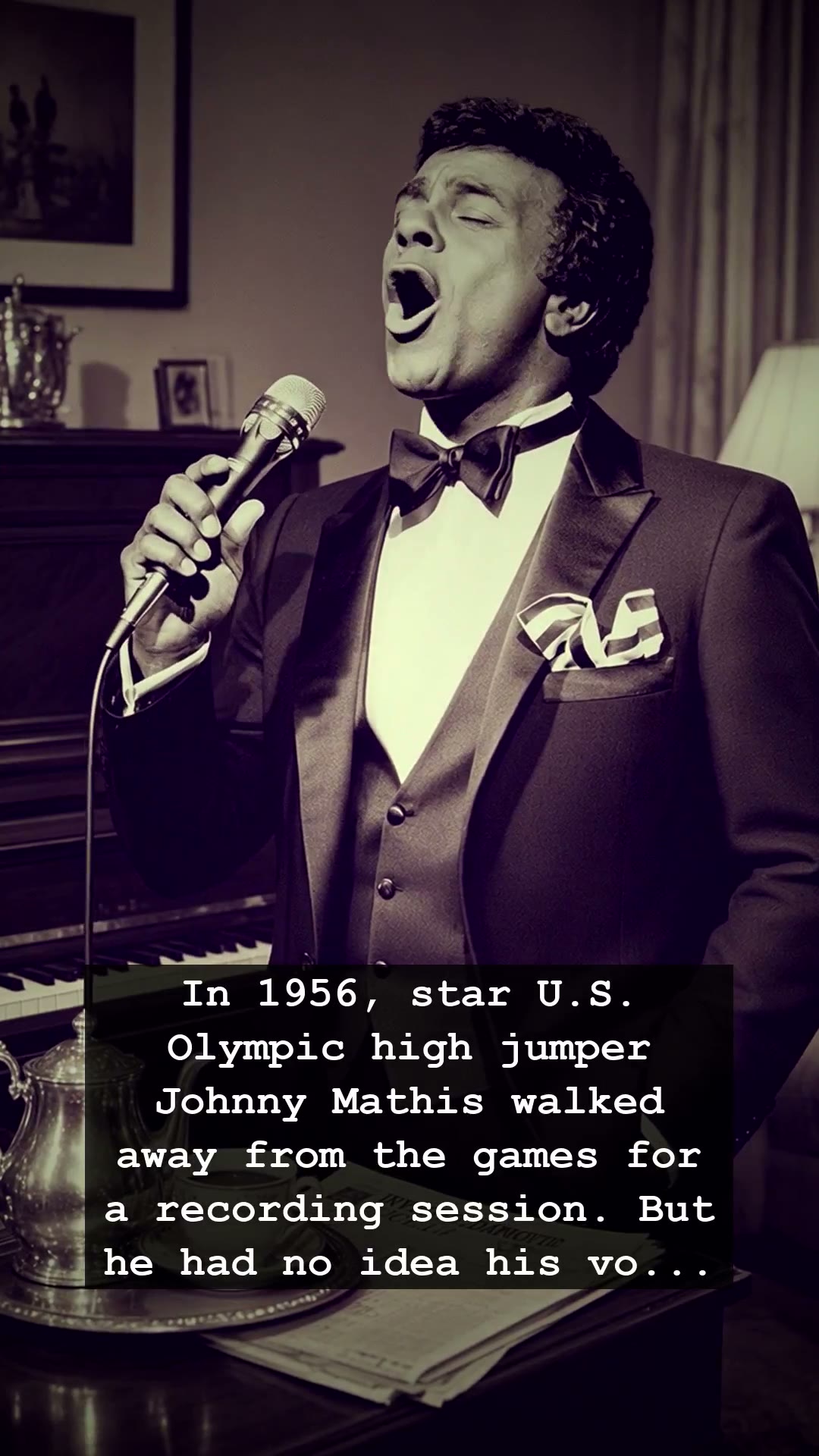
Imagine standing on the precipice of athletic immortality. The year is 1956, and a young man named Johnny Mathis is staring down the high jump bar at the Olympic trials. He was not just an athlete; he was one of the finest high jumpers in the United States, a man whose body was primed to soar over the competition and represent his country on the world stage. But in his pocket, there was a letter that would alter the trajectory of American music history forever. It was an invitation to a recording studio in New York City. In a move that shocked his coaches and teammates, Johnny Mathis chose the microphone over the gold medal. He walked away from the track, stepping into a dimly lit studio, unknowingly trading the sweat of the Olympics for the velvet-smooth legacy that would define a generation.
At the time, the airwaves were dominated by the raucous, burgeoning energy of early Rock ‘n’ Roll, but Johnny Mathis offered something entirely different. While the youth were busy learning the moves to the latest Jukebox hits, this former athlete brought a sophisticated, haunting intimacy to his recordings. His voice possessed a clarity and emotional depth that felt like a secret whispered in the dark. It was the antithesis of the chaotic energy seen on television sets during the mid-fifties. By choosing to record, he inadvertently pivoted away from the physical grit of sports and toward the vulnerability of the human soul. That single decision marked the end of his Olympic aspiration and the birth of a crooner who would remain a fixture in homes for decades to come.
As the fifties transitioned into the sixties, the sound of Johnny Mathis became the soundtrack of American romance. You could hear his tracks drifting from record players in living rooms, his ballads providing a soft, melodic contrast to the social upheaval that would soon dominate the American landscape. There was a timeless quality to his delivery that transcended the trends of the day. He didn’t just sing songs; he inhabited them with a polished grace that seemed to defy the rugged, often jagged edges of the evolving music scene. The transition from high jumper to musical icon was not without its internal pressures, yet he maintained a composure that made him look as effortless in front of an orchestra as he had looked on the track.
Looking back, the mystery remains: what if he had stayed on the track? Would he have been remembered as an Olympic footnote, or did his destiny truly lie in the resonance of his voice? We will never know the heights he might have reached in sport, but we know the heights he achieved in music. Johnny Mathis captured a version of intimacy that is rare in today’s high-speed digital world. His early hits paved the way for generations of vocalists to prioritize emotion over spectacle. It is a story of a man who left a sport behind only to find a far more permanent home in our collective memory. As we spin these classic records today, we are still hearing the decision of a young man who chose to jump into the unknown, changing the sound of American history with every breath.