
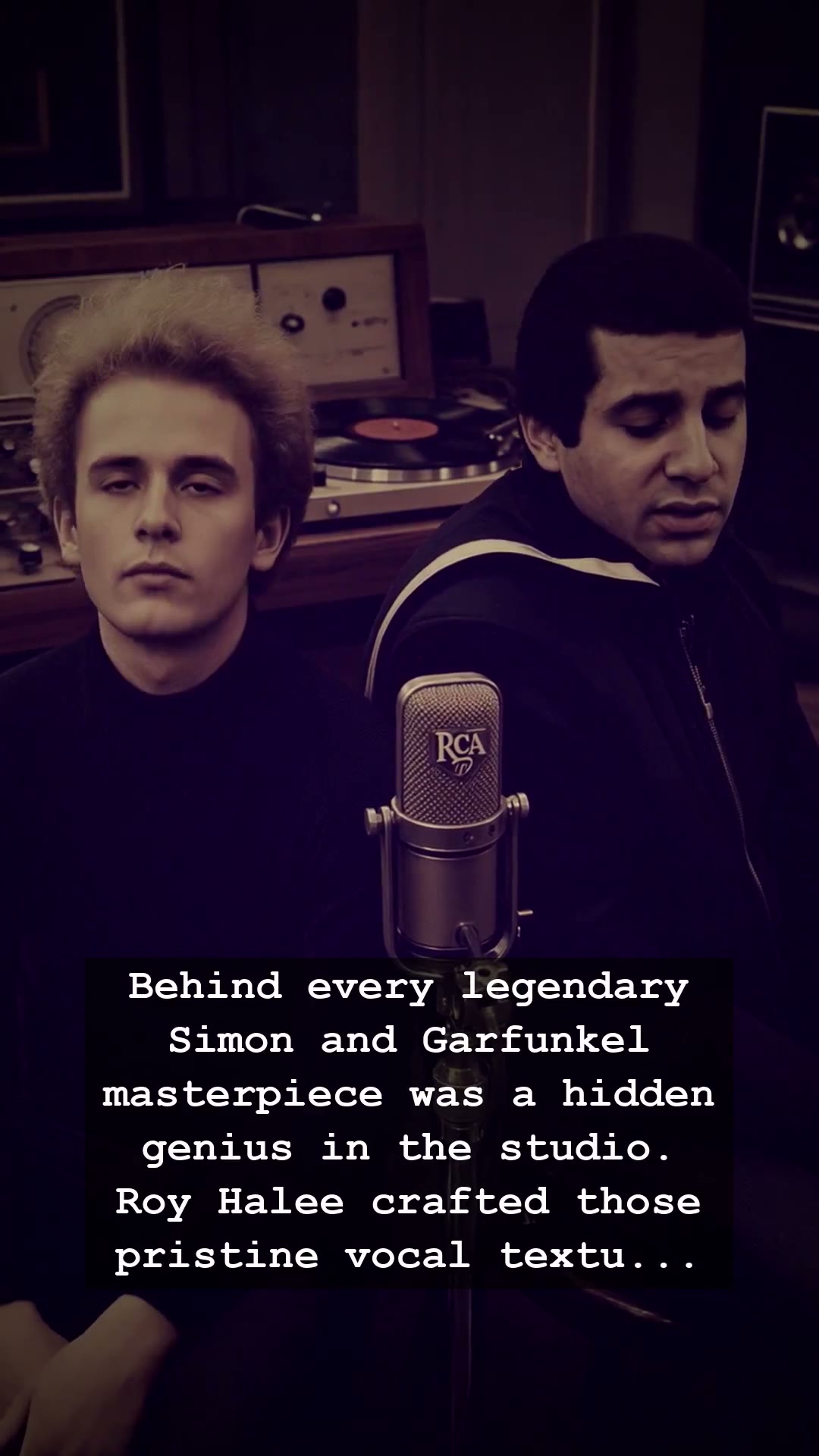
It was 1964, and the air in New York City was thick with the shifting promise of folk-rock. Paul Simon and Art Garfunkel had just stepped into the studio, their voices shimmering with a haunting intimacy that would define a decade. Most fans know the duo, but the true sonic architect behind those pristine, spine-tingling vocal textures was a man few listeners could name: Roy Halee. While the boys stood behind the microphones, it was Roy Halee who stood behind the console, meticulously crafting the soundscapes that allowed their harmonies to pierce through the noise of a rapidly changing America.
To understand the magic of Simon and Garfunkel, you have to imagine the environment of the studio in the mid-sixties. This was long before the digital polish of modern recording. Roy Halee brought a radical approach to the mix, treating the studio itself as an instrument. He experimented with echo chambers, mic placement, and physical space to create that signature ethereal resonance found on tracks like The Sound of Silence. He was not just an engineer; he was a silent partner in their creative combustion, an artist who understood that for a song to be truly legendary, it had to feel as fragile and expansive as a memory.
Roy Halee became the sonic glue during a time when the duo’s personal relationship was famously fraying at the edges. Behind the polished exterior of their tracks lay an increasing tension, a silent battle of egos and artistic direction that would eventually lead to their breakup. Yet, inside the recording booth, Roy Halee maintained a sanctuary of professional discipline. He forced Paul and Art to repeatedly layer their vocals until they achieved that perfect, haunting blend that resonated from transistor radios to high-end home stereo systems. Without his patience and his ear for perfection, the emotional weight of their music might have never found its way into our hearts.
This era was defined by the transition from the crackle of the Jukebox to the immersive experience of the album as a work of art. Roy Halee understood this shift better than anyone. He was there for the rise of the folk movement and the subsequent evolution into something more experimental. His work on Bridge Over Troubled Water remains a masterclass in production, a testament to what happens when raw talent meets a master of the board. He captured the vulnerability of their lyrics and elevated them into a cultural language that transcended the simple pop charts of the era.
Today, as we look back at the golden age of American music, we often focus on the icons in the spotlight. However, the legacy of Roy Halee serves as a poignant reminder that history is built by both the stars and the shadow-workers who capture them. Every time you drop the needle on a vintage record, you are hearing his vision. The next time you find yourself lost in the harmonies of The Boxer, take a moment to listen for the genius in the room. Some legends are heard, but rarely seen.