
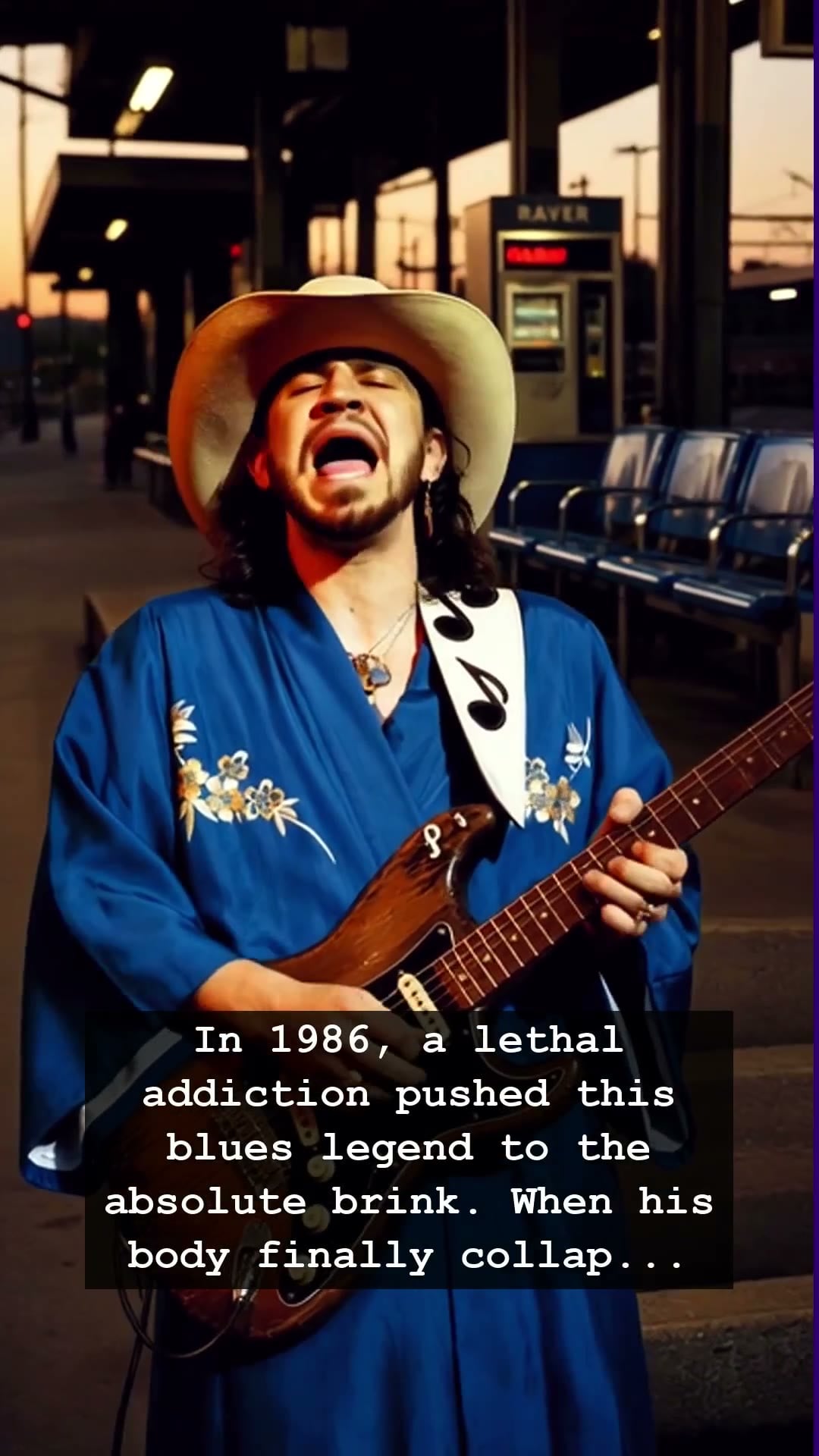
In the sweltering summer of 1986, the world of American blues was hanging by a literal, frayed thread. Stevie Ray Vaughan, the man who single-handedly breathed fire back into the dying embers of the Texas blues tradition, was not just playing his guitar; he was racing toward an early grave. Fueled by a harrowing, lethal cocktail of whiskey and cocaine, the virtuoso was consuming enough substance to fell a rhino. Behind the scenes of his frantic tour, the stage was set for a tragedy that many in the industry expected but felt powerless to prevent. The glitz of the mid-eighties music scene, dominated by the neon aesthetics of MTV and the rigid structures of stadium rock, provided a hollow backdrop to a man drowning in a very private, very dark sea.
Everything came to a screeching, terrifying halt in a backstage area in Germany. As Stevie Ray Vaughan collapsed, his body finally gave up the battle against years of extreme chemical abuse. To the outside observer, it was the end of a meteoric career; to those who knew him, it was a terrifyingly quiet moment in a life defined by deafening noise. Yet, in that clinical, sterile environment of a hospital room, the collapse acted as a jarring, necessary intervention. No one knew it at the time, but the total physical breakdown was the only thing capable of forcing Stevie Ray Vaughan to confront the reality of his own mortality. It was the brutal reset button that life pressed before the curtain could fall permanently.
Stevie Ray Vaughan emerged from that nightmare not just as a survivor, but as a transformed artist. The era of the mid-eighties was a strange time for guitar gods; while synthesizers were beginning to dominate the airwaves and the Walkman was changing how we consumed music, Stevie reminded us of the visceral power of the six-string. His return to the stage wasn’t just a victory for his fans; it was a profound testament to the power of redemption. He replaced the whiskey with a focused intensity that made his performances even more blistering than before. The man who had been teetering on the edge became the steady hand that kept the blues alive for a new generation.
Looking back, the story of Stevie Ray Vaughan serves as a somber reflection on the toll taken by the rock and roll lifestyle of that decade. We often romanticize the excess of the 1980s, the legends, and the high-octane tours, but the human cost was staggering. Stevie remains a towering figure not only for his technical prowess—his ability to make a Fender Stratocaster weep and roar—but for his raw, unvarnished humanity. He showed us that even when you are broken into pieces, the music can be the glue that holds you together.
Today, the legacy of Stevie Ray Vaughan continues to vibrate through the halls of musical history. Every young guitarist who picks up a slide, every blues enthusiast spinning a vintage record, and every fan who remembers the intensity of his live shows knows that his survival was a miracle. It is a story of a dark valley turned into a mountain top, reminding us all that even in the deepest despair, there is always a chance to change the melody of your life. Did you witness his resurgence, or are you just discovering the soul of Texas blues today?