
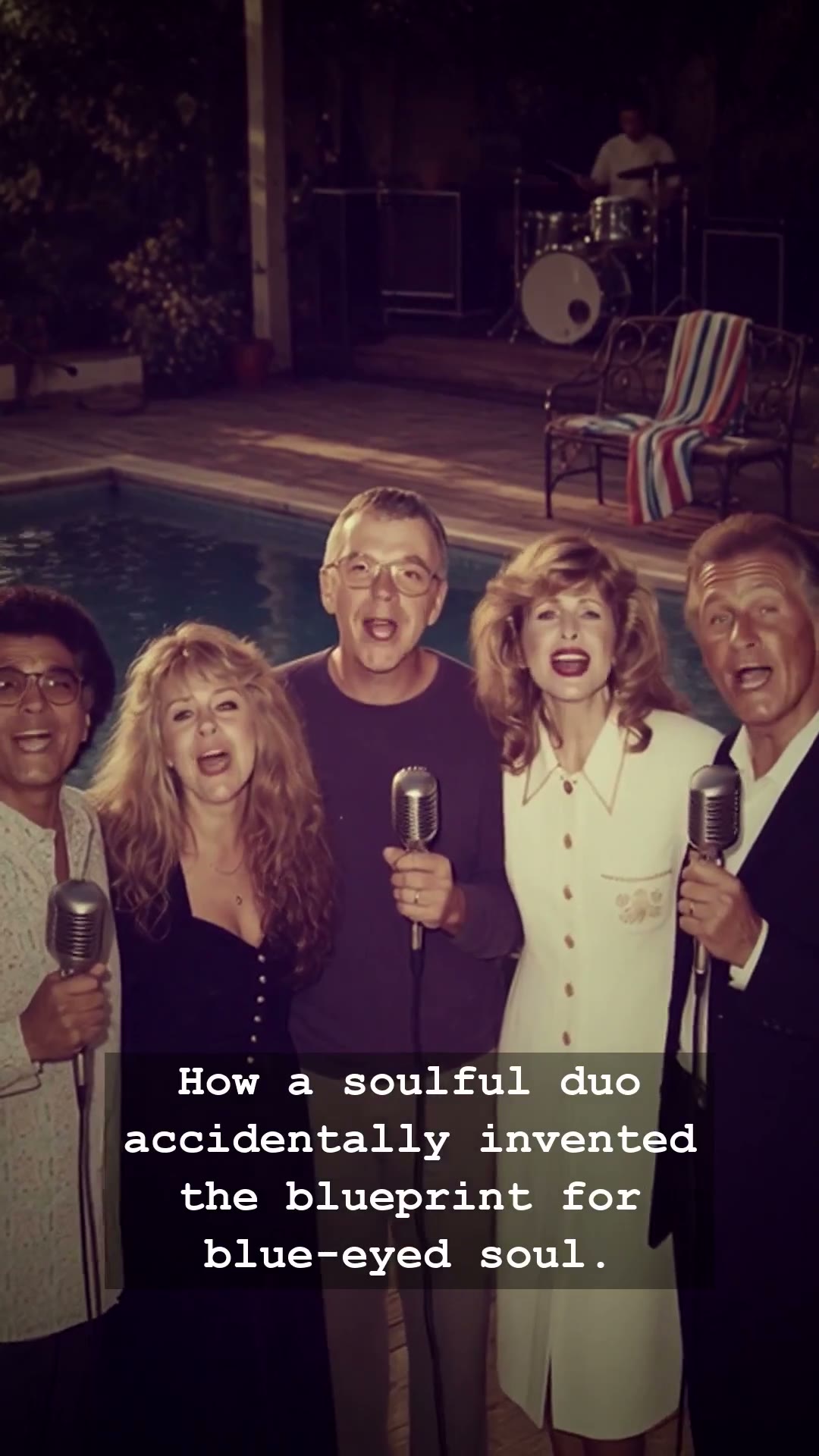
It started not with a calculated master plan, but with a spontaneous collision of two voices that sounded like they had been forged in the deep, velvet darkness of a midnight cathedral. In the early 1960s, Bill Medley and Bobby Hatfield were not looking to invent a genre; they were simply two men performing in a California club who realized that when their voices merged, they created something that felt like a spiritual awakening. They were The Righteous Brothers, and without realizing it, they were about to draft the blueprint for what would eventually be dubbed blue-eyed soul, a sound that brought the raw, bone-shaking emotional weight of gospel music directly into the glossy heart of American pop history.
The magic of The Righteous Brothers lay in their stark, beautiful contrast. Medley possessed a cavernous, earth-shaking baritone that seemed to pull gravity from the floorboards, while Hatfield provided a soaring, fragile tenor that reached for the heavens. When they sang, the world stopped moving. They captured a specific kind of American longing, a feeling that resonated in the neon-lit diners and the quiet, lonely corners of a post-war landscape. They were white singers capturing the essence of R&B with such genuine reverence and technical power that they transcended the racial barriers of the era, turning the Jukebox into a sanctuary for heartbreak and high-stakes romance.
Yet, the journey of The Righteous Brothers was far from a fairy tale. Their rise to fame was marked by the relentless pressure of the industry and the volatile nature of musical partnerships. They were caught in the crosshairs of the mid-century music scene, working alongside demanding producers like Phil Spector, whose ‘Wall of Sound’ famously pushed their voices to the breaking point. The studio was a pressure cooker, a place where perfectionism often curdled into paranoia. Behind the polished harmonies and the dramatic swells of their most famous tracks, there was always the underlying tension of two men trying to maintain their individuality while being inextricably linked to one another by the weight of their own massive success.
Their music, especially timeless hits like Unchained Melody, serves as a haunting time capsule of the 1960s. Even today, hearing those opening piano chords on a vintage radio feels like stepping back into a world of leather jackets, pompadours, and the unfiltered ache of youth. It is a reminder of a time when soul was defined not by algorithms or digital polish, but by the physical capacity of a human voice to make a listener cry. The Righteous Brothers proved that when you strip away the artifice, what remains is the truth of the human condition.
Decades later, the legacy of The Righteous Brothers remains untarnished, standing as a testament to the power of pure vocal alchemy. They didn’t just record songs; they captured ghosts, memories, and the echoes of a changing nation. Whether you are a fan of the classic era or a new listener discovering their depth, their music remains an essential chapter in the American story. Next time you hear the familiar surge of their voices, close your eyes and listen closely—you are hearing the exact moment blue-eyed soul was born.