
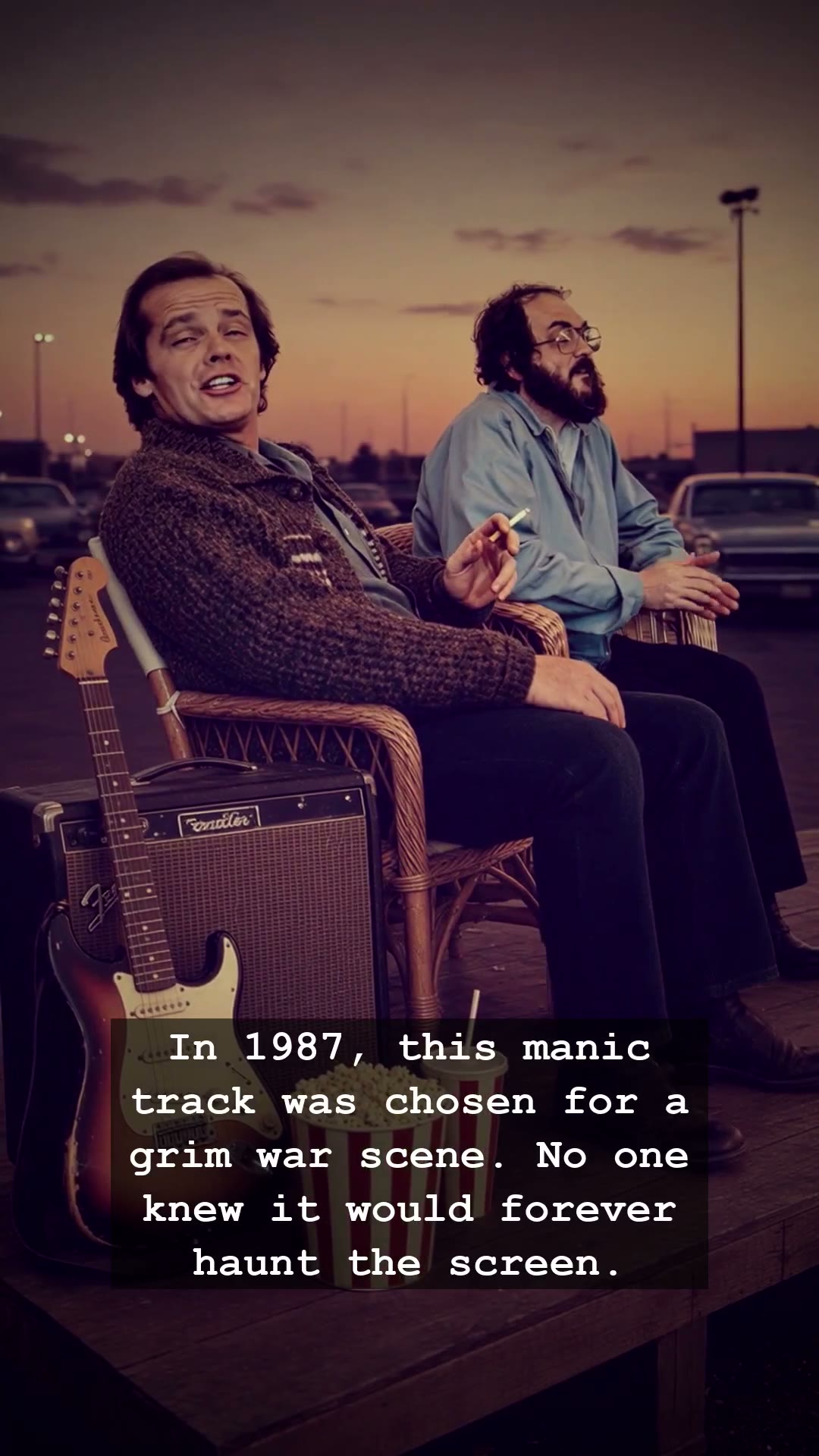
In 1987, theatergoers sat in darkness, waiting for the latest cinematic assault from Stanley Kubrick. Instead of a soaring orchestral score, the air was suddenly punctured by a chaotic, manic novelty anthem that defied every rule of war-film conventions. The song was Surfin’ Bird by The Trashmen, a mid-sixties surf-rock absurdity that, under the master’s direction, became a terrifying harbinger of psychological disintegration. As the jittery, nonsensical lyrics bled over images of grim combat, the audience realized they were witnessing something profound: the total erosion of sanity in the face of machine-like warfare. Stanley Kubrick was not just a director; he was a surgical architect of trauma, and he knew exactly how to weaponize nostalgia.
To understand the madness, we must look at the era. In the mid-sixties, surf rock was the soundtrack of sunny California dreams and carefree youth, a world away from the humid, visceral jungles of Vietnam. By choosing this specific track, Stanley Kubrick intentionally created a jarring friction between the innocence of the pop-culture past and the cold, mechanical horror of the present. The song, with its frantic repetition and primitive vocalizations, acted as a mirror for the madness of the troops. It was a bizarre, jarring choice that remains one of the most effective uses of irony in the history of cinema. When the needle dropped, the music didn’t just accompany the scene—it haunted it, turning a catchy rhythm into a nightmare.
Behind the scenes, the legend of Stanley Kubrick was one of relentless, bordering on obsessive, perfectionism. He didn’t pick songs because they were popular; he picked them because they held a psychological key to the scenes he meticulously crafted. While his peers were filling their movies with epic, soaring soundtracks, Stanley Kubrick reached into the dusty crates of the past, pulling out tracks like Surfin’ Bird to serve as discordant anchors for his narrative. The music became a character in itself, a symbol of the detachment that soldiers felt while staring into the abyss. It was as if the director were laughing at the absurdity of the conflict, using a cartoonish song to highlight the darkest corners of human nature.
This sonic choice resonated deeply with a generation that had lived through the chaos of the late twentieth century. For those of us who grew up under the flickering glow of MTV and the constant hum of a Walkman, this moment in Full Metal Jacket felt like a visceral reckoning. It reminded us that the soundtrack of our lives often masks deeper, uglier truths. Even today, decades later, the mere mention of the song brings back that icy dread that only Stanley Kubrick could conjure. It was a reminder that history is not just made of dates and maps, but of the songs that played while the world fell apart.
As we look back at the cinematic landscape of the 1980s, it is clear that few directors possessed the vision to pair such high-stakes drama with such low-brow, manic pop. Stanley Kubrick proved that the most terrifying moments are often those accompanied by the most unexpected sounds. We are still reeling from the echo of that track, forever trapped in the cycle of its relentless, manic beat. Next time you hear a classic tune from the golden age of radio, listen closely; you never know when you might find a ghost hiding in the melody.