
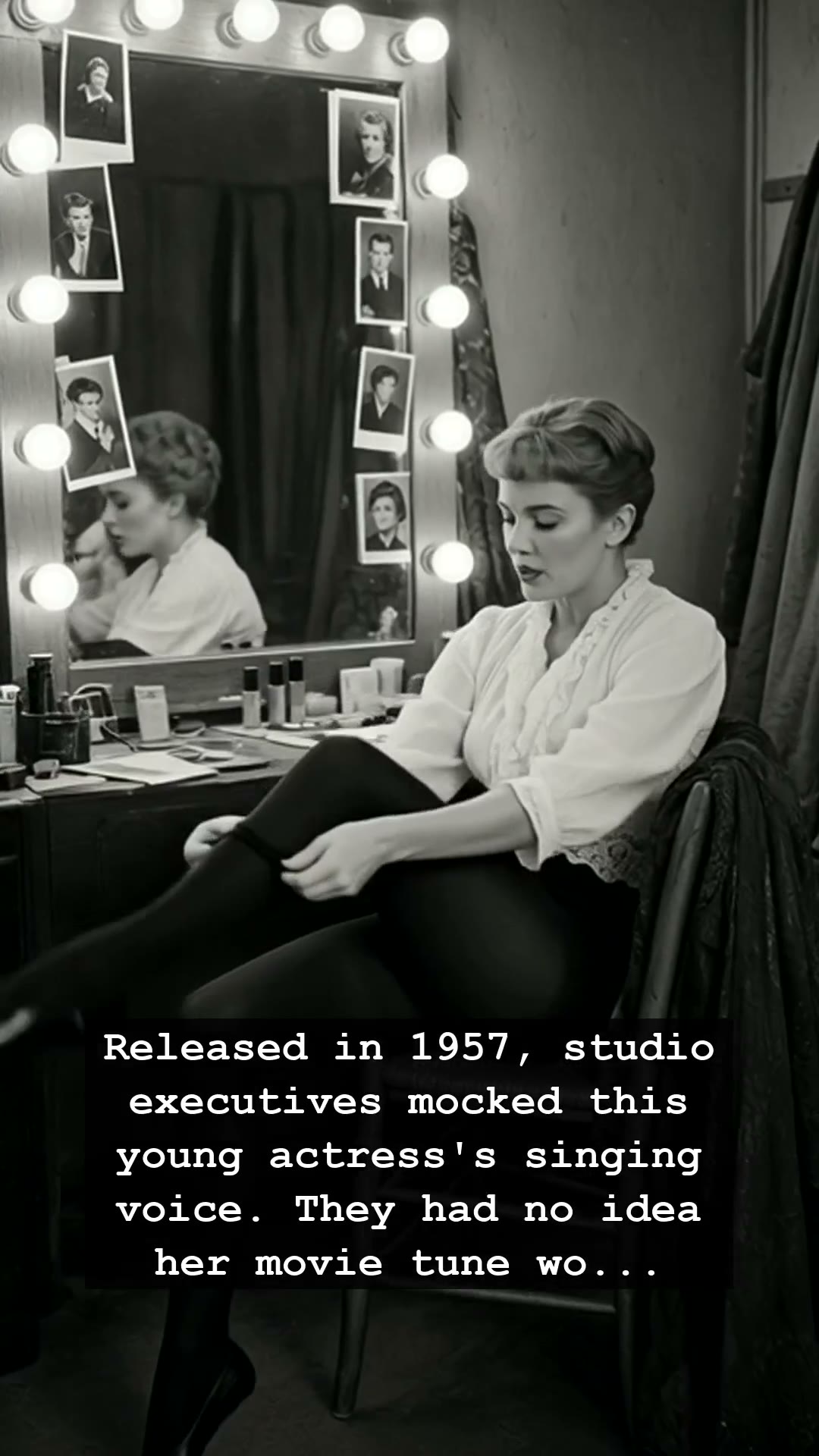
It was 1957, a year defined by the crackle of a jukebox in a roadside diner and the shifting sands of American pop culture. Debbie Reynolds, then the darling of the silver screen, was standing in a recording booth, her heart hammering against her ribs. She was young, talented, and undeniably luminous, yet the high-powered studio executives behind the glass were not impressed. They openly mocked her, claiming her voice lacked the grit and the nuance required to capture the ears of a nation obsessed with the rising tide of Rock ‘n’ Roll. To them, she was an actress who should have stayed within the confines of her script, not a vocalist worthy of a recording contract.
But fate had a different rhythm in mind. When Debbie Reynolds stepped up to the microphone to record Tammy for the film Tammy and the Bachelor, she infused the track with a raw, earnest vulnerability that no cynical executive could have manufactured. She didn’t have the smoky jazz delivery of the era’s torch singers, nor the rebellious howl of the new rockers. Instead, she possessed a purity that acted as a balm for a generation caught in the transition between the post-war innocence of the early fifties and the looming social upheavals of the sixties. When the song hit the airwaves, it didn’t just climb the charts; it occupied them, reigning at the number one spot on the Billboard charts for five consecutive weeks.
The industry was left stunned. The very people who had snickered at her in the studio were forced to watch as Debbie Reynolds became a household name in music as well as cinema. The song transcended the silver screen, turning into a cultural touchstone that played on car radios from coast to coast. For those who grew up in that era, listening to the crackle of an original 45-rpm record brings back a sensory flood of memories—the smell of drive-in theater popcorn, the feeling of a cool summer breeze against a rolled-down window, and the simple comfort of a melody that felt like a secret shared between the artist and the listener.
Beyond the glitz of Hollywood, the story of Debbie Reynolds serves as a poignant reminder of the pressures of fame. In an industry where artists were often molded into products, her defiance was a quiet revolution. She proved that technical perfection is often secondary to the emotional authenticity that a performer brings to a track. It is this human element that ensures her legacy survives, long after the record players and the jukeboxes have faded into the annals of history.
Today, revisiting the discography of Debbie Reynolds is like opening a dusty time capsule. Her chart-topping success remains a testament to the fact that when an artist trusts their own intuition, they can silence even the loudest critics. We invite you to find a quiet corner, put on this timeless track, and let the nostalgia wash over you. Do you remember where you were the first time you heard that iconic melody?