
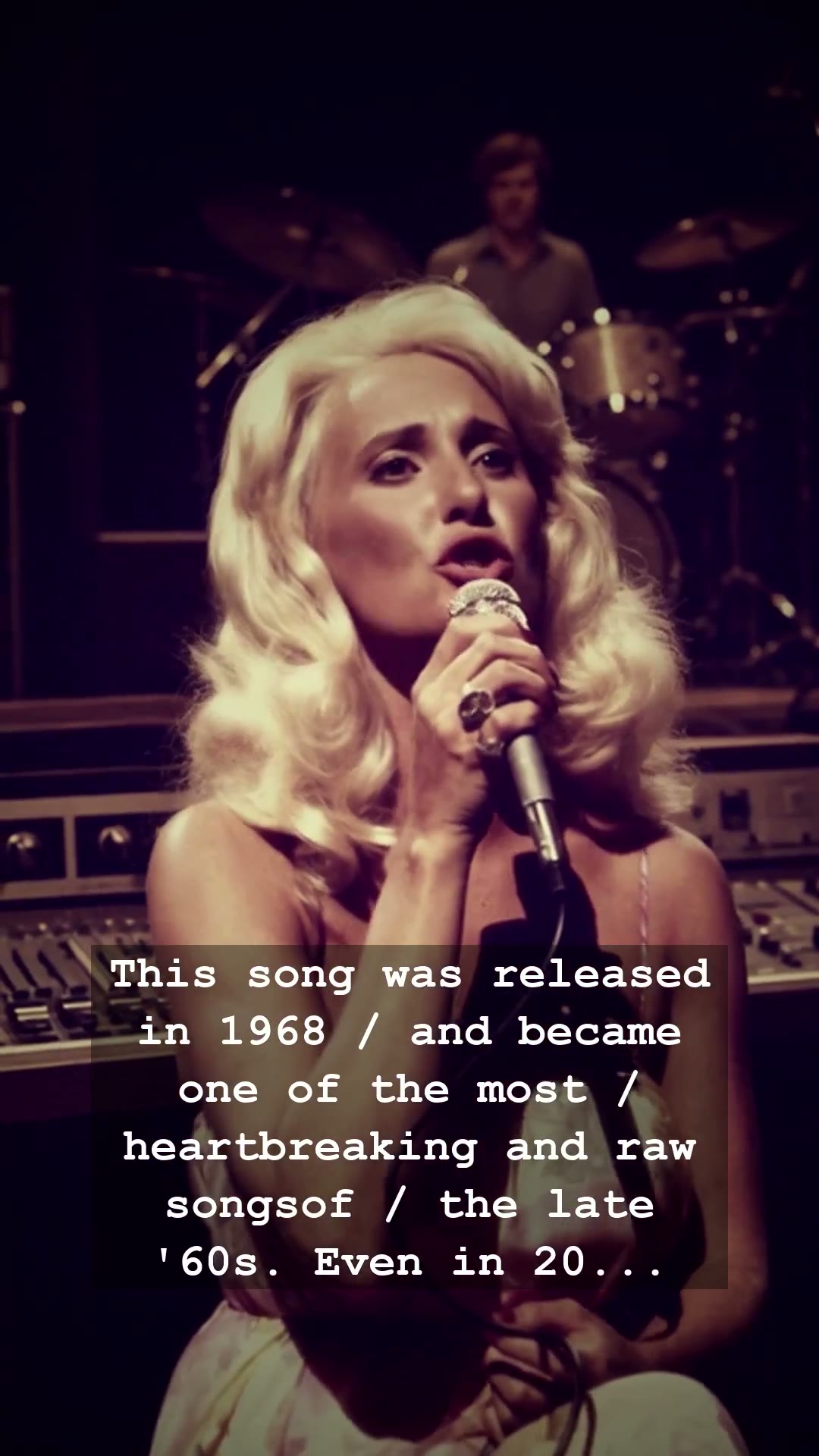
The year was 1968. As the world outside crackled with the static of political unrest, shifting cultural tides, and the raw, electric energy of the Vietnam era, a voice cut through the noise with a vulnerability that felt like a secret whispered in the dark. Tammy Wynette stepped into the recording booth, and in just a few short minutes, she delivered Stand By Your Man—a song that would go on to define a generation of country music. While many remember it as an anthem of devotion, the story behind its creation and the woman who sang it is a far more complex, bittersweet tapestry of pain and relentless fame.
At the height of the jukebox era, Tammy Wynette was carving out her place as the First Lady of Country Music. Life for Tammy Wynette was rarely the fairy tale the public imagined. Her personal life was a turbulent storm of high-profile marriages and deep-seated insecurities that she often channeled directly into her performances. When she recorded this iconic track, she wasn’t just hitting notes; she was living the lyrics. The song, written in collaboration with Billy Sherrill, was crafted in mere minutes, but it carried the weight of a lifetime of southern resilience. It was the sound of a woman who understood that love was often a battlefield, not just a romantic ideal.
When we look back from the lens of 2026, it is easy to hear the nostalgia in every strum of the guitar. This track became more than just a hit; it became a cultural touchstone that ignited fierce debates about gender, loyalty, and the expectations placed upon women during the late sixties. Despite the controversy it sparked, there is no denying the raw, unfiltered honesty that Tammy Wynette poured into every syllable. She transformed a simple melody into a mirror reflecting the struggles of everyday people who were desperately trying to hold their lives together while the world around them seemed to be falling apart.
Behind the scenes of the Nashville studios, the pressure to maintain the image of an icon was suffocating. Tammy Wynette battled through health struggles and the relentless scrutiny of the tabloid press, yet her voice never wavered. She was a master of conveying the quiet agony of keeping up appearances. Whether you were hearing it through a crackling radio or a pristine vinyl record, her voice reached out and grabbed your heart, demanding that you feel every ounce of her heartache. It was a performance that bridged the gap between the performer and the listener, making the struggles of a country star feel intimately, painfully familiar.
Today, we look back at the legacy of Tammy Wynette and realize that her music remains a timeless vessel for the human condition. The haunting clarity of her 1968 masterpiece remains a benchmark for raw, emotional songwriting that feels just as relevant in our modern digital landscape as it did in the smoky bars of mid-century America. As the echoes of that era continue to resonate, we invite you to listen again, not just to the music, but to the story of a woman who stood tall amidst her own beautiful, tragic wreckage.